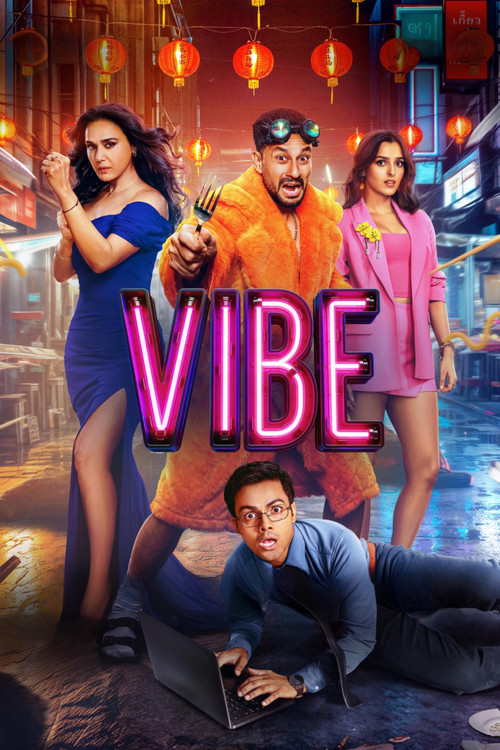
Vibe (2026)
Directed by Kunal Kemmu
Kunal Kemmu's Vibe arrives as a spy-comedy spoof in which two hopelessly ordinary men stumble into a national security crisis, survive through incompetence and prior drug abuse, and report to a woman who is better at their jobs than they will ever be.
Consciousness Markers
Preity Zinta's Madam H commands an intelligence agency and the incompetent male leads answer to her, which inverts the usual hierarchy of the spy genre. The film subverts hypermasculine hero archetypes by design, though critics suggest this is more comedic scaffolding than a sustained argument about gender.
The film's cast is uniformly Indian, which reflects its production context rather than any deliberate diversification agenda. A senior female intelligence chief and a female lead in a feature debut register faintly, but this is standard Bollywood ensemble construction, not a manifesto.
The film carries a mandatory anti-drug disclaimer, and critics noted the drug-tolerance plot device risks sending mixed signals about substance abuse. The messaging is accidental and halfhearted rather than evangelical, which is almost admirable in its own way.
No LGBTQ+ themes, characters, or subtext were identified in the film or its surrounding discourse.
No racial consciousness framing in the contemporary social-justice sense is present. The film does not engage with race as a structural or thematic concern.
No climate themes, environmental messaging, or ecological subtext were identified.
No anti-capitalist or class-warfare framing was identified. The film's conflict is rooted in spy-comedy misadventure, not systemic critique.
No body positivity themes or messaging were identified in the film or its reception.
No neurodivergence themes or representation were identified.
The film is an original spy spoof set in a contemporary fictional context. No historical revisionism is present.
Why it received this score
Kunal Kemmu's Vibe arrives as a spy-comedy spoof in which two hopelessly ordinary men stumble into a national security crisis, survive through incompetence and prior drug abuse, and report to a woman who is better at their jobs than they will ever be. This is, critics assure us, a subversive deconstruction of the hypermasculine action hero. It is also a film in which the protagonist's body tolerates a lethal super-soldier serum because of his history of addiction, a plot point accompanied by a mandatory disclaimer that the film does not endorse drug use. The disclaimer is doing considerable heavy lifting.
The progressive sensibilities here are modest and largely structural. Preity Zinta, returning to screens in a role of authority, commands the intelligence apparatus while the male leads blunder through it. This is a functional reversal of the usual spy-film hierarchy, though the film appears more interested in the comedy of male inadequacy than in making any durable point about who should be running things. Vanshika Dhir's feature debut and Sharmila Tagore's cameo add generational texture to the female presence, but the film does not pause to congratulate itself on this. That restraint is noted and appreciated.
Vibe is, in the final accounting, a Bollywood action-comedy that spoofs genre conventions without feeling the need to lecture the audience about them. Its social footprint is approximately the size of the mandatory disclaimer it carries into theaters. For a 2026 release, this qualifies as a form of modesty.
Analysis generated by our Consciousness Algorithm
Synopsis
Two inseparable friends' ordinary, unassuming lives spiral into an unpredictable, high-energy adventure that pushes their survival instincts and friendship to the limit.