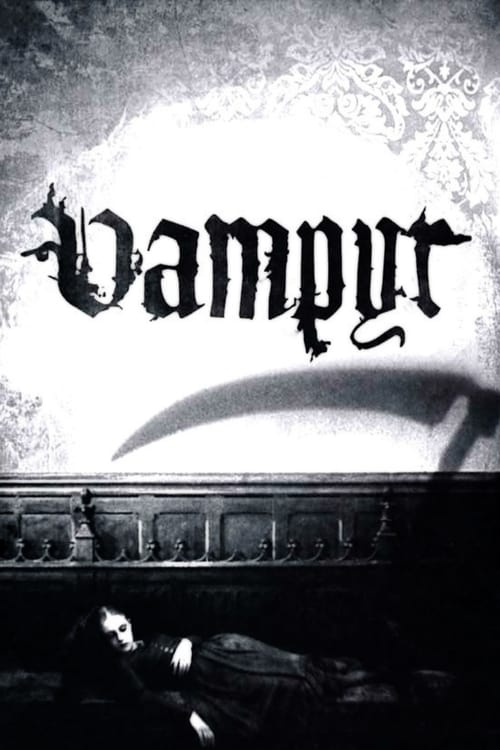
Vampyr (1932)
Directed by Carl Theodor Dreyer
No — Vampyr is not woke, scoring 3 out of 100 on our wokeness meter.
Carl Theodor Dreyer's Vampyr arrives from 1932 with the quiet confidence of a film that has nothing to sell.
Consciousness Markers
The screenplay borrows elements from Sheridan Le Fanu's collection, which includes the lesbian vampire tale 'Carmilla,' but the 1932 film itself conveys no explicit LGBTQ+ content on screen.
The cast is largely composed of non-professional actors unearthed in cafés and metro cars, but this is an aesthetic decision rooted in Dreyer's naturalism, not an exercise in diverse representation.
The women of the manor are victims to be rescued and protected; there is no feminist critique or agency narrative at work.
The story is a European gothic dream, wholly unconcerned with racial or social consciousness.
No ecological themes whatsoever; the flour mill is a death trap, not a metaphor for industry's environmental sins.
The flour mill suffocation is grisly spectacle rather than class critique; the aristocracy's baron financed the whole affair.
No body-positivity themes; the film's bodies are hosts for anemia and vampirism.
No neurodivergence themes; Gray is a student of the occult, a dreamer, not a coded neurodivergent character.
A loose adaptation of fictional supernatural stories, with no historical revisionism.
Dreyer explicitly stated he 'had not any particular intention' and simply wanted to make a film unlike any other; the finished work is famously ambiguous, dreamlike, and free of moralizing.
Why it received this score
Carl Theodor Dreyer's Vampyr arrives from 1932 with the quiet confidence of a film that has nothing to sell. It was financed by Baron Nicolas de Gunzburg, who purchased the leading role for himself and adopted the pseudonym Julian West so his family might not learn of the arrangement. The supporting players were plucked from Paris metro cars, shops, and cafés, largely non-professionals who had never stood before a camera. This is a casting method born of budget and a taste for unvarnished faces, not a program of inclusion. The result looks like the people Dreyer happened to encounter, which is a different thing from a statement.
The story concerns Allan Gray, a student of the occult who wanders into Courtempierre and finds a manor household in the grip of a vampire named Marguerite Chopin. There is a blood transfusion, a stake driven through a preserved heart, a doctor suffocated beneath milled flour, and an out-of-body sequence in which Gray watches his own corpse sealed in a coffin. Dreyer drew on Sheridan Le Fanu's In a Glass Darkly, a collection that contains the lesbian vampire tale Carmilla, though the finished film keeps none of that material on screen. What remains is atmosphere: gauze over the lens, washed-out light, long shadows that detach from their owners. The film is a dream, and dreams do not argue.
Dreyer said at the Berlin premiere that he had no particular intention beyond making a film unlike any other. He succeeded. There is no sermon here, no lesson, no villainous system to indict, no identity to celebrate. The women are endangered and must be protected. The aristocracy paid for the whole eerie business. The mill is a death trap, not a metaphor for industry. A century of criticism has praised the disorientation and the craft, and that praise is deserved. As a document of social instruction, it offers nothing at all, which is its own kind of integrity.
Analysis generated by our Consciousness Algorithm


Synopsis
Allan Gray, a young man fascinated by the supernatural, goes to a small village where he feels a sinister force descending upon him. There, Allan meets an old man who asks him to protect his two daughters, for one of them has been bitten by a vampire.
Questions about Vampyr
Is Vampyr woke?
No — Vampyr is not woke, scoring 3 out of 100 on our wokeness meter. That earns it a verdict of Ultra Based.
Does Vampyr have any woke elements?
Very few. None of the 10 markers reaches 30, the level where a marker counts as present; the highest is LGBTQ+ Themes at 5.
How does Vampyr compare to other 1932 movies?
It ranks #3 of the 4 films from 1932 we've scored; their average is 10. The wokest is Freaks (30).
How is the Woke Score calculated?
An AI-assisted process researches the film and its reception, scores it 0–100 on ten markers, then combines those into one 0–100 Woke Score. It measures a specific set of 2020s cultural themes, not film quality.