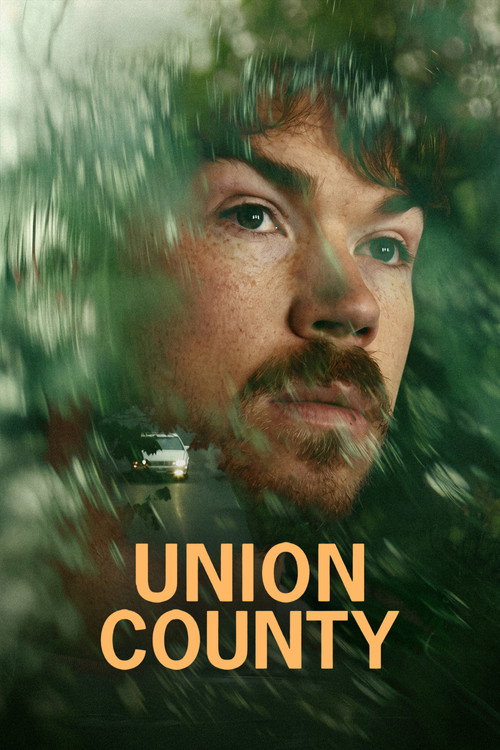
Union County (2026)
Directed by Adam Meeks
Union County arrives at Sundance with the measured gait of a film that knows exactly what it thinks, and is prepared to wait as long as necessary for you to agree.
Consciousness Markers
The film carries a quiet but persistent thesis: addiction is a health problem to be managed through community support and restorative justice, not a moral failing to be punished. The Guardian noted its advocacy for treating addiction as 'a problem to be solved.' The documentary-hybrid format grounds this argument in lived reality, softening the sermonizing considerably.
The film's production was formally highlighted under the See Change gender equity initiative for its female-led producing team. The casting itself reflects the demographics of rural Ohio organically, with real local recovery participants integrated alongside professional actors, suggesting representation as an ethical production practice rather than a narrative agenda.
The female-led production team (five named producers and a female composer) was formally tracked and celebrated under a gender equity initiative. This is a behind-the-scenes credential rather than a narrative argument, but the institutional framing earns a small score.
The film sits adjacent to Big Pharma critique by focusing on the human wreckage of the opioid epidemic, and Will Poulter's prior work on Dopesick adds thematic context. However, Union County itself directs its attention toward community recovery rather than corporate accountability, keeping systemic critique at a low simmer.
No LGBTQ+ themes, characters, or framing are present in the film or its surrounding discourse.
No racial consciousness themes are present. The film depicts a predominantly white rural Ohio community, and no discourse around racial dimensions of the opioid crisis appears in the film or its reception.
No climate themes, environmental messaging, or ecological framing of any kind appear in the film.
No body positivity themes or framing appear in the film.
No neurodivergence themes or characters are present in the film.
The film is set in the present day and makes no attempt to reframe or reinterpret historical events.
Why it received this score
Union County arrives at Sundance with the measured gait of a film that knows exactly what it thinks, and is prepared to wait as long as necessary for you to agree. Adam Meeks, returning to his native central Ohio, constructs a docu-fictional hybrid around the Adult Recovery Court of Bellefontaine, embedding Will Poulter and Noah Centineo among actual court participants, real judges, and recovery liaisons who play themselves. The result is a film that has done its homework, filed the paperwork, and would like you to know that rehabilitation is preferable to incarceration. We are not surprised by this position. We are, however, moderately impressed by the restraint with which it is advanced.
The film's progressive sensibilities are largely a production-level phenomenon. Behind the camera, a female-led producing team was formally catalogued under the See Change gender equity initiative, a distinction the film's Sundance materials were happy to flag. On screen, the agenda is considerably quieter: Poulter's performance is praised for its understatement, the narrative avoids the melodramatic "poverty porn" that Hollywood typically exports to the Rust Belt, and the real participants were granted daily opt-out rights, a production ethics detail that received more press attention than any scene in the film. The lecture energy is present, but it arrives in a cardigan and sensible shoes.
What the film is, ultimately, is a sincere and carefully assembled argument for compassion as policy. That argument is not new. It is not especially provocative. It is the kind of argument that generates approving reviews in The Guardian and a quiet life at the indie box office. Union County is the cinematic equivalent of a well-run support group: earnest, non-confrontational, and deeply committed to the proposition that people deserve better. We cannot argue with that. We can merely note it, score it, and move on to the next film.
Analysis generated by our Consciousness Algorithm


Synopsis
Assigned to a county-mandated drug court program, Cody Parsons embarks on the tenuous journey toward recovery amid the opioid epidemic in rural Ohio.