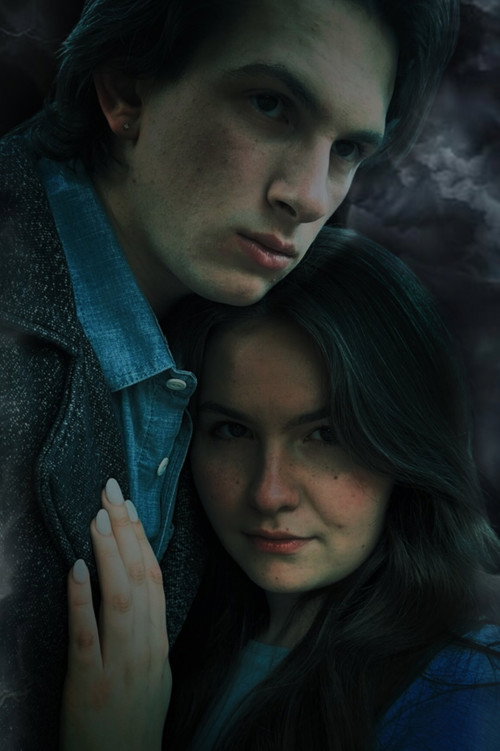
Twilight (But Worse Than Better) (2026)
Directed by Ayden Gardner
Twilight (But Worse Than Better) arrives, as its title honestly promises, in a state of deliberate diminishment.
Consciousness Markers
Isabel Hoggard plays both Mike and Rosalie, suggesting a degree of gender-fluid doubling that may be logistical rather than ideological. No documented casting philosophy beyond what small budgets and small casts demand.
No LGBTQ+ themes, characters, or subtext are documented anywhere in the available research. The film appears to reproduce the heterosexual Bella-Edward romance, albeit poorly.
The source material, Twilight, is frequently critiqued as anti-feminist. A parody of it could swing either direction, but no evidence suggests this production takes a feminist corrective stance.
No racial themes, commentary, or conscious casting choices along racial lines are documented. The research yields nothing on this front.
A vampire romance parody set in Forks, Washington has no documented climate messaging. The Pacific Northwest setting is incidental, not allegorical.
No anti-capitalist themes are present or implied. The Cullen family's inexplicable wealth is, as in the original, left entirely unexamined.
No body positivity themes are documented. The film does not appear to engage with body image in any deliberate way.
No neurodivergence themes or representation are present. Edward's century-old brooding is not, in this context, coded as anything clinically specific.
This is a parody of a fictional vampire story. There is no history to revise, and no attempt to revise any.
With no documented social messaging, no critical reception, and no apparent agenda beyond mimicking a viral YouTube parody format, the lecture podium remains mercifully empty.
Why it received this score
Twilight (But Worse Than Better) arrives, as its title honestly promises, in a state of deliberate diminishment. It is a 37-minute parody produced by a company called Checkles, directed by Ayden Gardner, and inspired by a viral YouTube parody of The Hunger Games. The chain of cultural transmission here is worth pausing over: we have a parody of a parody, filtered through a low budget, a three-person cast, and the particular creative energy of people who have presumably seen Twilight several times and wanted to do something about it. The result, at least in terms of social consciousness, is a document of almost archaeological blankness.
The research yields nothing. No discourse, no controversy, no documented agenda, no think-pieces, no Reddit threads in which anyone argues about what this film means for society. Isabel Hoggard plays both Mike and Rosalie, a casting choice that could, in a different film, carry weight. Here it almost certainly reflects the realities of working with a cast of three. The film does not appear to be making a point. It appears to be making a parody. These are different activities, and it is increasingly rare to encounter a production that understands the distinction.
On our ten-point spectrum of progressive cultural markers, Twilight (But Worse Than Better) scores near zero across the board. It does not lecture. It does not represent. It does not crusade, revise, or celebrate. It simply takes a story about a pale, immortal teenager and makes it worse, on purpose, in under forty minutes. In the current cultural climate, this qualifies as a form of restraint that borders on the radical.
Analysis generated by our Consciousness Algorithm
Synopsis
Bella moves to Forks and finds herself madly in love with a vampire named Edward. Parody of the vampire cult classic Twilight (2008),and inspired by the 2025 parody "The Hunger Games (but better)".