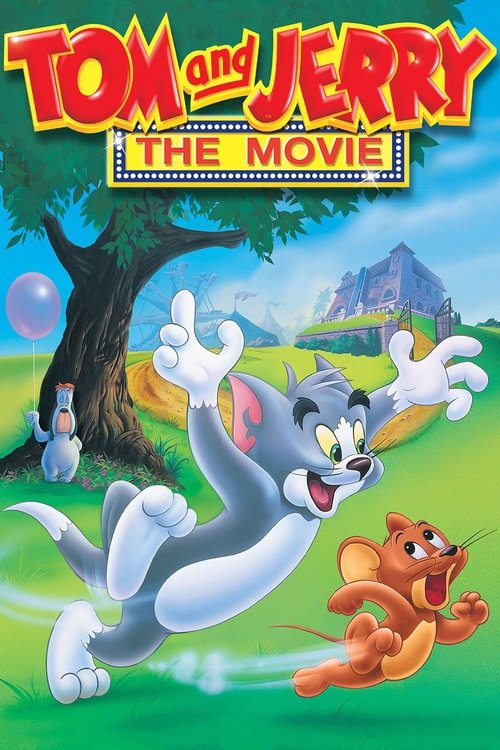
Tom and Jerry: The Movie (1992)
Directed by Phil Roman
No — Tom and Jerry: The Movie is not woke, scoring 6 out of 100 on our wokeness meter.
The 1992 Tom and Jerry feature arrives with a curious distinction: it is the only time the cat and mouse were given full speaking roles, a decision the production notes attribute to a fear that two mute leads could not carry a feature.
Consciousness Markers
The villains' greed is the engine of the plot, complete with the song '(Money is Such) A Beautiful Word,' but this is a standard cartoon-greed trope rather than a systemic critique of capitalism.
Songs like 'Friends to the End' and 'All in How Much We Give' carry mild moralizing about friendship and generosity, but the film preaches far less than it pratfalls.
Robyn is a plucky young girl who drives the rescue plot, but the film is a 1992 children's musical with no articulated feminist agenda, and its villain is a stock wicked-stepmother figure.
The voice cast is overwhelmingly white, and the human characters are drawn in a conventional early-90s manner with no deliberate diversity casting.
There are no LGBTQ+ characters, themes, or subtext anywhere in the film.
The film engages with no racial themes or commentary whatsoever.
No environmental or climate themes are present.
Ferdinand the dachshund's obesity is played entirely for slapstick mockery, the opposite of body-positive representation.
Captain Kiddie's split personality is a comedic villain gimmick, not a considered depiction of neurodivergence.
The film is a fictional cartoon adventure with no historical subject matter to revise.
Why it received this score
The 1992 Tom and Jerry feature arrives with a curious distinction: it is the only time the cat and mouse were given full speaking roles, a decision the production notes attribute to a fear that two mute leads could not carry a feature. The result is a musical about an orphaned girl named Robyn Starling, her wicked guardian Aunt Figg, and a custody fight over a family fortune. Miramax released it in the United States in the summer of 1993. It grossed a modest sum and was dismissed by critics. Time has not mounted a defense.
On the question of social consciousness, the ledger is nearly empty. Robyn is a resourceful child who drives the rescue, though the film surrounds her with a stock wicked stepmother and a shrieking lawyer, so the gender politics amount to a girl outrunning a cartoon harridan. The villains' avarice powers everything, and there is a musical number titled "(Money is Such) A Beautiful Word," which is as close as the film comes to an economic argument. It is a cartoon trope about greed, not a critique of a system. The songs "Friends to the End" and "All in How Much We Give" offer gentle encouragement toward kindness and generosity. Ferdinand, the obese dachshund, exists to be mocked for his weight through skateboard gags. Captain Kiddie's split personality is a villain's stagecraft, nothing more.
The voice cast is uniformly white, the human designs are conventional for the period, and the film shows no interest in race, climate, or history. No LGBTQ characters appear. No neurodivergent reading survives contact with the text. Nothing here revises any record. The film does possess a pratfall every twelve seconds, which is its own kind of honesty. We file it under harmless.
Analysis generated by our Consciousness Algorithm


Synopsis
The popular cartoon cat and mouse are thrown into a feature film. The story has the twosome trying to help an orphan girl who is being berated and exploited by a greedy guardian.
Questions about Tom and Jerry: The Movie
Is Tom and Jerry: The Movie woke?
No — Tom and Jerry: The Movie is not woke, scoring 6 out of 100 on our wokeness meter. That earns it a verdict of Ultra Based.
Does Tom and Jerry: The Movie have any woke elements?
Very few. None of the 10 markers reaches 30, the level where a marker counts as present; the highest is Eat the Rich at 15.
How does Tom and Jerry: The Movie compare to other 1992 movies?
It ranks #46 of the 74 films from 1992 we've scored; their average is 12. The wokest is The Crying Game (62).
How is the Woke Score calculated?
An AI-assisted process researches the film and its reception, scores it 0–100 on ten markers, then combines those into one 0–100 Woke Score. It measures a specific set of 2020s cultural themes, not film quality.