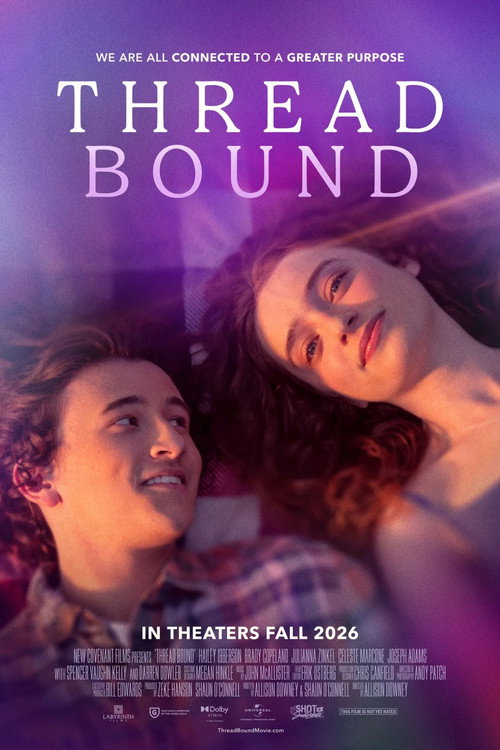
Thread Bound (2026)
Directed by Allison Downey
Thread Bound arrives from Aberdeen, South Dakota, a location not traditionally associated with the cutting edge of progressive cultural production, and this geographical fact turns out to be the most useful piece of critical information available.
Consciousness Markers
Faith-forward independent films carry a modest inherent risk of sermonizing, and the premise of discovering something greater connecting it all suggests a gentle spiritual thesis. However, the tone appears earnest rather than hectoring, and no reviewers have flagged heavy-handed messaging.
The protagonist is a teenage girl navigating personal trauma, and the director is a woman. Neither element constitutes a feminist agenda in any meaningful sense; the story is framed around faith and healing, not gender consciousness.
No evidence of casting decisions driven by representation mandates. The film is a small regional indie from South Dakota with no documented diversity-conscious casting strategy.
No LGBTQ+ themes, characters, or subtext are present or documented anywhere in the film's materials or reception.
No racial consciousness themes are present. The film's intergenerational trauma narrative is framed entirely through a faith and family lens with no racial dimension documented.
No climate themes whatsoever. The South Dakota setting is a backdrop, not a political statement.
No anti-capitalist messaging detected. The film is concerned with personal grief and healing, not economic critique.
No body positivity themes are present or implied in any available documentation about the film.
No neurodivergence themes are present. The mysterious healing gift of the central boy character does not appear to be framed in a neurodivergence context.
The film is an original contemporary drama with no historical setting or revisionist historical framing.
Why it received this score
Thread Bound arrives from Aberdeen, South Dakota, a location not traditionally associated with the cutting edge of progressive cultural production, and this geographical fact turns out to be the most useful piece of critical information available. Directed by Allison Downey and released to a limited regional audience in September 2026, the film concerns a skeptical teenager named Ellie who encounters a boy with a healing gift, after which the two proceed to work through intergenerational family trauma, grief, and matters of faith. The cultural research apparatus has returned essentially nothing in the way of progressive discourse, controversy, or activist adjacency. We note this not as a failure of research, but as a data point of some diagnostic clarity.
The film's thematic vocabulary, healing, forgiveness, connection, something greater than ourselves, belongs to an older and more traditionally American spiritual register. It is, in the taxonomy of our analysis, closer to a Hallmark original than to a social justice manifesto. The lone traces of scorable content are a female protagonist navigating personal pain (which the feminist marker registers as a faint 4, generously) and a mild undercurrent of spiritual thesis-delivery that edges the lecture energy score to an 8. Neither figure should alarm anyone. The healing gift at the center of the plot is supernatural in framing, not a metaphor for disability accommodation.
In a landscape where this critic is frequently called upon to document films straining under the weight of their own moral ambitions, Thread Bound presents a different kind of challenge: the challenge of thoroughness when there is very little to be thorough about. It is a quiet, regional, faith-inflected independent film made by people who appear to have been focused on telling a story. The woke detection instruments have been carefully calibrated, the readings taken, and the gauges have barely twitched. We record this outcome without judgment, and file it accordingly.
Analysis generated by our Consciousness Algorithm
Synopsis
When a skeptical teen meets a mysterious boy with a healing gift, they begin a journey to unravel the painful threads of their past, and discover that something greater may be connecting it all.