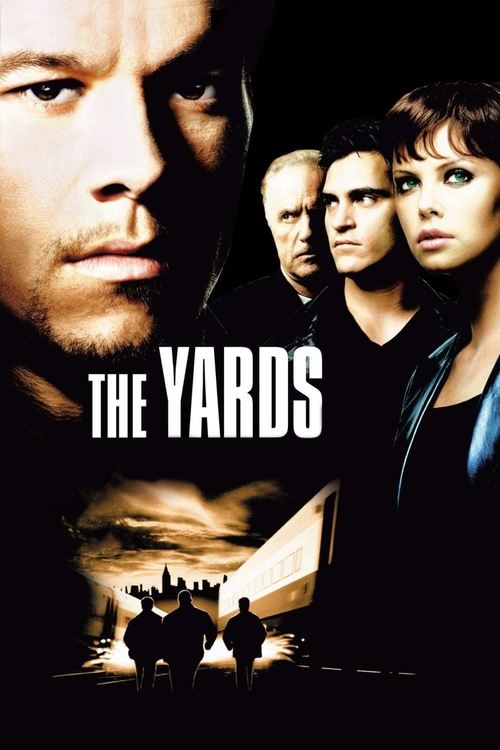
The Yards (2000)
Directed by James Gray
No — The Yards is not woke, scoring 14 out of 100 on our wokeness meter.
James Gray's The Yards arrives with the solemn gait of a film that believes corruption is a tragedy rather than a policy failure.
Consciousness Markers
The film depicts corporate bribery, sabotage, and political corruption in the contract system, offering a critique of corrupt capitalism without explicit anti-capitalist rhetoric.
A minority-owned Puerto Rican firm competes for rail contracts, but race is a plot mechanism rather than a subject of racial consciousness or systemic critique.
The cast is led by white actors, with Hispanic supporting players and a Puerto Rican-owned firm in the plot, but this is incidental rather than a deliberate representation-casting agenda.
The film has a moral conclusion about corruption, but it remains a crime drama rather than a preachy lecture.
No LGBTQ+ characters, themes, or subtext are present.
Female characters exist in the story, but the film does not advance a feminist agenda or critique patriarchy.
No environmental or climate-crisis themes appear.
No body-positivity themes or messaging are present.
No neurodivergence themes or characters are present.
The film is inspired by a real corruption scandal, but it does not revise or reinterpret history in a woke manner.
Why it received this score
James Gray's The Yards arrives with the solemn gait of a film that believes corruption is a tragedy rather than a policy failure. Leo Handler returns from prison to the rail yards of Queens, where contractors repair subway cars and rival firms sabotage one another's work to win bids. The machinery of graft is rendered with a craftsman's patience: bribes, Knicks tickets, a Puerto Rican-owned competitor undercut by vandalism, and a backroom negotiation that decides who gets to keep repairing trains for the city. There is a genuine contempt here for the men who trade contracts over the bodies of the people who work beneath them. We are meant to feel the weight of that rot, and we do, in the way one feels the cold in an unheated room. The film is angry at capital. It is not, however, interested in imagining an alternative to it.
The social consciousness on display is of an older, quieter variety. A minority-owned firm competes for contracts, and the plot uses that rivalry as a lever, not as a thesis. Race is a mechanism of the story, never its subject. The women, including Charlize Theron and Faye Dunaway, are given grief and betrayal and little else to work with, and the film does not appear troubled by this. There is no examination of the body, no neurology to interrogate, no climate to mourn, no queerness to acknowledge. The moral reckoning arrives at the end, when Leo testifies against the men who raised him, and it lands as the natural conclusion of a crime drama rather than a sermon delivered from a pulpit.
What remains is a well-built, glum, deeply traditional picture about a man discovering that the system he served will discard him the moment he becomes inconvenient. It is a fine thing to watch. It is not trying to teach us anything we did not already suspect.
Analysis generated by our Consciousness Algorithm


Synopsis
In the rail yards of Queens, contractors repair and rebuild the city's subway cars. These contracts are lucrative, so graft and corruption are rife. When Leo Handler gets out of prison, he finds his aunt married to Frank Olchin, one of the big contractors; he's battling with a minority-owned firm for contracts.
Questions about The Yards
Is The Yards woke?
No — The Yards is not woke, scoring 14 out of 100 on our wokeness meter. That earns it a verdict of Ultra Based.
Does The Yards have any woke elements?
1 of the 10 markers register at 30 or above, led by Eat the Rich (35). On Eat the Rich: The film depicts corporate bribery, sabotage, and political corruption in the contract system, offering a critique of corrupt capitalism without explicit anti-capitalist rhetoric.
How does The Yards compare to other 2000 movies?
It ranks #40 of the 125 films from 2000 we've scored; their average is 13. The wokest is But I'm a Cheerleader (72).
How is the Woke Score calculated?
An AI-assisted process researches the film and its reception, scores it 0–100 on ten markers, then combines those into one 0–100 Woke Score. It measures a specific set of 2020s cultural themes, not film quality.