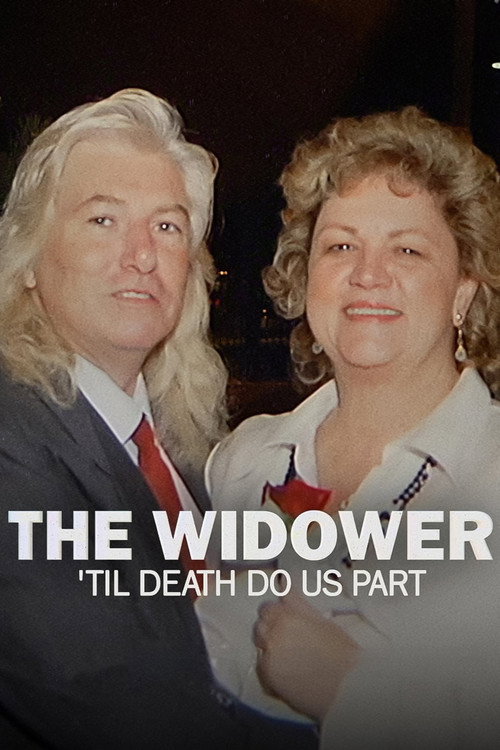
The Widower: 'Til Death Do Us Part (2026)
Directed by Chris Smith
Chris Smith, the documentarian who gave us Tiger King and Fyre, turns his camera on Thomas Randolph, a Las Vegas man who married six times and buried four of those wives under circumstances that strained the definition of coincidence.
Consciousness Markers
The film implicitly centers the vulnerability of women targeted by a manipulative male predator, and public discourse around it touched on coercive control and lovebombing. The framing stops well short of explicit feminist advocacy, however, remaining grounded in criminal reporting.
The subject's nickname in press coverage was 'The Black Widower,' a reference to his pattern of killing wives. There is no meaningful racial consciousness framing in the documentary itself, and the nickname's racial dimension appears to be incidental rather than thematically explored.
Public discourse around the film touched on systemic frustration with legal delays and the justice system's failure to stop Randolph for decades. The film gestures toward institutional critique, though this is not its primary register and it does not sermonize at length.
This is a documentary about a real case with real people. No casting decisions were made for representational purposes, and no such framing is evident in the film's approach.
There are no LGBTQ+ themes, subjects, or framing present. The case centers on heterosexual marriages, and no such identity dimension surfaces in the coverage.
No climate or environmental themes are present. This is a Las Vegas murder case documentary. The desert setting is not a metaphor.
No anti-capitalist framing is present. The killer's financial motives are treated as criminal psychology, not systemic critique.
No body positivity themes are present or relevant to the subject matter.
No neurodivergence framing is present. The subject's psychology is discussed in terms of predatory manipulation, not neurodivergent identity.
The film documents a contemporary criminal case and makes no attempt to reframe or reinterpret historical events through a modern ideological lens.
Why it received this score
Chris Smith, the documentarian who gave us Tiger King and Fyre, turns his camera on Thomas Randolph, a Las Vegas man who married six times and buried four of those wives under circumstances that strained the definition of coincidence. The film unfolds through archival Dateline NBC footage, a 16-year journalistic relationship, and the patient testimony of a detective who clearly spent too much of his career thinking about one man. It is, by the standards of the genre, well-assembled. It is also, by the standards of the woke spectrum, almost entirely inert.
The film's social consciousness, such as it is, operates entirely at the level of the crime itself. The victims were women. The predator was charming. The legal system took fifteen years to catch up. True-crime audiences have metabolized these observations into a sub-genre unto themselves, and the film dutifully supplies the vocabulary: lovebombing, coercive control, manipulation of vulnerable people. These are real phenomena being described, not progressive talking points being inserted. The distinction matters. A documentary about a man who killed his wives is not a feminist manifesto simply because the wives were women.
What the film lacks in ideological architecture, it makes up for in procedural grimness. The Movieguide reviewer who gave it a "SKIP IT" and lamented its absence of spiritual hope was not wrong about the tone, only about whether that constitutes a flaw. This is a document of a very bad man navigating a very slow justice system, told by people who watched it happen in real time. The cultural temperature here is room temperature. That is not a criticism. It is a classification.
Analysis generated by our Consciousness Algorithm


Synopsis
A journalist and a detective uncover the truth about a killer whose charm masked a trail of failed marriages and suspicious deaths.
Critic Reviews
“A tightly packed and fast-paced, but focused, documentary that I highly recommend watching.”
“The suspect is wildly bizarre and so full of himself that he becomes somewhat of a train wreck as his hubris overtakes him.”
“'Til Death Do Us Part offers an unusual angle on somewhat typically Netflixian true crime fodder – and there's enough good work here to give it some journalistic integrity.”
“The movie amounts to little more than another item for Netflix's well-stocked true-crime emporium, at a bargain-basement price.”