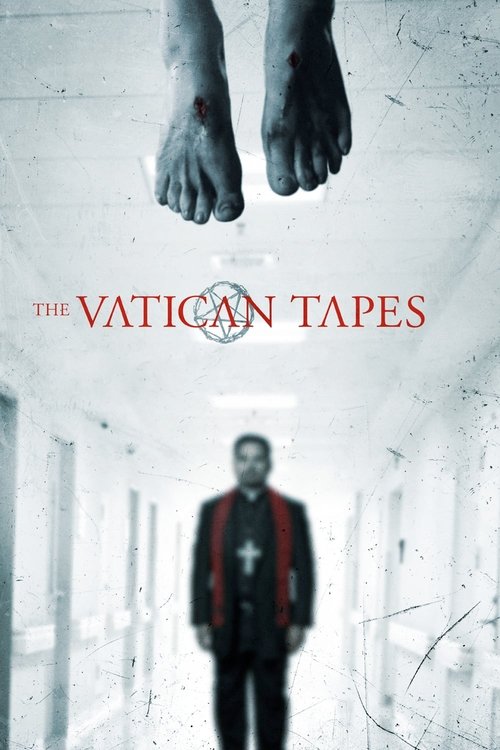
The Vatican Tapes (2015)
Directed by Mark Neveldine
No — The Vatican Tapes is not woke, scoring 6 out of 100 on our wokeness meter.
Somewhere in a vault beneath Vatican City, according to the opening title card, the Church keeps thousands of hours of footage it deems unfit for public consumption.
Consciousness Markers
The cast includes Michael Peña and Djimon Hounsou in prominent roles, but their presence is natural to the story and not framed as a deliberate representation statement.
No LGBTQ+ characters, themes, or subtext are present.
The film features a female protagonist and a female psychiatrist, but it does not advance any feminist agenda or commentary.
Race is not addressed or made a thematic concern at any point.
There is no environmental or climate-related content.
The film contains no critique of capitalism or wealth inequality.
No body positivity themes or messaging are present.
Psychiatric hospitalization appears as a plot device for possession, not as neurodivergence representation.
The film is fictional supernatural horror and does not revise or reinterpret historical events.
The film does not preach or deliver explicit social or political lessons.
Why it received this score
Somewhere in a vault beneath Vatican City, according to the opening title card, the Church keeps thousands of hours of footage it deems unfit for public consumption. The Vatican Tapes presents itself as the first of these reels, stolen and leaked, then spends its running time being an entirely conventional possession picture about a young woman named Angela, a coma, a psychiatric ward, and a cardinal who arrives too late with his Eucharist and his eggs. It opened in 427 theaters, finished fifteenth for the weekend, and vanished. The critics were unkind. The tape, it turns out, was not the explosive document the framing promised.
The cultural inventory here is remarkably sparse. Michael Peña plays Father Lozano and Djimon Hounsou plays Vicar Imani. Both are capable. Both are simply present, working priests and archivists with no commentary attached to their presence. That is the whole of the film's representational gesture, and it registers as casting rather than argument. Angela is our protagonist and Dr. Richards is her psychiatrist, but the screenplay gives neither of them anything to say about power, gender, or the institutions that fail them. Dr. Richards exists to be taunted in Aramaic. The psychiatric hospital is a staging ground for demonic spectacle, not a portrait of mental illness. There is no wealth to redistribute, no climate to mourn, no body to celebrate, no closet to open, no lesson to deliver.
Theology remains, and it arrives as gore. Angela's parentage inverts the virgin birth, her three eggs mock the Trinity, her resurrection mirrors Christ's. This is blasphemy as special effect, not historical reinterpretation. The film preaches nothing. It has no thesis beyond the one printed on the poster, which is that the devil is real and the archives are deep. A tape in a vault, indeed, and one that earned its sequestration on grounds of dullness alone.
Analysis generated by our Consciousness Algorithm
Part of


Synopsis
In a highly secured vault deep within the walls of Vatican City, the Catholic Church holds thousands of old films and video footage documenting exorcisms/supposed exorcisms and other unexplained religious phenomena they feel the world is not ready to see. This is the first tape - Case 83-G - stolen from these archives and exposed to the public by an anonymous source.
Questions about The Vatican Tapes
Is The Vatican Tapes woke?
No — The Vatican Tapes is not woke, scoring 6 out of 100 on our wokeness meter. That earns it a verdict of Ultra Based.
Does The Vatican Tapes have any woke elements?
Very few. None of the 10 markers reaches 30, the level where a marker counts as present; the highest is Representation Casting at 15.
How does The Vatican Tapes compare to other 2015 movies?
It ranks #200 of the 289 films from 2015 we've scored; their average is 15. The wokest is Chi-Raq (78).
How is the Woke Score calculated?
An AI-assisted process researches the film and its reception, scores it 0–100 on ten markers, then combines those into one 0–100 Woke Score. It measures a specific set of 2020s cultural themes, not film quality.