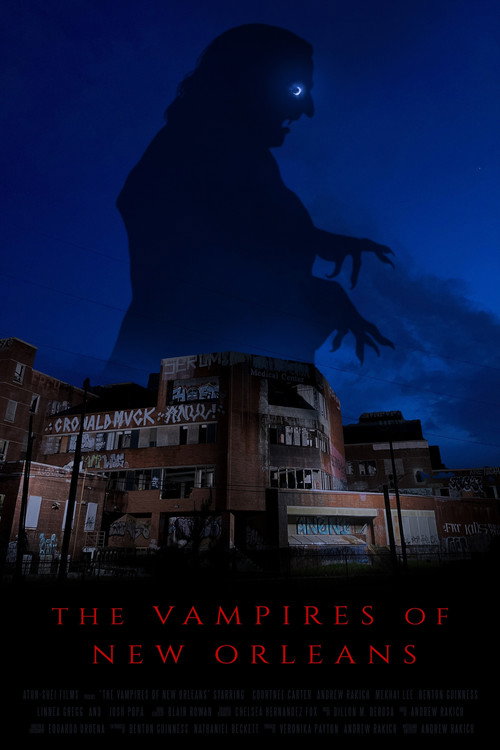
The Vampires of New Orleans (2026)
Directed by Andrew Rakich
Andrew Rakich arrives at the vampire genre with the energy of a man who has spent several years correcting people on the internet about the Civil War and has now decided that metaphor should do some of the heavy lifting.
Consciousness Markers
Racial consciousness is the film's entire skeletal structure. A plantation-owner vampire who views Black people as non-human, a Black woman's revenge arc, historical racial violence reframed as literal predation, and the director's documented career of countering Lost Cause mythology all combine into one of the more thoroughgoing racial allegory frameworks in recent horror. The film is not subtle about this.
The film systematically dismantles the tourist-friendly, romanticized Anne Rice version of New Orleans vampire lore and replaces it with a reading centered on racial terror and colonial violence. Real historical figures are recast as predators who continue targeting marginalized communities. The director's broader body of work is explicitly dedicated to historical revisionism against Lost Cause mythology, and that sensibility is fully present here.
The film centers a Black female protagonist in the lead revenge narrative and features a 'Black Van Helsing' figure, with the casting deliberately structured to reflect the racial dynamics the story is critiquing. The production drew heavily on local New Orleans community members, grounding representation in authentic specificity rather than tokenism.
The hybrid docudrama format is itself a delivery mechanism for historical argument, and a film that combines horror fiction with documentary investigation into systemic racial violence has a thesis to defend. The research notes explicit critiques of colonial history and 'Gothic Socialism' framing in promotional discourse. It is a film that wants to teach you something, and it is not shy about that ambition.
The protagonist is a woman pursuing violent justice for her murdered sister, which carries a recognizable revenge-narrative feminist structure. However, gender politics are clearly secondary to racial politics as the film's animating concern, and the feminist reading is more incidental than foregrounded.
The plantation-owner vampire is implicitly a figure of colonial economic extraction, and the framing of historical vampires as predators of marginalized populations carries an anti-capitalist undertone. It remains an undertone, not a thesis, so the score reflects presence without primacy.
No LGBTQ+ themes, characters, or storylines are present in any available research or metadata for this film.
No climate themes, environmental commentary, or ecological messaging appear anywhere in the film's materials or research summary.
No body positivity themes or messaging are present in any available evidence about this film.
No neurodivergence themes or representation are present in any available evidence about this film.
Why it received this score
Andrew Rakich arrives at the vampire genre with the energy of a man who has spent several years correcting people on the internet about the Civil War and has now decided that metaphor should do some of the heavy lifting. The result is a hybrid docudrama in which the undead of New Orleans are not brooding Frenchmen with complicated feelings about immortality, but rather historical predators in arrested development, still working through their antebellum property rights. The plantation-owner vampire at the center of the fictional narrative reserves his moral qualms exclusively for white victims, which is the film's central and least subtle point, delivered with the confidence of someone who has made this argument before in a different format.
The revisionist project here is thorough and not accidental. Rakich is systematically dismantling the Anne Rice version of New Orleans, that perfumed Gothic romance in which slaveholders get to be tragic, and replacing it with something considerably more pointed. The Black female protagonist seeking vengeance for her murdered sister, assisted by a figure the promotional materials call a "Black Van Helsing," occupies the moral center of the story with a clarity of purpose that leaves no room for ambiguity about where the film's sympathies lie. This is, to be clear, a coherent artistic choice. It is also a choice that forecloses a great deal of interpretive space and arrives at its conclusions at approximately the same time the opening credits do.
The documentary framing, which investigates New Orleans' real vampire subculture alongside the fictional narrative, adds a layer of academic credibility that the film clearly desires. Rakich is at heart an essayist, and this is an essay with a runtime of two hours and thirty-five minutes. It is a serious, committed, micro-budget work from a filmmaker who knows exactly what he thinks and is prepared to spend the better part of three hours confirming it. Audiences who already agree will find the experience deeply satisfying. The rest will at least learn something about the Axeman of New Orleans, which is more than most horror films offer.
Analysis generated by our Consciousness Algorithm
Synopsis
The horrors of New Orleans history reverberate down to the present in this docudrama combining Southern Gothic terror with investigations into the city's real-life folklore.