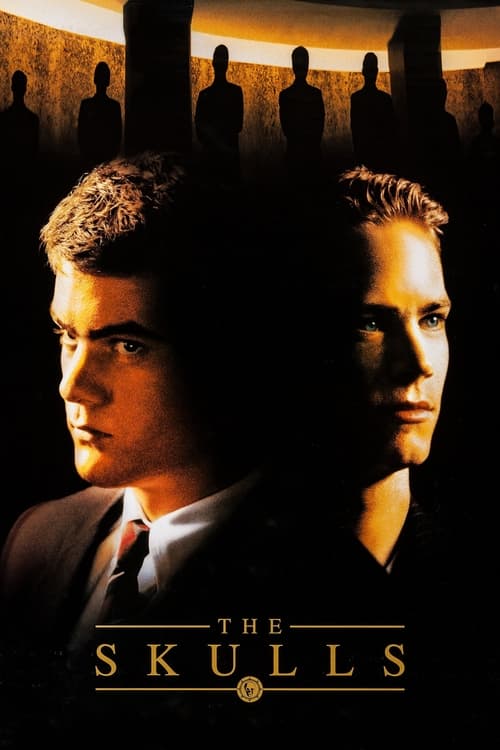
The Skulls (2000)
Directed by Rob Cohen
No — The Skulls is not woke, scoring 13 out of 100 on our wokeness meter.
The Skulls arrives from 2000 as a time capsule of preppy paranoia.
Consciousness Markers
The plot critiques a secret society of wealthy elites who rig institutions for their own advancement, echoing 'eat the rich' resentment, though it frames this as corruption rather than systemic capitalism.
Hill Harper and Steve Harris appear in supporting roles as Will Beckford and Detective Sparrow, but they exist naturally within the story without any commentary on their race.
The film gestures at moralizing about elite corruption and the price of power, but delivers it through thriller plotting rather than preachy sermonizing.
Leslie Bibb's Chloe is largely a love interest and helper figure; the film offers no feminist critique or agency-driven arc for its women.
The film's central conflict is about class and elite power, not race; the Black characters are present but the narrative makes no racial commentary.
No LGBTQ+ characters or themes appear anywhere in the film.
No environmental or climate themes whatsoever.
No body positivity themes present.
No neurodivergent characters or themes.
The film draws on conspiracy theories about Yale's Skull and Bones, but this is fictional speculation rather than a revisionist reframing of history.
Why it received this score
The Skulls arrives from 2000 as a time capsule of preppy paranoia. Rob Cohen treats Yale's Skull and Bones as the binding agent of American power, and the film follows scholarship rower Luke into rituals, oaths, and the sort of secret handshake that ruins a lunch. It is not a documentary. It is a thriller with a nine percent Rotten Tomatoes rating and a B CinemaScore, which is its own kind of class system.
On representation, Hill Harper's Will and Steve Harris's Detective Sparrow are present and competent, folded into the plot without the film stopping to explain their race. That is casting, not a thesis. Leslie Bibb's Chloe exists mostly to worry, assist, and kiss, so the feminist pulse is faint. No LGBTQ themes, no climate sermon, no body positivity, no neurodivergent arc. The movie is too busy with blackmail, security tapes, and a duel on a private island to bother with those concerns.
Its social consciousness is economic and conspiratorial. The Skulls are rich men rigging courts, senators, and universities for their children, which gives the film a faint eat-the-rich odor. But the target is corruption, not capitalism itself. The moral is that elite networks are bad because they cheat, not because hierarchy is rotten. History is not revised; it is borrowed from conspiracy lore. The lecturing is mild, delivered through chase scenes and courtroom whispers instead of a podium. By the end, Luke walks away from power, and the film seems to believe this is a radical act. It is a resigned one. The whole enterprise plays as a minor relic of millennial unease, watchable for Paul Walker's jawline and Craig T. Nelson's paternal menace, and for the sobering reminder that secret societies remain excellent at public relations.
Analysis generated by our Consciousness Algorithm


Synopsis
A senior at an Ivy League college, who depends on scholarships and working on the side, gets accepted into the secret society The Skulls. He hopes it betters chances at Harvard but The Skulls is not what he thought and comes at a price.
Questions about The Skulls
Is The Skulls woke?
No — The Skulls is not woke, scoring 13 out of 100 on our wokeness meter. That earns it a verdict of Ultra Based.
Does The Skulls have any woke elements?
1 of the 10 markers register at 30 or above, led by Eat the Rich (35). On Eat the Rich: The plot critiques a secret society of wealthy elites who rig institutions for their own advancement, echoing 'eat the rich' resentment, though it frames this as corruption rather than systemic capitalism.
How does The Skulls compare to other 2000 movies?
It ranks #41 of the 125 films from 2000 we've scored; their average is 13. The wokest is But I'm a Cheerleader (72).
How is the Woke Score calculated?
An AI-assisted process researches the film and its reception, scores it 0–100 on ten markers, then combines those into one 0–100 Woke Score. It measures a specific set of 2020s cultural themes, not film quality.