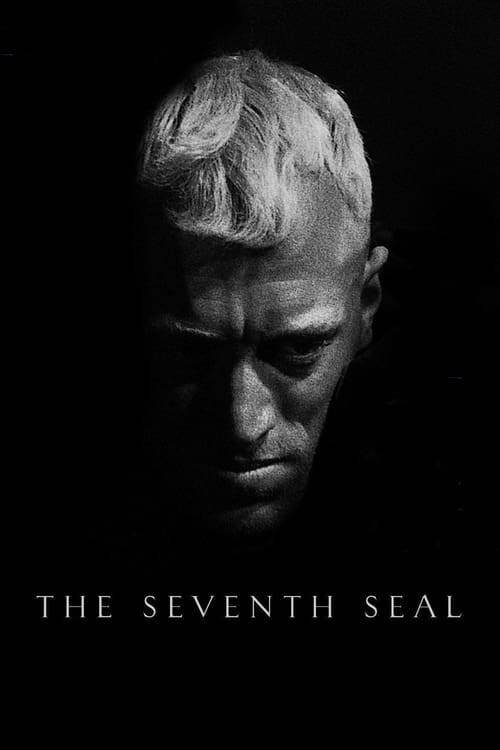
The Seventh Seal (1957)
Directed by Ingmar Bergman
No — The Seventh Seal is not woke, scoring 2 out of 100 on our wokeness meter.
The Seventh Seal arrives from 1957, which is to say from a cinematic era that had not yet developed the vocabulary we now apply to such things.
Consciousness Markers
The film is explicitly allegorical and sermon-like in structure, but its preaching is existential and theological rather than modern social messaging.
The cast is entirely Swedish and ethnically homogeneous, reflecting the 1957 production context with no deliberate diversity casting.
No LGBTQ+ characters, themes, or subtext appear anywhere in the film.
Women appear as wife, servant, and condemned witch within a medieval framework; no feminist critique or agenda is advanced.
The film engages no racial themes or commentary whatsoever.
The Black Death functions as a theological and existential backdrop, not an environmental or climate allegory.
Jöns mocks the church painter and the ideological fervor of the Crusades, but this is religious and existential critique, not an economic one.
No body-positivity themes are present.
No neurodivergence themes or representation appear.
The film freely mixes medieval and modern elements as allegory, but it makes no revisionist historical argument about real events or peoples.
Why it received this score
The Seventh Seal arrives from 1957, which is to say from a cinematic era that had not yet developed the vocabulary we now apply to such things. A knight named Antonius Block returns from the Crusades into a plague-ridden Sweden and challenges Death to a chess match, hoping to postpone the inevitable long enough to perform one meaningful act. The cast is uniformly Swedish. The women are wife, servant, and condemned witch. The theology on display is Lutheran, bleak, and concerned entirely with the silence of God. There is no racial commentary, no economic critique, no environmental allegory, no body politics, no neurodivergent representation, and nothing resembling a modern identity narrative. Bergman was chasing God through the silence, not auditing a casting call.
The film is, however, built like a sermon. Melvyn Bragg observed that it unfolds as an argument, each scene stacked like a panel of stained glass, and the flagellants, the witch burning, and the final Dance of Death all carry the weight of moral instruction. A viewer braced for scolding will get scolding. It simply concerns dying without certainty, the torment of belief that receives no answer, and the possibility of faith in a post-Holocaust age. The lecturing is genuine. The syllabus is medieval.
Jöns mocks the church painter for feeding the ideological fervor that sent men off to the Crusades, and that burst of anticlerical spleen is the closest the film comes to political comment. It is aimed at religious enthusiasm, not at money. What remains is a black-and-white allegory about a man who demands proof and receives none, interrupted by a picnic of wild strawberries and closed by a silhouette dance over the hillside. We file it accordingly: a solemn artifact of existential anguish, loose with its medieval detail, and innocent of contemporary social messaging. It has been lecturing audiences for nearly seventy years, and never once about anything fashionable.
Analysis generated by our Consciousness Algorithm


Synopsis
When disillusioned Swedish knight Antonius Block returns home from the Crusades to find his country in the grips of the Black Death, he challenges Death to a chess match for his life. Tormented by the belief that God does not exist, Block sets off on a journey, meeting up with traveling players Jof and his wife, Mia, and becoming determined to evade Death long enough to commit one redemptive act while he still lives.
Questions about The Seventh Seal
Is The Seventh Seal woke?
No — The Seventh Seal is not woke, scoring 2 out of 100 on our wokeness meter. That earns it a verdict of Ultra Based.
Does The Seventh Seal have any woke elements?
Very few. None of the 10 markers reaches 30, the level where a marker counts as present; the highest is Lecture Energy at 10.
How does The Seventh Seal compare to other 1957 movies?
It ranks #7 of the 13 films from 1957 we've scored; their average is 3. The wokest is 12 Angry Men (18).
How is the Woke Score calculated?
An AI-assisted process researches the film and its reception, scores it 0–100 on ten markers, then combines those into one 0–100 Woke Score. It measures a specific set of 2020s cultural themes, not film quality.