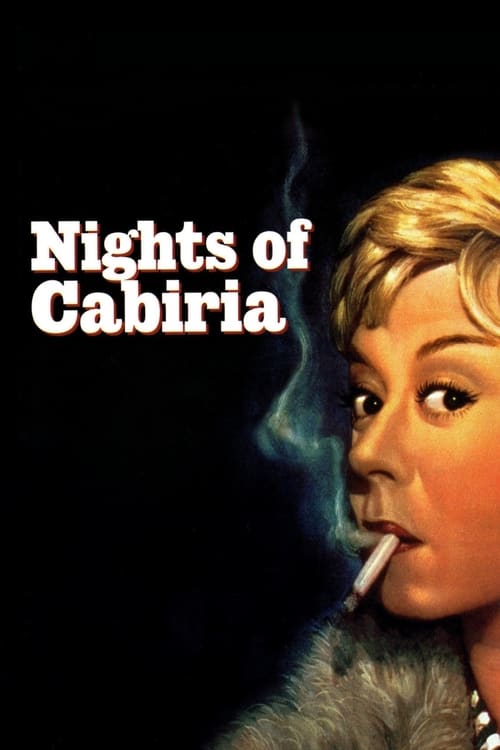
Nights of Cabiria (1957)
Directed by Federico Fellini
No — Nights of Cabiria is not woke, scoring 2 out of 100 on our wokeness meter.
Federico Fellini's Nights of Cabiria (1957) follows Giulietta Masina's small, strutting prostitute through a Rome of caves, shrines, and cheap nightclubs.
Consciousness Markers
The cast is entirely Italian and European, with no deliberate modern diversity casting or commentary on representation.
There are no LGBTQ+ themes, characters, or subtext in the film.
Although Cabiria is a sympathetic female protagonist, the film does not advance a modern feminist agenda or critique patriarchy in contemporary activist terms.
Race and racial identity are not addressed or made thematically relevant.
There is no environmental or climate-crisis theme.
The film depicts poverty and exploitation, but not as a modern anti-capitalist or eat-the-rich polemic.
There is no body-positivity theme or challenge to conventional beauty standards as a social message.
Cabiria's childlike mannerisms are not framed through a modern neurodivergence or mental-health advocacy lens.
The film is not a historical revision or counter-narrative; it is a contemporary postwar Italian character drama.
The film does not lecture the audience on social or political issues; it tells a tragicomic personal story.
Why it received this score
Federico Fellini's Nights of Cabiria (1957) follows Giulietta Masina's small, strutting prostitute through a Rome of caves, shrines, and cheap nightclubs. She is pushed into a river by a boyfriend who steals her purse, rescued by children, hypnotized on a stage, courted by a movie star, and finally abandoned on a cliff by a man who takes her life savings. It is a tragicomedy of stubborn endurance. The film won the Academy Award for Best Foreign Language Film, the second consecutive such win for Fellini and Italy, and Masina's performance remains the standard against which such performances are measured.
An auditor of contemporary social consciousness will find the ledger nearly empty, and this is not a complaint. Cabiria is a woman, but the film does not argue a case about women; it watches one. The poverty is real and unromantic, and it is never converted into a thesis about systems. The religious procession is neither endorsed nor indicted. The charity worker handing out food to the cave dwellers, a sequence censors removed after the premiere and restored in 1998, offers a portrait of mercy with no policy proposal attached. Race, climate, capital, and the body are simply not the film's business.
What remains is the ending. Cabiria walks out of the woods ruined, and a parade of young people on scooters gathers around her, playing music, dancing, and she smiles as a line of black mascara runs down her cheek. The moment earns its uplift without instructing anyone. By the standards of the current index, the film registers at zero, which in this case is a mark of honor. It has no sermon to deliver and no audience to correct. It has a woman, a road, and a refusal to look away.
Analysis generated by our Consciousness Algorithm


Synopsis
Rome, 1957. A woman, Cabiria, is robbed and left to drown by her boyfriend, Giorgio. Rescued, she resumes her life and tries her best to find happiness in a cynical world. Even when she thinks her struggles are over and she has found happiness and contentment, things may not be what they seem.
Questions about Nights of Cabiria
Is Nights of Cabiria woke?
No — Nights of Cabiria is not woke, scoring 2 out of 100 on our wokeness meter. That earns it a verdict of Ultra Based.
Does Nights of Cabiria have any woke elements?
No. All 10 markers score zero.
How does Nights of Cabiria compare to other 1957 movies?
It ranks #7 of the 13 films from 1957 we've scored; their average is 3. The wokest is 12 Angry Men (18).
How is the Woke Score calculated?
An AI-assisted process researches the film and its reception, scores it 0–100 on ten markers, then combines those into one 0–100 Woke Score. It measures a specific set of 2020s cultural themes, not film quality.