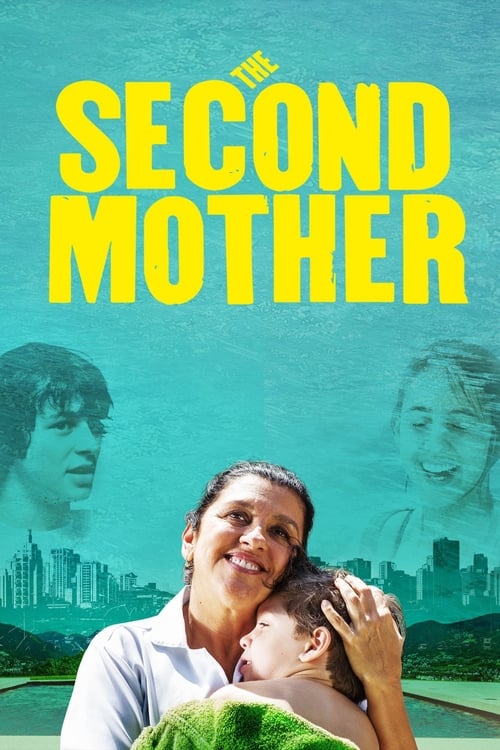
The Second Mother (2015)
Directed by Anna Muylaert
No — The Second Mother is not especially woke, scoring 27 out of 100 on our wokeness meter.
Anna Muylaert's The Second Mother arrives with the quiet confidence of a film that knows how much it can get away with.
Consciousness Markers
Written and directed by a woman and centered on the interior lives of women—a mother, a daughter, and a wealthy mistress—while foregrounding the undervalued labor of caregiving, though it frames these concerns through class rather than explicit feminist polemic.
The film sharply critiques the affluent household's casual exploitation of domestic labor and the rigid class boundaries that enforce servitude, culminating in Val's symbolic rebellion in the forbidden pool.
A Brazilian production with an entirely Brazilian cast, a female director, and a 60-something working-class woman in the lead role, though the diversity is organic to the setting rather than a deliberate representational statement.
The film's central tension is class, not race, though the implicit Brazilian reality of Northeastern domestic workers carries a faint racial undertone that the narrative never directly examines.
The film is widely praised for its subtlety and humor, showing class friction through behavior and small transgressions rather than speeches, keeping didacticism to a minimum.
No LGBTQ+ characters, themes, or subtext appear anywhere in the film.
No environmental or climate themes are present.
No body-positivity themes or messaging are present.
No neurodivergent characters or themes are depicted.
The film is a contemporary fictional drama with no historical revisionism.
Why it received this score
Anna Muylaert's The Second Mother arrives with the quiet confidence of a film that knows how much it can get away with. Val, played by Regina Casé, has spent thirteen years raising another woman's son in a São Paulo mansion while her own daughter grew up in Pernambuco. The camera stays close to the kitchen door, that threshold where service ends and family begins, and it never announces its own importance. This is a Brazilian production with a Brazilian cast and a woman at the helm, and the lead is a sixty-something domestic worker, a configuration the festival circuit found agreeable. The film does not congratulate itself for any of it.
The class critique is the engine. Dona Barbara issues orders from a hospital bed, Don Carlos propositions a teenager with promises of vacations, and the household's architecture is built to remind Val that she is furniture with a pulse. When Jéssica swims in the forbidden pool, the transgression is small and the punishment is immediate. Muylaert builds her argument from behavior, from seating arrangements and refrigerator privileges, and she resists handing anyone a manifesto. The film's concern with undervalued caregiving is genuine and centered on women, though it argues through class and not through the vocabulary of a movement. Race hovers at the edges, as in any honest portrait of Northeastern domestic labor in Brazil, and the screenplay declines to pick it up.
What we get instead is a film that trusts its audience, which is rarer than it should be. Val's final splash in the pool she was never permitted to enter lands as a gesture of self-possession and not a speech. There is no LGBTQ content, no environmental sermon, no body-positivity subplot, no neurodivergent arc, no historical revisionism. Nobody lectures. The film was Brazil's Oscar submission and did not make the cut, which seems fitting for something this allergic to campaigning. It is small, precise, humane, and it will not be winning any arguments on its own behalf.
Analysis generated by our Consciousness Algorithm


Synopsis
After leaving her daughter Jessica in a small town in Pernambuco to be raised by relatives, Val spends the next 13 years working as a nanny to Fabinho in São Paulo. She has financial stability but has to live with the guilt of having not raised Jessica herself. As Fabinho’s university entrance exams approach, Jessica reappears in her life and seems to want to give her mother a second chance. However, Jessica has not been raised to be a servant and her very existence will turn Val’s routine on its head. With precision and humour, the subtle and powerful forces that keep rigid class structures in place and how the youth may just be the ones to shake it all up.
Questions about The Second Mother
Is The Second Mother woke?
No — The Second Mother is not especially woke, scoring 27 out of 100 on our wokeness meter. That earns it a verdict of Based.
Does The Second Mother have any woke elements?
3 of the 10 markers register at 30 or above, led by Eat the Rich (45), Feminist Agenda (45) and Representation Casting (35). On Eat the Rich: The film sharply critiques the affluent household's casual exploitation of domestic labor and the rigid class boundaries that enforce servitude, culminating in Val's symbolic rebellion in the forbidden pool.
How does The Second Mother compare to other 2015 movies?
It ranks #46 of the 289 films from 2015 we've scored; their average is 15. The wokest is Chi-Raq (78).
How is the Woke Score calculated?
An AI-assisted process researches the film and its reception, scores it 0–100 on ten markers, then combines those into one 0–100 Woke Score. It measures a specific set of 2020s cultural themes, not film quality.