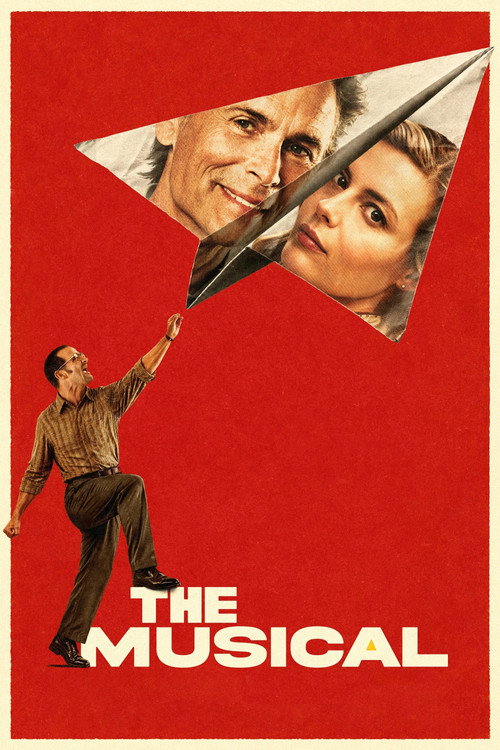
The Musical (2026)
Directed by Giselle Bonilla
The Musical arrives at Sundance with the premise of a man so consumed by petty resentment that he weaponizes the September 11 attacks against a school principal, and it would like you to know it is aware of how that sounds.
Consciousness Markers
The film's central conflict explicitly includes a scene where the protagonist fumes over diversity checkboxes on a fellowship application, framing representation requirements as a grievance rather than a virtue. The casting itself is diverse, but the film's posture toward institutional diversity is mockery, not endorsement.
The film's satirical intent is explicitly about skewering performative progressivism, which means the lecture energy flows in an unusual direction: it is preaching against preachiness. Critics noted the political commentary was broad and lacked a committed point of view, which is arguably the most sophisticated form of lecture energy available.
Race enters the film obliquely, through the satire of white liberal performativity embodied by Principal Brady and through Doug's bitterness at being an unmarginalized playwright. The film is conscious of race as a social currency without endorsing that currency.
The film's central device, a grotesquely inappropriate children's musical about 9/11, involves staging a version of historical trauma for satirical purposes. This is less revisionism than it is cringe comedy at the expense of anyone who would aestheticize that trauma.
No LGBTQ+ themes, characters, or subplots are identified in any available research or critical coverage of the film.
The film's central dynamic is male resentment and ego, with no feminist thesis or agenda discernible in the narrative. Abigail exists primarily as a catalyst for Doug's spite.
There is no climate or environmental content anywhere in this film's premise, plot, or critical coverage.
The film targets institutional vanity and bureaucratic careerism, but this reads as personal satire rather than a systemic critique of capital. No anti-capitalist framing is present.
No body positivity themes, characters, or messaging are present in any available material about the film.
No neurodivergence themes or characters are identified in the film's plot or critical coverage.
Why it received this score
The Musical arrives at Sundance with the premise of a man so consumed by petty resentment that he weaponizes the September 11 attacks against a school principal, and it would like you to know it is aware of how that sounds. Director Giselle Bonilla has described the project as a satire of white liberalism, which is a perfectly defensible artistic ambition, though one might pause to note that the film's protagonist is most vividly characterized by his rage at a fellowship application asking whether he belongs to a marginalized group. This is not a film that endorses progressive social frameworks. It is a film that puts those frameworks in the mouth of a preening administrator modeled on Gavin Newsom and waits for you to laugh. Whether you do is a matter of temperament.
The scoring of this film presents a taxonomic challenge of some delicacy. The woke markers are present, but they appear in the specimen jar rather than in the bloodstream. Racial consciousness scores modestly not because the film promotes racial equity, but because it treats diversity credentials as a social commodity to be resented and parodied. The fellowship application scene is the film's most precise cultural observation: the progressive infrastructure of arts funding, rendered as a bureaucratic insult to a mediocre white playwright. The film does not endorse Doug's grievance. It does, however, spend considerable screen time inhabiting it, which is its own kind of position.
What keeps the overall score low is that Bonilla's film is, structurally, a film about woke culture rather than a film exhibiting it. The lecture energy present here flows in reverse: the sermon is against sermonizing. This is a genuinely rare configuration, and it earns the film a modest score rather than the single-digit readings typically reserved for films made before anyone had coined the relevant vocabulary. The Producers comparison is apt and not entirely flattering. Both films ask whether tragedy can be made ridiculous. The Musical asks the additional question of whether the people who would object to that are the real problem. It does not fully answer it. Some critics found this evasion frustrating. Others called it daring. The distinction may say more about the critic than the film.
Analysis generated by our Consciousness Algorithm
Synopsis
Doug, a frustrated playwright and middle school theater teacher, learns his ex is dating his nemesis, the school principal. To get revenge and cost him a Blue Ribbon Award, Doug secretly stages the most inappropriate play imaginable.