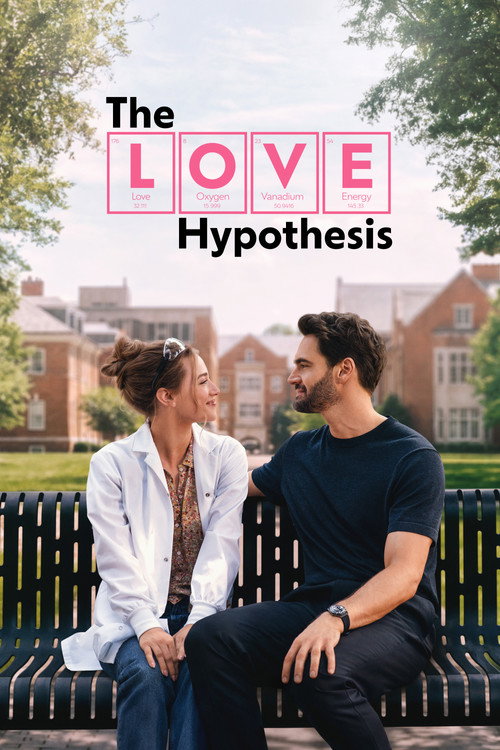
The Love Hypothesis (2026)
Directed by Claire Scanlon
The Love Hypothesis arrives bearing a provenance that would give any cultural taxonomist pause.
Consciousness Markers
The film is built around a female PhD candidate navigating academic sexism, microaggressions, and a sexual harassment subplot involving a predatory visiting professor. Promotional materials explicitly used the term 'STEMinist,' and lead actress Lili Reinhart took a producer credit specifically to champion female-led romantic narratives. The feminist architecture is load-bearing, not decorative.
The supporting cast includes meaningful racial diversity, and the film's academic setting is populated with non-white researchers in credible professional roles. However, the removal of Dr. Holden Rodriguez, a character of color from the source novel, is a concrete subtraction that caps this score below what the book would have earned.
The sexual harassment subplot resolves with an institutional confrontation and the antagonist's dismissal, which carries a clear instructional energy about consequences for predatory behavior in academia. The film does not preach relentlessly, but the lesson is delivered with the subtlety of a departmental HR seminar.
The film does not appear to center race as an explicit theme, and the academic setting's diversity reads as ambient rather than politically foregrounded. No scenes or plot points specifically address racial identity or systemic racism in STEM, so the score stays low.
Dr. Adam Carlsen's characterization as a socially abrasive, hyper-logical academic with poor interpersonal skills is a well-worn romance trope that online reader communities have long read as coding for neurodivergence. The film does not explicitly name or claim this reading, but it is present in the text for those inclined to find it.
The film's most discussed LGBTQ+ element is, paradoxically, its absence: the gay character Dr. Holden Rodriguez was entirely cut from the adaptation, generating significant fan backlash. A residual score reflects that the excision itself became a cultural talking point, but the film as released contains negligible LGBTQ+ content.
The film earned an R-rating for explicit intimate content, and the narrative frames Olive's physical and emotional vulnerability as worthy of respect and desire. There is no overt body-positivity messaging, but the adult framing of a female lead who is not a conventional Hollywood ingenue carries a mild signal.
Academic institutional critique is faintly present in the power-imbalance storyline, and the antagonist's dismissal gestures toward holding institutions accountable. This is a stretch, however, and the film is not concerned with capitalism as a system.
A fake-dating academic romance set in a biology department offers no evidence of climate messaging. The closest the film gets to environmental content is that the protagonist studies biology, which does not count.
The film is set in a contemporary fictional university and makes no engagement with historical narrative, revisionist or otherwise.
Why it received this score
The Love Hypothesis arrives bearing a provenance that would give any cultural taxonomist pause. The source novel began its life as Star Wars fanfiction, specifically a corrective fantasy for fans aggrieved by the non-consummation of a space-fascist romance, and has since traveled through a bestseller list, a BookTok canonization ceremony, and now a Prime Video adaptation in which the male lead is married, in real life, to the actress who played the original space heroine. The film's production team insists this casting was coincidental. We note this claim and move on.
The film's progressive sensibilities are concentrated almost entirely in its feminist infrastructure, which is genuinely substantial. Olive Smith is not merely a woman in STEM for symbolic purposes; she is a woman navigating microaggressions, funding precarity, and a visiting professor who treats the department as a personal predator's market. The film dispatches the harasser with institutional efficiency and frames female intellectual ambition as the story's moral center. Promotional materials used the word "STEMinist" without apparent irony, and the film largely earns the label. The removal of Dr. Holden Rodriguez, the gay pharmacology professor from Ali Hazelwood's novel, is the adaptation's most consequential cultural decision, managing the rare achievement of generating an LGBTQ+ controversy through deletion. The film's LGBTQ+ score is therefore a monument to what is not on screen.
What remains is a competent, occasionally warm enemies-to-lovers romance that understands its genre obligations and fulfills them with professional diligence. Director Claire Scanlon reportedly avoided BookTok entirely during production, a creative choice that reads less like artistic independence and more like a trained professional declining to read her own reviews before surgery. The R-rating for explicit content is the film's most quietly radical statement, a small act of defiance against the sanitized streaming romcom, and probably the thing least discussed in any thinkpiece about it.
Analysis generated by our Consciousness Algorithm

Synopsis
Olive Smith, a biology PhD candidate, and Dr. Adam Carlsen, a hotshot professor and well-known tyrant, enter into a fake relationship, seeing each of their carefully calculated theories on love get thrown into chaos.
Critic Reviews
“The Love Hypothesis proves it’s all about getting the rom-com chemistry right. Lili Reinhart, Tom Bateman, and the ensemble shine in this successful BookTok-to-screen adaptation.”
“While the film's third act does stumble in tying up every possible loose end, it doesn't detract from the joy of watching two people fumble their way through a fake-dating plot and all the very real feelings it stirs up in the process.”
“It’s a miracle of miracles: a new romantic comedy that’s actually charming! ”
“The movie, based on a romance novel by Ali Hazelwood, establishes Olive and Anh’s friendship immediately then all but drops that bond, an omission that fits the film’s inability to commit to much, including a consistent tone.”