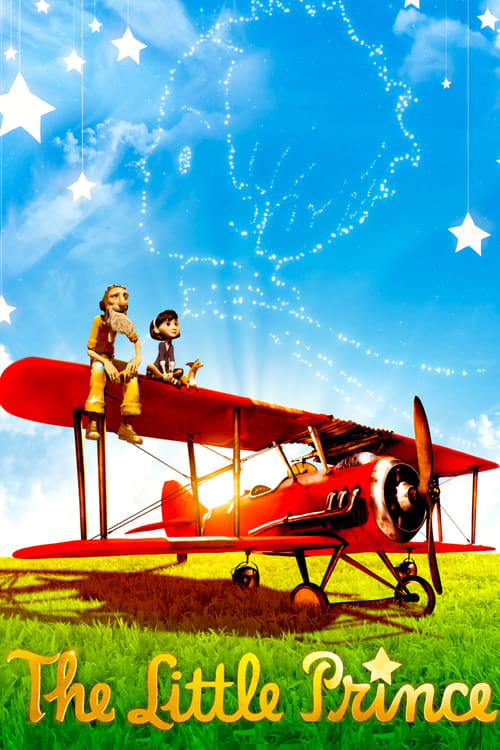
The Little Prince (2015)
Directed by Mark Osborne
No — The Little Prince is not especially woke, scoring 36 out of 100 on our wokeness meter.
The Little Prince, in its 2015 animated incarnation, takes a beloved French novella and wraps it inside a contemporary framing story about a little girl, her single mother, and an eccentric aviator neighbor.
Consciousness Markers
The Businessman owns the stars and employees, the Academy reconditions children into workaholic adults, and the film critiques efficiency and profit as dehumanizing dogmas.
Director Mark Osborne explicitly made the protagonist a little girl after Geena Davis Institute research on gender disparity; the story focuses on a girl's agency and her single mother, though it is not an overt feminist polemic.
The film carries gentle moral lessons about childhood, imagination, and not losing oneself to adulthood, but they are delivered through story rather than direct lecturing.
The film centers a young girl as the lead, a deliberate choice to counter gender disparity in animation, but the voice cast is predominantly white and lacks significant racial or ethnic diversity.
No LGBTQ+ characters, themes, or subtext.
No engagement with racial themes, systemic racism, or racial identity.
No climate or environmentalist message, despite nature imagery like the rose and baobabs.
No body positivity themes or diverse body representation.
No explicit neurodivergent characters or themes; the Aviator's eccentricity is not framed as neurodivergence.
No historical revisionism; it is a fantasy adaptation.
Why it received this score
The Little Prince, in its 2015 animated incarnation, takes a beloved French novella and wraps it inside a contemporary framing story about a little girl, her single mother, and an eccentric aviator neighbor. Director Mark Osborne chose a girl as the protagonist after research from the Geena Davis Institute on Gender in Media exposed the gender disparity in animation. That choice gives the film a quiet feminist pulse, and the girl's agency drives the emotional engine. The voice cast, however, remains overwhelmingly white, so the representational reach is limited. There is no LGBTQ content, no engagement with racial identity, no climate message, no body positivity, no neurodivergent framing, and no revisionist history. This is a fantasy, not a social treatise.
Where the film does sharpen its social consciousness is in its critique of adult economics. The Businessman owns the stars and his employees. The Academy reconditions children into workaholic adults. Efficiency and profit are presented as dehumanizing dogmas, which gives the story a clear eat-the-rich current. The mother's obsessive life plan for her daughter receives similar scrutiny. The film's lessons about childhood, imagination, and not losing oneself to adulthood are delivered through story and character. They never become a direct lecture, though the moral instruction is still present and gently persistent. The result is a film that prefers parable to podium.
Taken as a whole, this is a soft-spoken cultural artifact from a transitional moment in animation. It makes a deliberate feminist gesture and a sturdy anti-capitalist argument, but it leaves most of the modern progressive checklist untouched. No LGBTQ themes, no racial consciousness, no climate crusade, no body positivity, no neurodivergence, no historical revisionism. The film is socially aware in a narrow, humane register. It earns its place in the ledger, but it does not storm the barricades. It simply reminds us that grown-ups are strange, and then goes back to watching the stars.
Analysis generated by our Consciousness Algorithm


Synopsis
Based on the best-seller book 'The Little Prince', the movie tells the story of a little girl that lives with resignation in a world where efficiency and work are the only dogmas. Everything will change when accidentally she discovers her neighbor that will tell her about the story of the Little Prince that he once met.
Questions about The Little Prince
Is The Little Prince woke?
No — The Little Prince is not especially woke, scoring 36 out of 100 on our wokeness meter. That earns it a verdict of Based.
Does The Little Prince have any woke elements?
3 of the 10 markers register at 30 or above, led by Eat the Rich (60), Feminist Agenda (50) and Lecture Energy (35). On Eat the Rich: The Businessman owns the stars and employees, the Academy reconditions children into workaholic adults, and the film critiques efficiency and profit as dehumanizing dogmas.
How does The Little Prince compare to other 2015 movies?
It ranks #28 of the 289 films from 2015 we've scored; their average is 15. The wokest is Chi-Raq (78).
How is the Woke Score calculated?
An AI-assisted process researches the film and its reception, scores it 0–100 on ten markers, then combines those into one 0–100 Woke Score. It measures a specific set of 2020s cultural themes, not film quality.