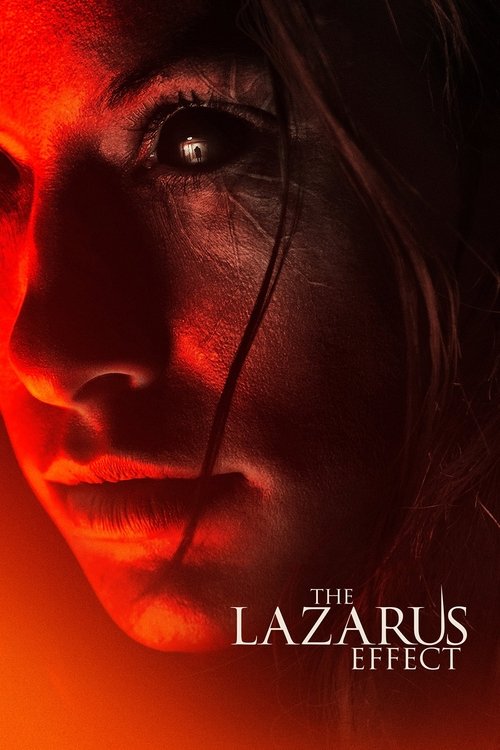
The Lazarus Effect (2015)
Directed by David Gelb
No — The Lazarus Effect is not woke, scoring 9 out of 100 on our wokeness meter.
The Lazarus Effect arrives with the grim tidiness of a Blumhouse chiller that knows exactly how long it can hold a room.
Consciousness Markers
The ensemble includes Donald Glover and Sean T. Krishnan in supporting roles, but their presence is entirely organically embedded in the research-team premise with no commentary or messaging.
A pharmaceutical company buys out the team's funder and confiscates their research, offering a faint 'evil corporation' shrug, but the film never develops this into a sustained critique.
Olivia Wilde headlines as a female scientist, but she is rapidly transformed into a demonic villain, so any proto-feminist gesture is undercut by the film's own plotting.
No LGBTQ+ characters, subtext, or themes appear anywhere in the film.
The film engages in no racial commentary; its diverse cast exists without any thematic weight attached to race.
No environmental or climate themes are present in this reanimation horror story.
No body-positivity themes or messaging appear.
No neurodivergent characters or themes are depicted.
The film makes no historical claims to revise; it is a present-day genre thriller.
A lean 83-minute Blumhouse chiller trades in jump scares rather than moral instruction or messaging.
Why it received this score
The Lazarus Effect arrives with the grim tidiness of a Blumhouse chiller that knows exactly how long it can hold a room. An 83-minute runtime, a modest budget, and a premise borrowed from Mary Shelley by way of a university lab. David Gelb, better known for documenting sushi, directs with a steady hand and no particular appetite for ideas. The result is competent, brief, and entirely uninterested in the cultural conversations that were already underway around it in 2015. It wants to frighten you and then get out of the way, and it mostly succeeds at the second part.
The cast is more diverse than the genre typically bothers with, and the film deserves a small nod for simply not making a fuss about it. Donald Glover and Sean T. Krishnan move through the research team as colleagues, not symbols. Olivia Wilde holds the center as a scientist with a fiance and a hypothesis, though the screenplay wastes little time converting her into a telekinetic nightmare, which tends to complicate any reading of the material as a statement on women in science. A pharmaceutical company absorbs the team's funding and confiscates their work, offering a faint corporate-villain shrug before the plot moves on to flying furniture. That thread is never pulled.
What remains is a possession story with an e-cigarette and a dog. No sermons, no causes, no lessons. The film trades in jump scares and loud crescendos, and critics were unimpressed, though audiences kept it profitable. We are left with a lean genre exercise that scores low on social consciousness not out of hostility, but out of complete disinterest. Refreshing, in its way. Empty, in most others.
Analysis generated by our Consciousness Algorithm
Part of


Synopsis
Medical researcher Frank, his fiancee Zoe and their team have achieved the impossible: they have found a way to revive the dead. After a successful, but unsanctioned, experiment on a lifeless animal, they are ready to make their work public. However, when their dean learns what they've done, he shuts them down. Zoe is killed during an attempt to recreate the experiment, leading Frank to test the process on her. Zoe is revived -- but something evil is within her.
Questions about The Lazarus Effect
Is The Lazarus Effect woke?
No — The Lazarus Effect is not woke, scoring 9 out of 100 on our wokeness meter. That earns it a verdict of Ultra Based.
Does The Lazarus Effect have any woke elements?
Very few. None of the 10 markers reaches 30, the level where a marker counts as present; the highest is Representation Casting at 25.
How does The Lazarus Effect compare to other 2015 movies?
It ranks #151 of the 289 films from 2015 we've scored; their average is 15. The wokest is Chi-Raq (78).
How is the Woke Score calculated?
An AI-assisted process researches the film and its reception, scores it 0–100 on ten markers, then combines those into one 0–100 Woke Score. It measures a specific set of 2020s cultural themes, not film quality.