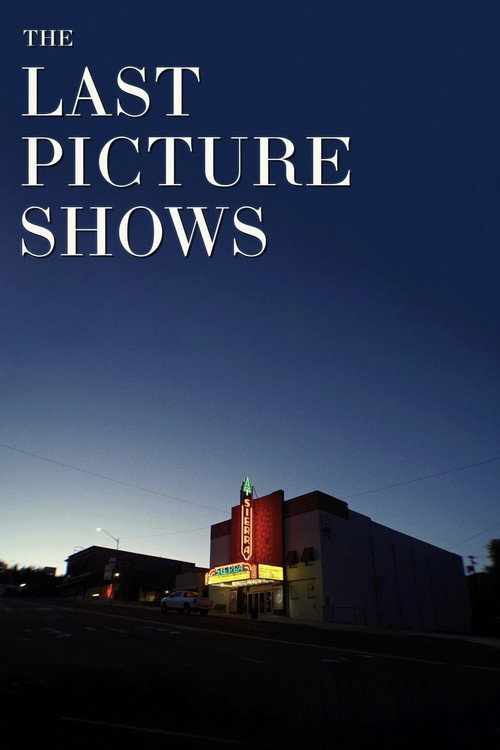
The Last Picture Shows (2026)
Directed by Rustin Thompson
Rustin Thompson drives 10,825 miles across ten states to document the slow extinction of the small-town movie theater, and the film that results is, to deploy the technical term, very earnest.
Consciousness Markers
The film frames major film distributors as impersonal economic forces crushing independent small-business owners, which carries a mild anti-corporate charge. It stops well short of systemic critique, but the sympathy clearly lies with the little guy against the industry machinery.
Thompson's offhand remark that towns with a 'progressive mindset' do better constitutes the film's one brief editorial aside. It does not sustain a lecturing posture, but it is there, on the record.
This is a documentary about buildings. The subjects are the theater owners and caretakers Thompson encounters on his route, and no evidence suggests any casting or subject-selection calculus based on identity representation.
No LGBTQ+ themes, subjects, or framing are present in any available description, review, or research summary for this film.
No feminist framing or agenda is present. The film does not engage with gender as a lens through which to examine the decline of rural cinema.
Race is not a theme of this documentary. The focus is on economic and cultural forces affecting rural exhibition, not racial dynamics within those communities.
No climate themes are present. The film's environmental footprint is arguably the 10,825 miles Thompson drove, but the film itself does not moralize about it.
No body positivity themes are present. This is a film about theaters, not the people who sit in them.
No neurodivergence themes or framing appear anywhere in the film's content or reception.
The film is nostalgic and elegiac about American cinema history, not revisionist. It mourns the past rather than reinterpreting it.
Why it received this score
Rustin Thompson drives 10,825 miles across ten states to document the slow extinction of the small-town movie theater, and the film that results is, to deploy the technical term, very earnest. It is a road movie about buildings. The buildings are losing. Thompson intersperses his footage with clips from Peter Bogdanovich's 1971 elegy to small-town America, a structural choice that is either poetic or on-the-nose depending on how much you enjoyed your last film studies seminar. The film's politics, to the extent they exist, are the politics of a man who really likes projection booths and is sad that fewer people do.
The anti-corporate undercurrent is present, in the sense that small independent theater owners are portrayed sympathetically and major film distributors are portrayed as the impersonal economic forces that are strangling them. This is not a manifesto. It is a lament. There is a meaningful difference, and Thompson, to his credit, understands it. The director himself has stated he did not want to make a political film, though he notes approvingly that towns with a "progressive mindset" tend to fare better. This is the film's most daring moment. We note it and move on.
Against the full battery of contemporary cultural markers, The Last Picture Shows registers as essentially inert. There is no representation agenda, no identity politics, no lecture energy aimed at the audience's moral failings. There are just some old theaters, some devoted caretakers, and a filmmaker who drove a very long way to tell us that community matters. This is, by the standards of 2026, a radical act of restraint.
Analysis generated by our Consciousness Algorithm
Synopsis
Ten states. 10,825 miles. 123 theaters. In his latest feature The Last Picture Shows, filmmaker Rustin Thompson journeys into the American West on a search for traces of what was once a center of small-town life: the movie theater. On the trip, he finds long abandoned and forgotten cinemas; movie houses that have fallen into disrepair; theaters recently closed, theaters struggling to hold on, and theaters that—thanks to their thoughtful caretakers—are not only surviving but thriving. Between the stops along the way, Rustin poetically intersperses excerpts from Peter Bogdanovich's 1971 classic film The Last Picture Show, as well as reflections on past and present hardships facing the film exhibition industry. The Last Picture Shows reminds viewers that even in vast cinema deserts, there are oases of community and gathering that remain, where the movie house continues to be a place of wonder, contemplation, and connection.