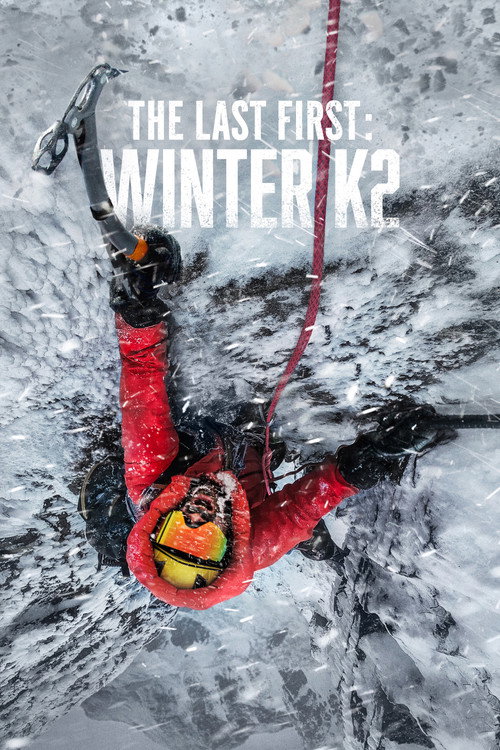
The Last First: Winter K2 (2026)
Directed by Amir Bar-Lev
Amir Bar-Lev's documentary arrives at the precise cultural moment when mountaineering, long the exclusive province of well-sponsored Westerners with satellite phones and Instagram handles, has been forced to reckon with who, exactly, has always been doing the hard work.
Consciousness Markers
The film explicitly maps racial, economic, and national hierarchies onto the expedition, contrasting well-funded Western climbers and influencers against Pakistani high-altitude workers whose risk and sacrifice are disproportionate. The director publicly asked who gets to access aspirational peaks and who ultimately pays the bill, which is about as on-the-nose as a Sundance Q&A gets.
The documentary deliberately centers Nepalese and Pakistani climbers, framing the Nims Purja-led team's ascent as a conscious reclamation of a sport long dominated by Western expeditions. Promotional materials and the director's own Sundance statements make clear that this framing is intentional and structural, not incidental.
The film mounts a sustained critique of commercial expedition outfits, Instagram-driven climbers, and the broader commodification of extreme sports. Critics from multiple outlets noted its exposure of how commercial ego and social media ambition contributed directly to fatal outcomes.
The film actively reframes the received narrative of Himalayan mountaineering, repositioning non-Western climbers from supporting cast to protagonists of their own history. It does not invent revisionist facts so much as insist on a different lens for reading well-documented events.
The film carries a clear analytical agenda and critics note its political undercurrents, but Bar-Lev's stated intention to avoid clear heroes and villains produces something more complex than a sermon. The tragedy does the heavy lifting; the director largely stays out of the pulpit.
Female climbers Tamara Lunger and Angela Benavides appear as participants with screen time, but the film does not foreground gender politics or frame their presence as a feminist statement. Their inclusion is documentary fact, not agenda.
No LGBTQ+ themes, characters, or narratives are present in the film or its surrounding discourse.
No climate change themes or environmental activism framing appear in the film or its documented reception.
No body positivity themes are present. The film concerns itself with elite mountaineers at the apex of physical conditioning.
No neurodivergence themes or framing appear anywhere in the film or its critical reception.
Why it received this score
Amir Bar-Lev's documentary arrives at the precise cultural moment when mountaineering, long the exclusive province of well-sponsored Westerners with satellite phones and Instagram handles, has been forced to reckon with who, exactly, has always been doing the hard work. The film covers the January 2021 winter ascent of K2, the last of the eight-thousanders to be summited in winter, and it is, technically, a story about altitude and ambition. It is also, less technically but more insistently, a story about colonialism with crampons. Bar-Lev deploys the mountain as a vertical cross-section of contemporary anxieties: race, commerce, ego, and the peculiar modern compulsion to film one's own potential death for an audience that will watch it between recipe videos.
What distinguishes the film from the standard triumph-of-the-human-spirit mountaineering documentary is its willingness to let the commercial machinery of modern expedition culture indict itself. The presence of influencer climbers seeking content, the overcrowded base camps, the Seven Summit Tracks operation running expeditions at scale: Bar-Lev presents all of this with the measured composure of a forensic accountant who has found something genuinely alarming in the ledger. The contrast between the well-funded Western participants and the Sadpara father-son team, whose visibility and financial backing exist in inverse proportion to their competence and sacrifice, is not subtle. The film does not need it to be. The mountain provides the punctuation.
Bar-Lev is careful enough to resist the sermon, at least most of the time. His stated ambition to produce no clear heroes or villains is largely honored, which saves the film from the category of pure consciousness-raising exercise. The racial and economic hierarchies are documented rather than prosecuted, and the tragedy is allowed to be genuinely tragic rather than merely instructive. It is a film that carries its politics the way a well-packed expedition bag carries its weight: you are aware of it, it slows you down slightly, and you could not have made the journey without it.
Analysis generated by our Consciousness Algorithm

Synopsis
A historic race to become the first to summit K2 in winter unravels into tragedy, exposing how ambition, ego, and the pursuit of glory can be as dangerous as the mountain itself.
Critic Reviews
“Bar-Lev’s film balances compassion for the surviving relatives of those who lose their lives with a clear-eyed view of the realities of nature. It’s a salutary lesson in the climate-change era, when a small percentage of humanity is taking a risky gamble, betting that human ingenuity will win out against physics.”
“You come to truly care about the people featured in the documentary, making the victories even sweeter and the heartbreaks when disaster strikes even more devastating.”
“Drugs can make us act irrationally, selfishly. If climbing is a drug, then the limits of what the human body can do also necessarily include things which would not be morally accepted at sea level.”
“It’s a movie that shows us the dark side of literally getting high. That’s engrossing, to a point, but it’s not exhilarating.”