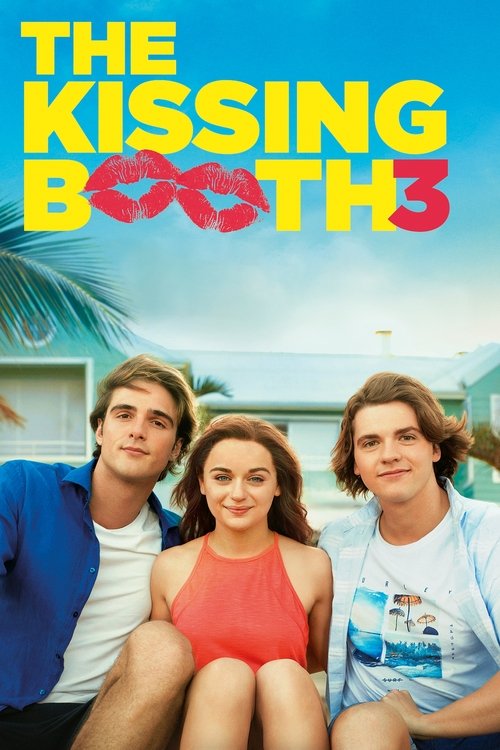
The Kissing Booth 3 (2021)
Directed by Vince Marcello
No — The Kissing Booth 3 is not woke, scoring 18 out of 100 on our wokeness meter.
The Kissing Booth 3 arrives as the closing chapter of a trilogy that never pretended to be anything other than a teenage girl choosing between two boys and a college.
Consciousness Markers
The ensemble includes performers of color such as Maisie Richardson-Sellers, Taylor Zakhar Perez, and Zandile Madliwa in supporting roles, but their presence is unremarked and incidental to the plot.
Elle's arc culminates in her choosing USC for game design based on her own desires rather than following a boyfriend, a mild self-determination message, though it is framed through romance rather than any explicit feminist critique.
The film gestures at a 'figure out what makes you happy' moral in its final act, but it is delivered through character drama rather than preachy sermonizing.
No LGBTQ+ characters, relationships, or themes appear anywhere in the film.
Race is never addressed or thematized; the film is a race-blind teen romance.
No environmental or climate content whatsoever.
No economic critique; the beach house sale is a plot device, not a class commentary.
No body-image or body-positivity themes are present.
No neurodivergent characters or themes.
A contemporary teen romance with no historical subject matter to revise.
Why it received this score
The Kissing Booth 3 arrives as the closing chapter of a trilogy that never pretended to be anything other than a teenage girl choosing between two boys and a college. This time Elle, freshly graduated, weighs Harvard against Berkeley while a beach house is sold out from under her. It takes ninety minutes of romantic indecision to reach a modest destination: a decision made on her own terms, a game design program at USC. That registers as a faint pulse of self-determination in an otherwise conventional courtship narrative. The film frames the choice through the men who prompted it, which situates the gesture exactly where the genre always leaves it, adjacent to romance and subordinate to it.
The supporting ensemble includes performers of color in roles that carry no comment and require none. They are present, pleasant, incidental. There is no LGBTQ+ content, no engagement with race as a subject, no economic critique, no environmental concern, no body-image discourse, no neurodivergent characterization, and no historical revision, because the film has no history to revise. It exists in a sunlit present tense of beach houses and bucket lists. The moral arrives late and softly: figure out what makes you happy. A character says it to another character. The screenplay does not say it to us, which keeps the sermonizing to a murmur.
The picture is chaste, amiable, largely inert. Critics were unkind, and not without cause. What it offers instead of insight is ambient reassurance, the sense that growing up mostly involves apologizing to the right people in the right order. There is a beach house, a waterpark, a Fourth of July party, and a breakup with the emotional weight of a scheduling conflict. Six years later, everyone is fine. The trilogy ends as it began, with young people looking at each other across a room and declining to say the thing. We have seen this before. We will see it again. The classification is unremarkable, and the film, in its final accounting, is too. That is not a crime. It is barely an event.
{"thematic_tags": ["sequel", "book_adaptation"]}
Analysis generated by our Consciousness Algorithm


Synopsis
It's the summer before Elle heads to college, and she has a secret decision to make. Elle has been accepted into Harvard, where boyfriend Noah is matriculating, and also Berkeley, where her BFF Lee is headed and has to decide if she should stay or not.
Questions about The Kissing Booth 3
Is The Kissing Booth 3 woke?
No — The Kissing Booth 3 is not woke, scoring 18 out of 100 on our wokeness meter. That earns it a verdict of Ultra Based.
Does The Kissing Booth 3 have any woke elements?
1 of the 10 markers register at 30 or above, led by Representation Casting (30). On Representation Casting: The ensemble includes performers of color such as Maisie Richardson-Sellers, Taylor Zakhar Perez, and Zandile Madliwa in supporting roles, but their presence is unremarked and incidental to the plot.
How does The Kissing Booth 3 compare to other 2021 movies?
It ranks #114 of the 242 films from 2021 we've scored; their average is 23. The wokest is The Forever Purge (83).
Is The Kissing Booth 3 the most woke The Kissing Booth movie?
Yes. It scores highest of the 3 The Kissing Booth films we've scored.