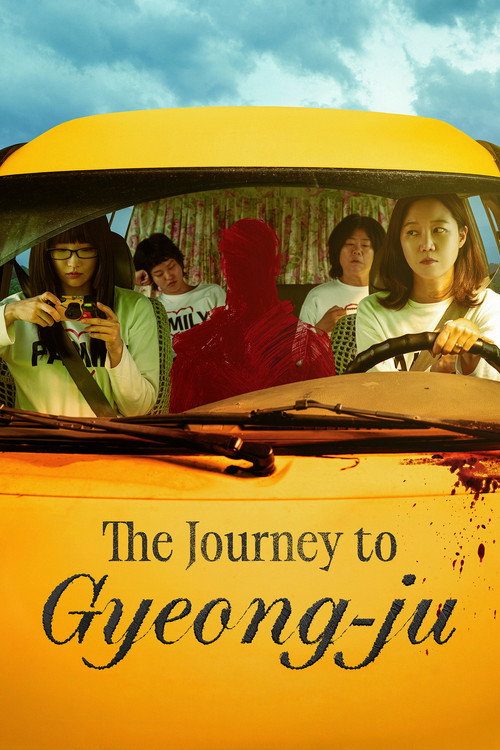
The Journey to Gyeong-ju (2026)
Directed by Kim Mi-jo
Kim Mi-jo's The Journey to Gyeong-ju arrives wearing matching family T-shirts and a van full of unresolved grief, which is either the most Korean setup imaginable or a universal metaphor for how trauma travels.
Consciousness Markers
This is the film's most substantive social dimension. Director Kim Mi-jo explicitly frames the story around rejecting the Korean cultural concept of 'victimhood performance' (피해자다움), centering women who take chaotic active control rather than performing grief passively. Critics and the director herself identified the subversion of male-dominated revenge thriller conventions as a deliberate formal and thematic choice.
The film features an almost entirely female principal cast, but this is a Korean production set in Korea with Korean characters. The composition reflects the story's requirements rather than any visible corrective agenda, though the deliberate generational female ensemble structure is clearly intentional.
The film critiques the judicial system's tendency to favor perpetrators over victims, and Ok-sil's manipulation of a legal settlement to engineer the killer's early release implies deep institutional distrust. This is systemic critique, but it targets legal institutions specifically, not capital or economic class structures.
The film carries a clear perspective on victim rights and judicial failure, but critics and the lead actress alike emphasize it resists advocacy framing. The dark comedy register actively works against the sermonizing impulse, and no reviewers flagged heavy-handed messaging.
The perpetrator reportedly received reduced sentencing partly on grounds of mental impairment. This functions as a plot mechanism illustrating judicial dysfunction rather than any commentary on neurodivergence as a social category.
No LGBTQ+ characters, themes, or references appear in any available material about this film.
This is a Korean film made in Korea about Korean characters. No racial dynamics, interracial commentary, or racial consciousness framing appears in the film or its surrounding discourse.
No climate or environmental themes are present or suggested in any available material.
No body positivity themes, discourse, or relevant character framing appears in any available material.
The film is set in contemporary South Korea and engages with no historical events, figures, or narratives requiring revisionist reframing.
Why it received this score
Kim Mi-jo's The Journey to Gyeong-ju arrives wearing matching family T-shirts and a van full of unresolved grief, which is either the most Korean setup imaginable or a universal metaphor for how trauma travels. A mother and her three surviving daughters drive to the city where their youngest was murdered, and they have brought the killer with them in the trunk. The film does not flinch from this premise, nor does it inflate it into a manifesto. It simply follows the family and lets the dark comedy do its quiet, devastating work.
The feminist dimension here is genuine and specific, not decorative. Director Kim Mi-jo, whose debut Gull won the Grand Prix at Jeonju for its examination of sexual violence and institutional failure, is clearly interested in Korean women who refuse to perform their suffering on society's preferred schedule. The concept of 피해자다움, the culturally enforced expectation of how a victim should look and behave, hangs over the film like a persistent drizzle. Ok-sil and her daughters are messy, purposeful, and not particularly interested in being legible to anyone observing from outside. The film earns this framing because it emerges from the characters rather than being announced by the screenplay. There is no speech. There is just a family in a van.
What keeps this out of more elevated score territory is the film's studied resistance to the lecture format. Lee Jung-eun, in a press conference that sounds more considered than most, explicitly deflected any reading of the film as a vigilantism endorsement, insisting on the genre framework and the emotional logic of a collapsing family. The critics agreed. The audience gave it a 93% satisfaction rating and sent it to number one at the South Korean domestic box office, which suggests that a film about women refusing to be passive can find its audience without requiring a syllabus. Kim Mi-jo seems to understand that the most effective argument is a story told well. A lesson the rest of the industry continues to absorb at variable speeds.
Analysis generated by our Consciousness Algorithm
Synopsis
Eight years ago, the youngest daughter, Gyeong-ju, disappeared during a school field trip to Gyeongju and never came home alive. On what would have been her birthday, her mother Ok-sil and her three daughters—Jang-ju, Young-ju, and Dong-ju—put on matching family T-shirts and set off for Gyeongju, the place where Gyeong-ju vanished, in what appears to be a family trip to honor her memory. But beneath the cheerful façade lies a deadly secret. In the trunk of their van is a bound and unconscious man zipped inside a plastic bag.