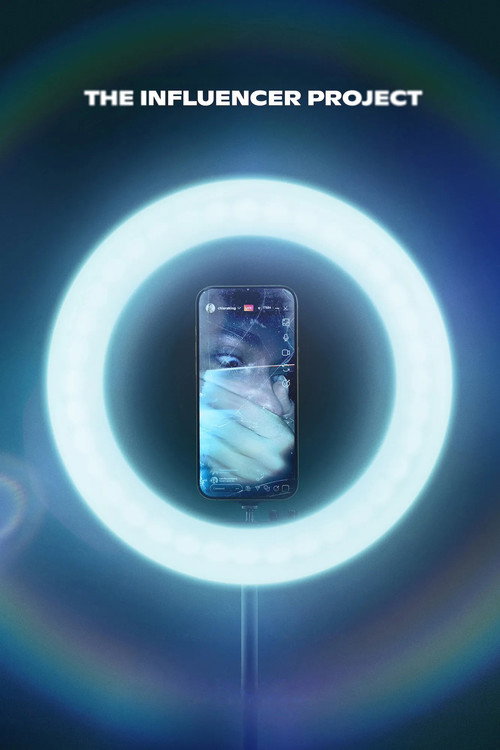
The Influencer Project (2026)
Directed by Mike Nybroe
The Influencer Project arrives bearing the pedigree of The Blair Witch Project producers and the premise of a real-life TikTok creator playing a fictionalized version of herself being stalked through Copenhagen.
Consciousness Markers
The film critiques the commodification of personal identity and the monetization of human attention, depicting influencer culture as a machine that turns selfhood into revenue. The critique is present but operates as horror atmosphere rather than political argument.
A woman being stalked and subjected to threats of sexual violence is central to the plot. The film gestures at female vulnerability in online spaces, but this is genre mechanics, not advocacy. The protagonist is depicted as complicit in her own commodification, which complicates any straightforward feminist reading.
The cast is modestly diverse for a European co-production, with Scandinavian and international performers. There is no evidence this reflects ideological casting mandates; it reads as practical production geography.
The film nods toward commentary on EU social media regulation and the damage of online culture to youth identity, but reviewers consistently note it opts for gore over sermon. The messaging is present in the architecture of the premise but is not delivered with any sustained moralizing energy.
No LGBTQ+ themes, characters, or storylines are present in the film or its surrounding discourse.
There is no racial consciousness framing in the film. Race is not a thematic or narrative concern anywhere in the research or metadata.
No climate or environmental themes are present. The film is entirely preoccupied with digital culture, not ecological crisis.
No body positivity themes or messaging are identifiable in the film or its reception.
No neurodivergence themes are present. The stalker is framed as a predator, not a subject of sympathetic psychological reframing.
The film is set in the contemporary present and has no historical revisionist dimension whatsoever.
Why it received this score
The Influencer Project arrives bearing the pedigree of The Blair Witch Project producers and the premise of a real-life TikTok creator playing a fictionalized version of herself being stalked through Copenhagen. This is, on paper, a rich vein of cultural material. The film proceeds to mine it with all the philosophical ambition of a ring light.
The social commentary is present in the way furniture is present: it fills the room, but no one is particularly moved by it. We get the commodification of identity, the parasocial predator-prey dynamic, the teenage suicide livestream as opening gambit, the blurring of content and evidence. These are not trivial concerns. They are, in fact, the defining anxieties of a generation raised on algorithmic validation. The film acknowledges them, nods soberly in their direction, and then returns to the business of being a horror movie. Critics noted the surface-level engagement, and they were not wrong. The EU social media regulations for minors get a mention. Then someone presumably gets killed in an unpleasant way. This is the rhythm.
What saves the film from a higher score on our cultural consciousness index is its commitment to being unpleasant rather than instructive. A film that wanted to lecture us about influencer culture would have given its protagonist more dignity and its audience more credit. This one makes her a wealthy narcissist and drenches the proceedings in gore, which is, in its own perverse way, the more honest artistic choice. The stalker is not a metaphor for systemic oppression. The gore is not a symbol of late-stage capitalism. Sometimes a horror film is just a horror film, and The Influencer Project, for all its thematic raw material, is mostly content to be exactly that.
Analysis generated by our Consciousness Algorithm
Synopsis
Influencer Chiara King travels to Copenhagen with a documentary crew promising an unfiltered look behind the glamorous business of online fame. But as the cameras and her devoted fans follow her every move, someone else is watching too. When an obsessive stalker begins closing in, the documentary mutates into something far more terrifying, blurring the line between content and evidence, follower and predator, fact and fiction.