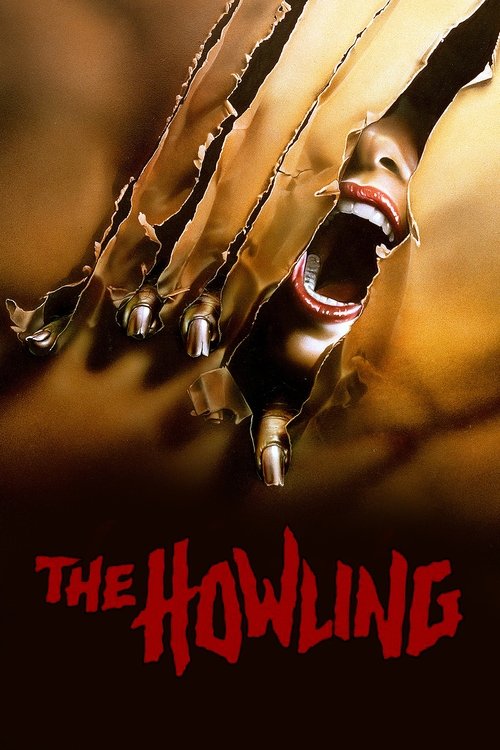
The Howling (1981)
Directed by Joe Dante
No — The Howling is not woke, scoring 7 out of 100 on our wokeness meter.
Joe Dante's The Howling arrives from 1981 carrying a werewolf, a news desk, and a colony of well-dressed Californians who turn hairy when the moon cooperates.
Consciousness Markers
The protagonist is a professional female news anchor, but this is a genre convention of the era rather than a feminist statement; the film's treatment of sexuality is exploitative rather than empowering.
The film offers satirical commentary on television sensationalism and media, but it is woven into the horror narrative rather than delivered as a preachy message.
The cast is overwhelmingly white with no deliberate diverse or inclusive casting choices; the ensemble consists of established white character actors.
No LGBTQ+ characters, themes, or subtext are present in the film.
The film engages no racial themes or commentary whatsoever.
No environmental or climate-related themes appear in the film.
The film contains no critique of capitalism, wealth, or class structures.
No body positivity themes; the film's treatment of the body is rooted in horror transformation and sexualized imagery.
No neurodivergence themes; the psychiatric setting is used for horror atmosphere, not representation.
No historical revisionism; the film is a contemporary-set fictional horror story.
Why it received this score
Joe Dante's The Howling arrives from 1981 carrying a werewolf, a news desk, and a colony of well-dressed Californians who turn hairy when the moon cooperates. Karen White, a Los Angeles anchor, survives an encounter with a serial killer and is packed off to a rural retreat by her therapist. The film's interest in television is genuine. Its interest in everything else is minimal. What we have here is a creature feature with a smirk, and the smirk is aimed squarely at the medium that made its characters briefly famous.
There is a woman at the center of the story, and she holds a professional job, which in 1981 counted as a statement of sorts. The film does not build on that. Its camera lingers where the era's cameras lingered, and the sexuality on display serves the transformation set pieces instead of the character. Dee Wallace does the work of a leading lady who deserves a better screenplay, and she receives one only in the final minutes, when Karen walks onto a live broadcast and proves her story to a global audience that assumes it is a special effect. That is a sharp ending. It is also the only moment the film says anything about the audience it was made for.
The satire of sensational television runs underneath the gore, never on top of it, and the screenplay by John Sayles keeps the commentary folded into the plot where it belongs. The cast is a parade of familiar white character actors. The film has no interest in race, class, sexuality, or the environment, and it offers no lessons on any of them. It wants to frighten us and then amuse us. It succeeds at both, modestly, and asks nothing more of us than the price of a ticket.
It remains a tidy piece of monster craftsmanship, and its restraint in the sermonizing department is its quietest virtue. The werewolves do the talking. They are, on the whole, more coherent than the humans.
{"thematic_tags": ["book_adaptation", "box_office_number_one"]}
Analysis generated by our Consciousness Algorithm


Synopsis
After a bizarre and near fatal encounter with a serial killer, a newswoman is sent to a rehabilitation center whose inhabitants may not be what they seem.
Questions about The Howling
Is The Howling woke?
No — The Howling is not woke, scoring 7 out of 100 on our wokeness meter. That earns it a verdict of Ultra Based.
Does The Howling have any woke elements?
Very few. None of the 10 markers reaches 30, the level where a marker counts as present; the highest is Feminist Agenda at 10.
How does The Howling compare to other 1981 movies?
It ranks #9 of the 43 films from 1981 we've scored; their average is 5. The wokest is The Fox and the Hound (18).
How is the Woke Score calculated?
An AI-assisted process researches the film and its reception, scores it 0–100 on ten markers, then combines those into one 0–100 Woke Score. It measures a specific set of 2020s cultural themes, not film quality.