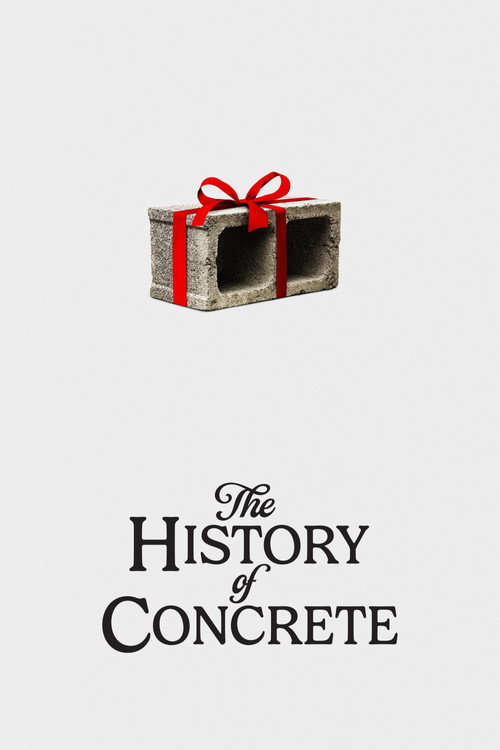
The History of Concrete (2026)
Directed by John Wilson
John Wilson's feature debut arrives bearing the cultural weight of its subject material: something ancient, utilitarian, and increasingly crumbling under the pressures of the modern world.
Consciousness Markers
The depletion of global sand reserves and the environmental impact of urban sprawl are documented concerns in the film, and The Washington Post specifically noted climate anxieties in its coverage. This is the film's most credible brush with a woke marker, though it arrives via civil engineering rather than advocacy.
The film satirizes Hollywood financing, corporate formulaism, film industry consolidation, and the Hallmark industrial complex. This is a genuine critique of commercial media structures, even if the tone is absurdist rather than polemical.
Wilson has described this as his most political film, and it directly engages with municipal policy, infrastructure decay, and housing. However, every account suggests the mode is melancholy and absurdist, not sermonizing. The lecture energy is present in the subject matter but largely absent in the delivery.
The film touches on affordable housing, the Elizabeth Street Garden controversy, and New York development politics, which carry implicit racial and class dimensions in that context, but the framing is civic and infrastructural, not racially conscious in the modern activist sense.
Wilson's observational style captures New Yorkers across diverse neighborhoods in his signature fashion, but this is incidental texture, not programmatic casting. No evidence of diversity-as-agenda.
Tom Ford appears in the cast, and Wilson's New York milieu is not unfriendly to queer visibility, but no LGBTQ+ themes are reported as central or even peripheral to the film's concerns.
No feminist themes, female-centered narratives, or gender politics are identified in any source. The film is about concrete.
No body positivity themes are present. The film is, again, about concrete.
No neurodivergence themes are identified in any source or in the film's known content.
The film engages with history only insofar as concrete has a history, which is to say it does not revise anything about the past so much as pour a foundation under it.
Why it received this score
John Wilson's feature debut arrives bearing the cultural weight of its subject material: something ancient, utilitarian, and increasingly crumbling under the pressures of the modern world. The film's central conceit, applying the Hallmark movie formula to a documentary about concrete, is either the most inspired pitch meeting in documentary history or a very elaborate way to avoid talking to your landlord. Wilson, who spent three seasons on HBO cataloguing the quiet disasters of New York City apartment life, has now turned his camera on the city's skeleton. The result is a film that is, by his own admission, his most political work, which is a striking claim from a filmmaker whose previous work included an extended meditation on covering furniture.
The film's progressive credentials are modest and, crucially, unselfconscious. There are gestures toward environmental concern, specifically the looming sand depletion crisis, which is the kind of ecological anxiety that registers as genuinely alarming once you hear it and then immediately forget it because you have other things to worry about. The critique of Hollywood commercialization and media consolidation lands with more conviction, though Wilson's method is to embody the absurdity of the Hallmark formula rather than lecture us about it. The film does not stand at a podium. It stands on a sidewalk, looking down at a crack in it.
What keeps the film's social consciousness score low is precisely what keeps it interesting: Wilson is not trying to change your mind. He is trying to show you something you walk over every day without noticing, and he has, with characteristic indirection, made that something into a film about impermanence, housing policy, and the specific sadness of a city eating itself. The film's politics are embedded in its subject matter the way aggregate is embedded in cement, present throughout, load-bearing, and entirely invisible until the whole structure starts to fail.
Analysis generated by our Consciousness Algorithm
Synopsis
After attending a workshop on how to write and sell a Hallmark movie, filmmaker John Wilson tries to use the same formula to sell a documentary about concrete.