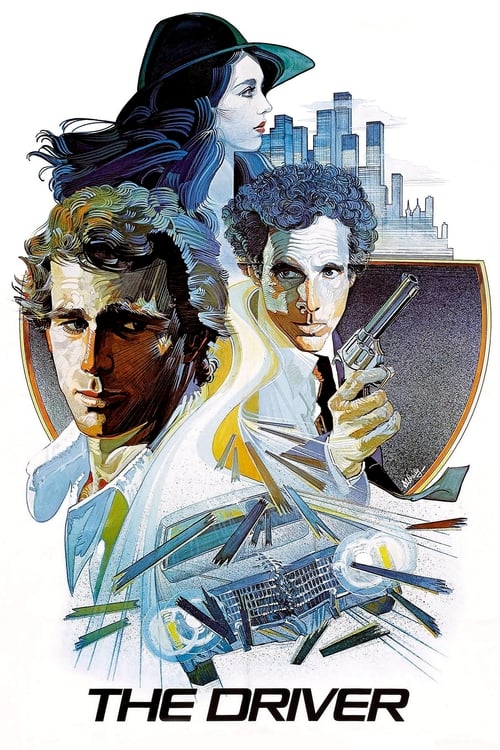
The Driver (1978)
Directed by Walter Hill
No — The Driver is not woke, scoring 3 out of 100 on our wokeness meter.
The Driver arrives from a distant era when a filmmaker could strip a genre down to its chassis and call the result a movie.
Consciousness Markers
The female characters possess agency within the criminal underworld, but they do not serve a modern feminist agenda.
The film relies entirely on archetypal, unnamed characters, offering no modern commentary on representation.
There is no evidence of LGBTQ+ themes or representation in this neo-noir crime thriller.
The setting is Los Angeles, but the film offers no specific commentary or focus on racial dynamics.
The environmental impact of the city or the plot is entirely ignored.
The film deals with crime and money, but it does not engage in any specific critique of modern corporate capitalism.
Body image is not a factor in this minimalist, action-driven narrative.
No characters exhibit traits related to neurodivergence.
This is a fictional crime drama and does not engage with historical revisionism.
The film is defined by its sparse, minimalist style, which is the antithesis of a lecture.
Why it received this score
The Driver arrives from a distant era when a filmmaker could strip a genre down to its chassis and call the result a movie. No character has a name. Ryan O'Neal drives, Bruce Dern obsesses, Isabelle Adjani gambles. The dialogue is sparse enough to fit on a napkin. This is a film built from archetypes, and archetypes, by their nature, decline to carry a message. It is a study in velocity and silence, and it has no interest in our current vocabulary of social concern.
We search the frame for markers of contemporary cultural awareness and find only asphalt. The cast is uniformly white, and the film treats this as unremarkable, which in 1978 it was. Adjani's Player holds her own among criminals and negotiates her own terms, a flicker of agency that stops well short of an agenda. Los Angeles appears as a colorless grid of parking structures, and nobody pauses to lament the carbon footprint of a V8. There is no lecture, no sermon, no moment where a character turns to the camera to explain what we ought to feel. The film's politics, such as they are, consist of disliking guns and distrusting everyone.
The picture flopped in America and was savaged by critics who found it pretentious and cold. Time has been kinder. Tarantino, Refn and Edgar Wright have all paid tribute, and retrospectives now treat it as a minor classic of economy. What remains is a lean machine with nothing on its mind but the next corner. For a certain temperament, that is the entire point. For the purposes of classification, it is a remarkably clean specimen: a film that predates the whole apparatus of modern cultural signaling and manages, somehow, to survive without it.
Analysis generated by our Consciousness Algorithm
Synopsis
The Driver specializes in driving getaway cars for robberies. His exceptional talent has prevented him from being caught yet. After another successful flight from the police a self-assured detective makes it his primary goal to catch the Driver. He promises pardons to a gang if they help to convict him in a set-up robbery. The Driver seeks help from The Player to mislead the detective.
Questions about The Driver
Is The Driver woke?
No — The Driver is not woke, scoring 3 out of 100 on our wokeness meter. That earns it a verdict of Ultra Based.
Does The Driver have any woke elements?
Very few. None of the 10 markers reaches 30, the level where a marker counts as present; the highest is Feminist Agenda at 5.
How does The Driver compare to other 1978 movies?
It ranks #21 of the 27 films from 1978 we've scored; their average is 8. The wokest is The Wiz (52).
How is the Woke Score calculated?
An AI-assisted process researches the film and its reception, scores it 0–100 on ten markers, then combines those into one 0–100 Woke Score. It measures a specific set of 2020s cultural themes, not film quality.