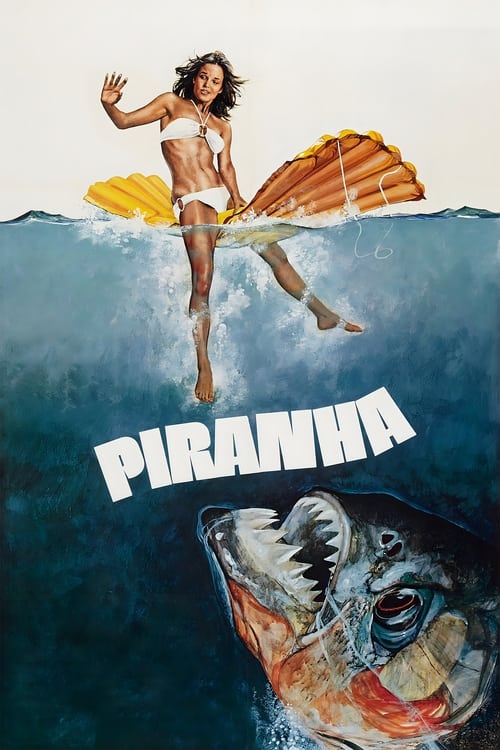
Piranha (1978)
Directed by Joe Dante
No — Piranha is not woke, scoring 9 out of 100 on our wokeness meter.
Piranha arrives from 1978 with a rubber fish in its mouth and no interest in the culture wars that would arrive decades later.
Consciousness Markers
Maggie McKeown is a determined female skiptracer who drives much of the plot, but this is incidental to a 1978 creature feature rather than any deliberate feminist statement.
The film satirizes military-industrial secrecy and government cover-ups (Operation: Razorteeth, Dr. Mengers spinning the truth on television), but this is Cold War-era institutional cynicism rather than an eat-the-rich economic critique.
The film carries a wry satirical bite about government and military incompetence, but it is delivered with B-movie tongue-in-cheek rather than preachy moralizing.
The cast is entirely white, with no meaningful racial or ethnic diversity in the principal or supporting roles.
There are no LGBTQ+ characters, themes, or subtext anywhere in the film.
The film engages no racial themes or commentary whatsoever.
No environmental or climate concerns are present; the ecological angle is purely a monster-delivery mechanism.
No body-positivity themes; the film trades in conventional exploitation imagery.
No neurodivergent characters or themes are present.
The Vietnam-era backstory is fictional genre scaffolding, not a revisionist reframing of real historical events.
Why it received this score
Piranha arrives from 1978 with a rubber fish in its mouth and no interest in the culture wars that would arrive decades later. Joe Dante directs John Sayles's script about genetically altered piranhas released into a river near a summer resort. The cast is entirely white, the concerns are entirely local, and the film's idea of a social problem is a government cover-up that might ruin a vacation. There is no racial consciousness, no LGBTQ subtext, no climate allegory, no body positivity, and no neurodivergent representation. The piranhas are not stand-ins for anything except piranhas.
The film does offer Maggie McKeown, a skiptracer who pushes much of the plot forward. She is competent and stubborn, which is more than many 1970s horror films allowed, but the movie treats her as a genre necessity. It is not making a feminist argument. The script also sneers at military-industrial secrecy through Operation: Razorteeth and Dr. Mengers's televised spin. That is Cold War institutional cynicism, not an economic uprising. The film has no interest in class warfare, racial justice, or the politics of the body. It wants to put swimmers in the water and let the teeth do the rest.
The satire is delivered with a wink. Dante keeps the pace brisk, the in-jokes dry, and the moralizing absent. There is a mild lecture about government incompetence, but it comes wrapped in B-movie slapstick and stop-motion curiosity. The result is a cult curiosity that Spielberg admired and critics still find agreeable. As a document of modern progressive sensibilities, it is barren. As a creature feature, it is efficient. The distinction matters. Not every film needs to be a sermon, and this one is happy to be a snack.
Analysis generated by our Consciousness Algorithm


Synopsis
When flesh-eating piranhas are accidentally released into a summer resort's rivers, the guests become their next meal.
Questions about Piranha
Is Piranha woke?
No — Piranha is not woke, scoring 9 out of 100 on our wokeness meter. That earns it a verdict of Ultra Based.
Does Piranha have any woke elements?
Very few. None of the 10 markers reaches 30, the level where a marker counts as present; the highest is Eat the Rich at 12.
How does Piranha compare to other 1978 movies?
It ranks #7 of the 27 films from 1978 we've scored; their average is 8. The wokest is The Wiz (52).
How is the Woke Score calculated?
An AI-assisted process researches the film and its reception, scores it 0–100 on ten markers, then combines those into one 0–100 Woke Score. It measures a specific set of 2020s cultural themes, not film quality.