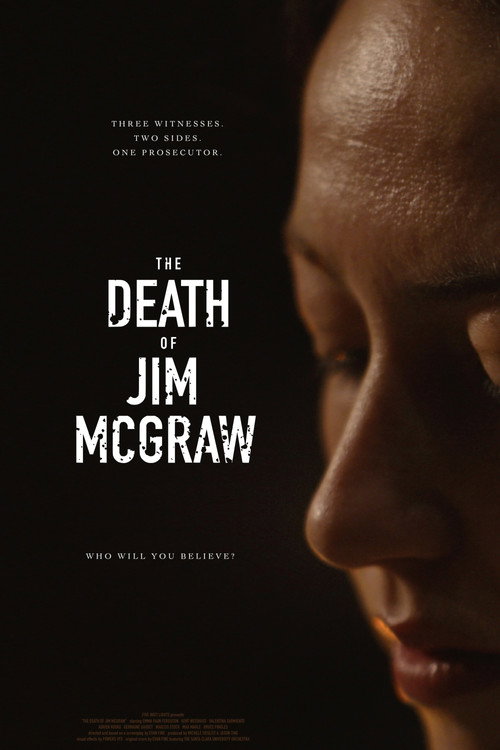
The Death of Jim McGraw (2026)
Directed by Evan Fine
The Death of Jim McGraw arrives from director Evan Fine as a short film about a novice prosecutor navigating a murder trial, a premise that announces itself with the confidence of a first-year law student presenting oral argument.
Consciousness Markers
The victim is a billionaire, which in 2026 carries a faint ambient charge. However, the film appears to treat the murder as a legal puzzle rather than a redistributive fantasy, so the score remains low.
The lead prosecutor is a woman, which is unremarkable in 2026 and appears to be a casting choice rather than a statement. No evidence of deliberate diversity signaling beyond this.
A female assistant district attorney is the protagonist fighting to secure a conviction, but the film's focus is procedural rather than ideological. The gender of the lead generates no apparent commentary.
No LGBTQ+ themes, characters, or storylines are present or referenced in any available material.
No evidence of racial themes, race-conscious casting commentary, or systemic racism narratives in any available research.
A billionaire murder mystery set at a New Year's Eve gala has no known connection to climate discourse.
No body positivity themes or related commentary are present in any available material.
No neurodivergence themes, characters, or framing are present or referenced.
The film is an original fictional story with no historical setting or revisionist intent.
Director Evan Fine has stated the film's motivation is procedural and craft-driven, rooted in Mock Trial experience. No evidence of sermonizing or ideological messaging in the narrative.
Why it received this score
The Death of Jim McGraw arrives from director Evan Fine as a short film about a novice prosecutor navigating a murder trial, a premise that announces itself with the confidence of a first-year law student presenting oral argument. The film's central conceit, revealing the victim and killer in the opening minute and then spending its remaining runtime on courtroom procedure, is a genuinely interesting structural choice. It is the kind of film that could only have been made by someone who spent meaningful time in Mock Trial competitions and emerged from the experience believing that voir dire is, in fact, dramatic. They are not entirely wrong.\n\nFrom a progressive sensibilities standpoint, the film is essentially a blank canvas. A billionaire is murdered, which in the current cultural climate carries a faint ambient charge, but Fine appears uninterested in redistributive subtext. The victim is a plot device. The killer is a legal problem. The prosecutor, played by Emma Faun Ferguson, is a woman doing her job, which the film treats as neither remarkable nor worth remarking upon. This is, by contemporary standards, almost an act of restraint.\n\nThe research confirms what the film itself suggests: no lectures, no consciousness-raising, no systemic critiques embedded in the procedural machinery. Fine's stated motivation is his undergraduate Mock Trial experience and Stanford Law training, and the film reads accordingly. It is a short about process, not politics. In a landscape where every courtroom drama is expected to carry the weight of structural reform on its shoulders, The Death of Jim McGraw simply wants to know if the evidence is admissible. That is, genuinely, a minority position.
Analysis generated by our Consciousness Algorithm
Synopsis
A prosecutor fights for justice in the wake of a billionaire's murder on New Year's Eve.