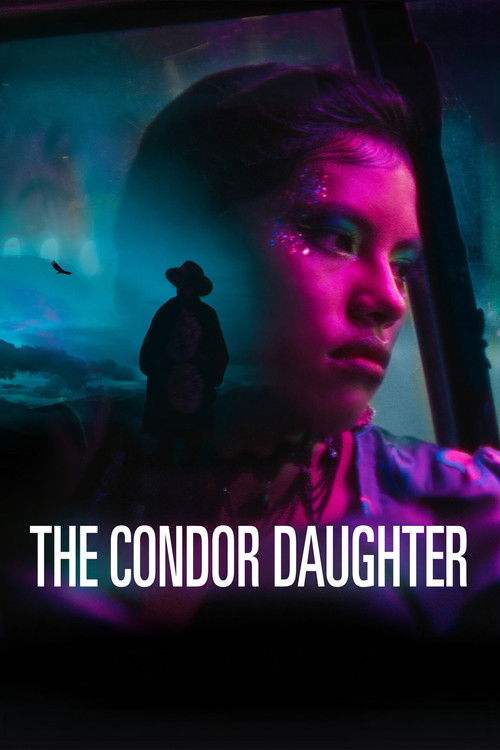
The Condor Daughter (2026)
Directed by Álvaro Olmos
Álvaro Olmos Torrico has made a film about an Indigenous Bolivian teenager who must choose between sacred ancestral tradition and the siren call of folkloric stardom in Cochabamba, and he has done so without once pausing to explain to the audience what they should feel about it.
Consciousness Markers
The film cast non-professional Indigenous Bolivian actresses discovered via community outreach and TikTok, with Quechua identity placed explicitly at the center of the narrative. This is not incidental diversity but a deliberate, foregrounded production philosophy.
Quechua language preservation, Indigenous identity, and the cultural survival of Andean midwifery traditions are foregrounded as explicit social messages, not background texture. Promoters and reviewers alike noted the film's advocacy for the contemporary relevance of Quechua identity.
Female autonomy under patriarchal community constraint is a central and explicit concern, including a scene in which a village elder cuts a woman's hair as punishment for stepping outside prescribed gender roles. The film treats women's agency as its primary dramatic engine.
The film implicitly rehabilitates suppressed Indigenous midwifery traditions as worthy of preservation and dignity, but it does not engage in corrective rewriting of historical events or figures in any sustained way.
Critics specifically and repeatedly praised the director for avoiding moralizing and overt political lectures, relying instead on restrained visual storytelling. A faint residue of social messaging remains, but the film appears to wear it lightly.
The rural-to-urban migration arc implies a tension between communal tradition and individual economic aspiration, but the film does not frame capitalism or urban modernity as a villain to be condemned.
No LGBTQ+ themes, characters, or subtext are present in the film or noted in any available research.
No climate, environmental, or ecological messaging is present in the film or noted in any available research.
No body positivity themes or messaging are present in the film or noted in any available research.
No neurodivergence themes or characters are present in the film or noted in any available research.
Why it received this score
Álvaro Olmos Torrico has made a film about an Indigenous Bolivian teenager who must choose between sacred ancestral tradition and the siren call of folkloric stardom in Cochabamba, and he has done so without once pausing to explain to the audience what they should feel about it. This is, in the current landscape, an act of considerable restraint. The film centers Quechua identity, language preservation, and the patriarchal constraints placed on rural Andean women with the full weight of its narrative attention, and yet it manages to avoid the trap that snares most films of this type: the characters are permitted to be people, not arguments.
The representation credentials are impeccable and, to the film's credit, earned. Lead actresses Marisol Vallejos Montaño and María Magdalena Sanizo are non-professionals cast through community outreach and social media, and the authenticity of their performances apparently justifies the unorthodox casting process, which resulted in Silver Biznaga hardware at Málaga and Bolivia's submission to the Academy Awards. The scene in which a community elder cuts a woman's hair as punishment for female transgression lands as genuinely unsettling precisely because the film does not score it with ominous music and a lingering close-up on the protagonist's horrified expression. The patriarchy, here, is simply present. It does not announce itself.
Where the film accumulates its social consciousness score, it does so quietly. The Quechua language preservation angle is explicit enough that promoters flagged it as a selling point, and the film's very existence as a Bolivian Indigenous drama with festival traction is itself a statement. But critics uniformly noted the absence of sermonizing, and the research supports that assessment. Bolivia has submitted a film to the Oscars that advocates for Indigenous culture without condescending to it. The bar for this achievement is lower than it should be, but the achievement is real.
Analysis generated by our Consciousness Algorithm
Synopsis
Clara is a teenager growing up in a small indigenous community high in the Andes. Her adoptive mother, a midwife who took her in as a baby, has taught her the ancient songs used to guide women through childbirth, melodies passed down for generations, believed to bring new life safely into the world. But while her voice carries on this tradition, her dreams lie elsewhere: she longs to leave the mountains behind and become a folkloric music star in the big city.