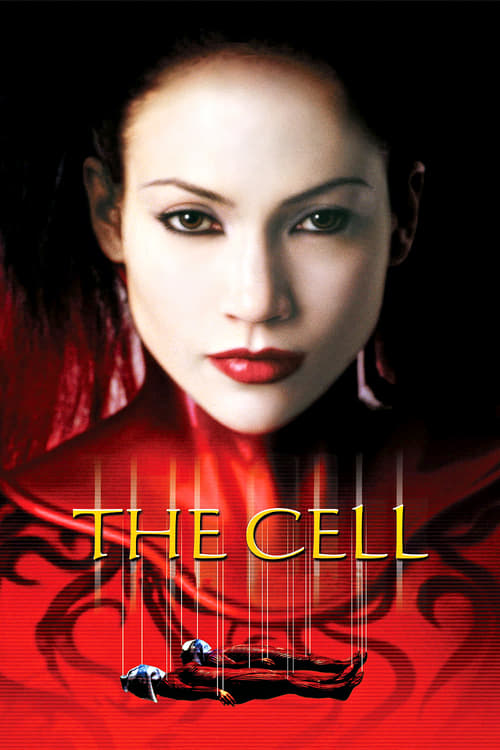
The Cell (2000)
Directed by Tarsem Singh
No — The Cell is not woke, scoring 16 out of 100 on our wokeness meter.
Tarsem Singh arrived from the world of music videos with a debut feature that treats the human skull as a venue for opera.
Consciousness Markers
A Latina actress (Jennifer Lopez) carries the lead as the heroic psychotherapist, with a Black actress (Marianne Jean-Baptiste) in a supporting scientist role — notable for a 2000 genre thriller, though the film never comments on it.
The female protagonist is the central agent who ultimately defeats the monstrous antagonist, but the film frames this as psychological drama rather than any feminist statement.
The film gestures at themes of childhood abuse and compassion for killers, but it presents them as open questions rather than moralizing lectures.
No LGBTQ+ characters, themes, or subtext of any kind.
Race is never a subject or theme; the diverse casting exists without commentary.
No environmental or climate themes whatsoever.
No economic critique; the villain is a serial killer, not a capitalist.
No body-positivity themes; the film's imagery is stylized and often grotesque.
Schizophrenia appears as a horror plot device tied to a serial killer's monstrous psyche, not as positive neurodivergent representation.
No historical revisionism; the story is entirely fictional and contemporary.
Why it received this score
Tarsem Singh arrived from the world of music videos with a debut feature that treats the human skull as a venue for opera. The Cell sends a psychotherapist into the comatose mind of a serial killer, and that mind is furnished with bisected horses, floating glass panels, and a desert the color of dried blood. It is a film of enormous visual confidence and modest narrative patience. Roger Ebert loved it. Most everyone else shrugged at the plot and stared at the wallpaper.
Jennifer Lopez carries the lead as the doctor, and Marianne Jean-Baptiste sits at a monitor as one of the scientists. Neither fact is announced, underlined, or explained to the audience. In 2000 this passed without remark, which is its own quiet data point. The story concerns a killer who was himself a victim, and it asks whether compassion is owed to a man who has done dreadful things. The screenplay poses the question and then declines to answer it, which spares us a closing monologue about the cycle of abuse. The climactic image of the doctor as a Marian figure cradling a drowning child is strange, gorgeous, and theologically unaffiliated.
Seen from the present day, the film reads as a relic of a moment when a genre thriller could be visually extravagant and morally unresolved at once. There is no sermon here, no checklist, no lesson imposed upon the audience. Just a glass box filling with water, and a woman deciding what mercy costs. It opened at number one and returned its budget three times over. The culture has since moved toward more explicit instruction, and this film's refusal to instruct now looks like a virtue.
Analysis generated by our Consciousness Algorithm


Synopsis
A psychotherapist journeys inside the mind of a comatose serial killer in the hopes of saving his latest victim.
Questions about The Cell
Is The Cell woke?
No — The Cell is not woke, scoring 16 out of 100 on our wokeness meter. That earns it a verdict of Ultra Based.
Does The Cell have any woke elements?
1 of the 10 markers register at 30 or above, led by Representation Casting (35). On Representation Casting: A Latina actress (Jennifer Lopez) carries the lead as the heroic psychotherapist, with a Black actress (Marianne Jean-Baptiste) in a supporting scientist role — notable for a 2000 genre thriller, though the film never comments on it.
How does The Cell compare to other 2000 movies?
It ranks #33 of the 125 films from 2000 we've scored; their average is 13. The wokest is But I'm a Cheerleader (72).
How is the Woke Score calculated?
An AI-assisted process researches the film and its reception, scores it 0–100 on ten markers, then combines those into one 0–100 Woke Score. It measures a specific set of 2020s cultural themes, not film quality.