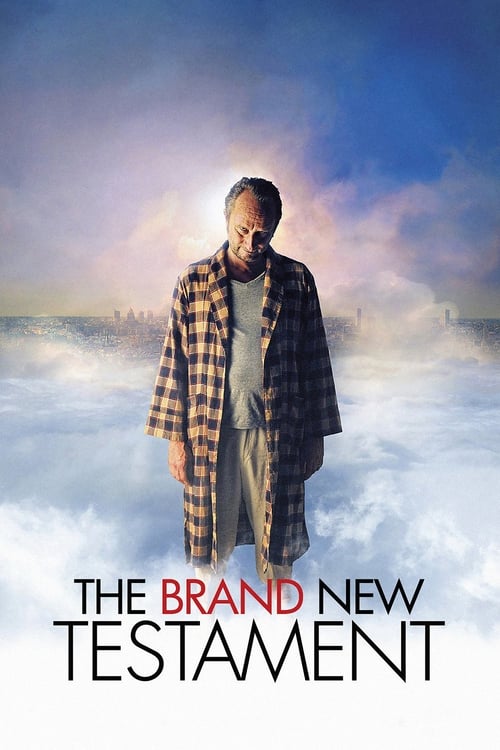
The Brand New Testament (2015)
Directed by Jaco Van Dormael
No — The Brand New Testament is not especially woke, scoring 28 out of 100 on our wokeness meter.
God lives in a Brussels apartment, beats his ten-year-old daughter with a belt, and torments humanity from a desktop computer because he has nothing better to do.
Consciousness Markers
The sixth apostle is a terminally ill boy who chooses to live his remaining days as a girl, a genuine gender-identity thread treated matter-of-factly and encouraged by Ea.
Ea, a young girl, revolts against her abusive patriarchal father-God, and God's wife ultimately seizes control of the divine computer, giving the film a clear feminist subtext of overthrowing male authority.
The film carries a subversive message about free will and religious tyranny, but delivers it through whimsical surrealist comedy rather than preachy sermonizing.
The cast is a largely white European ensemble; the film includes a one-armed woman and a homeless man as characters, but these exist as surrealist narrative devices rather than deliberate representational casting.
Illegal immigrants slated for deportation to Uzbekistan appear briefly as a plot device for God's comeuppance, but race is not a thematic concern of the film.
The film reimagines Biblical and religious narrative (God as a Brussels sadist, a new testament), but this is theological satire rather than a revision of historical record.
The film satirizes religion and divine cruelty rather than capitalism; the ending even rewards the scribe Victor with fame and fortune, offering no economic critique.
The one-armed apostle and the elderly woman's relationship with a gorilla touch on unconventional bodies and desire, but not as a body-positivity message.
No environmental or climate themes are present.
No neurodivergence themes are present.
Why it received this score
God lives in a Brussels apartment, beats his ten-year-old daughter with a belt, and torments humanity from a desktop computer because he has nothing better to do. Jaco Van Dormael's 2015 fantasy treats this as the setup for a whimsical road movie, which is either charming or deranged, and the film never picks a lane. Ea, the daughter, leaks everyone's death dates by text message and escapes through a washing machine. The premise is subversive in a manner that predates most streaming-era provocations, and it lands with a shrug.
The film's social instincts are real but soft. Ea's rebellion against a tyrannical father carries an unmistakable feminist charge, and when her mother seizes the divine computer at the end, male authority is quietly retired. The sixth apostle, a dying boy who chooses to spend his remaining days as a girl, is handled with a matter-of-factness that few English-language comedies of the period would have attempted. Elsewhere the ambition thins. The cast is a white European ensemble, with a one-armed woman and a homeless scribe functioning as surrealist props. Immigrants bound for Uzbekistan appear late as a plot mechanism. A woman's romance with a gorilla gestures at unconventional desire without arguing for anything.
What keeps it from sermonizing is the tone. Van Dormael prefers sight gags to speeches, so the message about free will and religious tyranny arrives sideways. The film satirizes a cruel deity, not an economic order, and the scribe's reward is a bestseller and a fortune. It is a curious, uneven film, more mischievous than moralizing, and it earns its cult status without ever raising its voice.
Analysis generated by our Consciousness Algorithm


Synopsis
God lives in Brussels. On Earth though, God is a coward, morally pathetic and odious to his family. His daughter, Ea, is bored at home and can't stand being locked up in a small apartment in ordinary Brussels, until the day she decides to revolt against her dad...
Questions about The Brand New Testament
Is The Brand New Testament woke?
No — The Brand New Testament is not especially woke, scoring 28 out of 100 on our wokeness meter. That earns it a verdict of Based.
Does The Brand New Testament have any woke elements?
3 of the 10 markers register at 30 or above, led by LGBTQ+ Themes (45), Feminist Agenda (40) and Lecture Energy (30). On LGBTQ+ Themes: The sixth apostle is a terminally ill boy who chooses to live his remaining days as a girl, a genuine gender-identity thread treated matter-of-factly and encouraged by Ea.
How does The Brand New Testament compare to other 2015 movies?
It ranks #39 of the 289 films from 2015 we've scored; their average is 15. The wokest is Chi-Raq (78).
How is the Woke Score calculated?
An AI-assisted process researches the film and its reception, scores it 0–100 on ten markers, then combines those into one 0–100 Woke Score. It measures a specific set of 2020s cultural themes, not film quality.