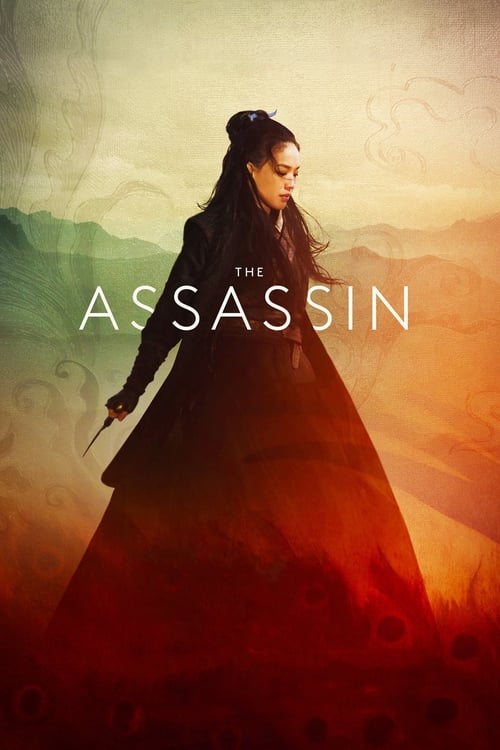
The Assassin (2015)
Directed by Hou Hsiao-hsien
No — The Assassin is not woke, scoring 2 out of 100 on our wokeness meter.
The Assassin arrives from 2015 with the calm of a museum piece that has never once been asked to justify itself.
Consciousness Markers
The cast is entirely East Asian, reflecting the film's Chinese historical setting rather than a modern diversity casting agenda.
There are no LGBTQ+ characters or themes.
While the protagonist is a female assassin, the film presents her story as a historical wuxia narrative without explicit feminist commentary or agenda.
The film does not engage with racial identity or racial justice themes.
There is no environmental or climate-related content.
The political conflicts are feudal and dynastic, not critiques of capitalism or wealth inequality.
No body positivity themes are present.
No neurodivergence themes are present.
The film is set in the Tang dynasty and based on a historical short story, without modern revisionist historical commentary.
The film is a slow, contemplative wuxia with no didactic or lecture-like messaging.
Why it received this score
The Assassin arrives from 2015 with the calm of a museum piece that has never once been asked to justify itself. Hou Hsiao-hsien takes the ninth-century tale of Nie Yinniang and strips the wuxia genre down to fabric, candlelight, and long silences. A woman trained from childhood to kill corrupt governors is sent home to murder the cousin she was once promised to. That is the plot. The film is mostly interested in the space between the plot and the silk curtain.
A female assassin at the center of a martial arts epic might look, from a distance, like an argument about something. It is not. Nie Yinniang's gender is a fact of the source material, a ninth-century short story by Pei Xing. The film treats it the way it treats the weather: present, unremarked, and not up for discussion. The political struggles here are dynastic and feudal. Nobody is dismantling an empire of capital or delivering a speech about it. The cast is entirely East Asian because the story takes place during the Tang dynasty, which is a form of historical accuracy and not a casting initiative. The film's convictions, such as they are, live in the framing of a doorway.
The result is a work of enormous formal control and almost no messaging. It won Hou the Best Director prize at Cannes and topped the Sight & Sound poll for 2015, which suggests the critical establishment will reward patience even when the audience is left holding a beautiful, empty vase. There is no sermon here, no lesson, no posture. It is a film about a woman deciding not to kill a man, filmed as though that decision were the quietest event in Chinese history. We classify it accordingly, and we find nothing to classify.
Analysis generated by our Consciousness Algorithm


Synopsis
9th century China. Ten year old general’s daughter Nie Yinniang is abducted by a nun who initiates her into the martial arts, transforming her into an exceptional assassin charged with eliminating cruel and corrupt local governors. One day, having failed in a task, she is sent back by her mistress to the land of her birth, with orders to kill the man to whom she was promised – a cousin who now leads the largest military region in North China. After 13 years of exile, the young woman must confront her parents, her memories and her long-repressed feelings.
Questions about The Assassin
Is The Assassin woke?
No — The Assassin is not woke, scoring 2 out of 100 on our wokeness meter. That earns it a verdict of Ultra Based.
Does The Assassin have any woke elements?
No. All 10 markers score zero.
How does The Assassin compare to other 2015 movies?
It ranks #254 of the 289 films from 2015 we've scored; their average is 15. The wokest is Chi-Raq (78).
How is the Woke Score calculated?
An AI-assisted process researches the film and its reception, scores it 0–100 on ten markers, then combines those into one 0–100 Woke Score. It measures a specific set of 2020s cultural themes, not film quality.