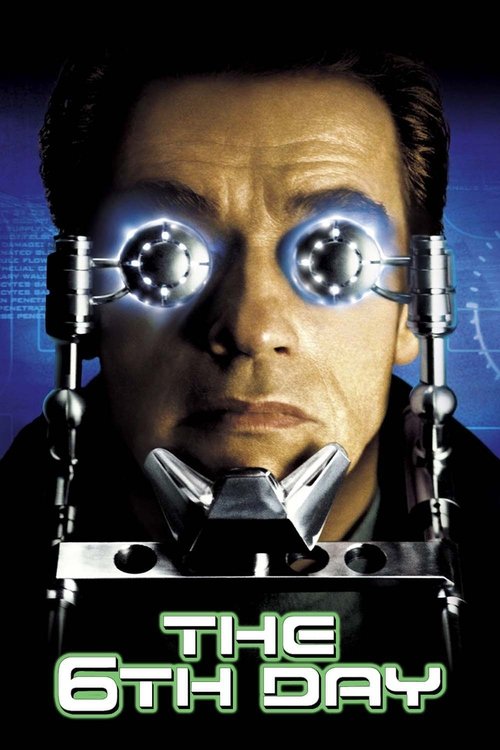
The 6th Day (2000)
Directed by Roger Spottiswoode
No — The 6th Day is not woke, scoring 8 out of 100 on our wokeness meter.
The 6th Day arrives from the year 2000, a moment when a studio could spend eighty-two million dollars on a cloning thriller and feel no obligation to explain itself to anyone.
Consciousness Markers
The villain is a shady billionaire who secretly clones himself to preserve his fortune and treats clones as property with no legal rights, giving the film a mild anti-corporate, dehumanization-of-labor streak, though it is never framed as a systemic economic critique.
The cast is overwhelmingly white, with Terry Crews appearing in a minor supporting role in his film debut. No casting choices are made with representational intent; minorities exist only incidentally.
The cloning-ethics premise carries faint thematic weight, but the film is a routine Schwarzenegger actioner that never stops to lecture its audience.
No LGBTQ+ characters, themes, or subtext appear anywhere in the film.
Sarah Wynter's Talia is a competent assassin and Wendy Crewson plays the wife, but the film offers no feminist critique or gender-conscious framing whatsoever.
Race is entirely unexamined; the film has no racial consciousness or commentary of any kind.
No environmental or climate themes are present in this cloning thriller.
No body positivity themes or messaging appear in the film.
No neurodivergent characters or themes are present.
The film engages with the Genesis creation narrative and cloning ethics but makes no revisionist historical claims.
Why it received this score
The 6th Day arrives from the year 2000, a moment when a studio could spend eighty-two million dollars on a cloning thriller and feel no obligation to explain itself to anyone. Arnold Schwarzenegger plays Adam Gibson, a charter pilot who comes home to find that a duplicate has taken his place, his dog has been resurrected by a retail franchise, and a billionaire named Drucker has been quietly replacing himself for years. The title nods to the Genesis creation narrative. The film treats this as a premise, not a position.
The cultural inventory here is sparse. The cast is white to a degree that borders on architectural, with Terry Crews appearing in a minor supporting role in his film debut and no casting decision made with representational intent. No LGBTQ characters or subtext appear. Sarah Wynter's Talia is a capable assassin and Wendy Crewson's wife is a wife, and the film offers no gender-conscious framing of either. Race goes unexamined. The environment goes unmentioned. Bodies are bodies. Neurodivergence does not enter the conversation. The Genesis reference is theological furniture, not a revisionist claim about history. We are left, then, with the villain.
Drucker is a shady billionaire who cloned himself to preserve his fortune and regards his clones as property without legal rights. That gives the proceedings a mild anti-corporate chill, the sense that capital would happily duplicate and discard its own workforce to keep the books balanced. It is never framed as systemic critique, and the film has no interest in pressing the point. The cloning-ethics premise carries faint thematic weight, though the machinery of the actioner keeps interrupting before anything resembling a sermon can form. The result is a film that thinks about mortality for ninety minutes and concludes that the answer is a helicopter.
Analysis generated by our Consciousness Algorithm


Synopsis
A world of the very near future in which cattle, fish, and even the family pet can be cloned. But cloning humans is illegal - that is until family man Adam Gibson comes home from work one day to find a clone has replaced him. Taken from his family and plunged into a sinister world he doesn't understand, Gibson must not only save himself from the assassins who must destroy him to protect their secret, but uncover who and what is behind the horrible things happening to him.
Questions about The 6th Day
Is The 6th Day woke?
No — The 6th Day is not woke, scoring 8 out of 100 on our wokeness meter. That earns it a verdict of Ultra Based.
Does The 6th Day have any woke elements?
Very few. None of the 10 markers reaches 30, the level where a marker counts as present; the highest is Eat the Rich at 15.
How does The 6th Day compare to other 2000 movies?
It ranks #65 of the 125 films from 2000 we've scored; their average is 13. The wokest is But I'm a Cheerleader (72).
How is the Woke Score calculated?
An AI-assisted process researches the film and its reception, scores it 0–100 on ten markers, then combines those into one 0–100 Woke Score. It measures a specific set of 2020s cultural themes, not film quality.