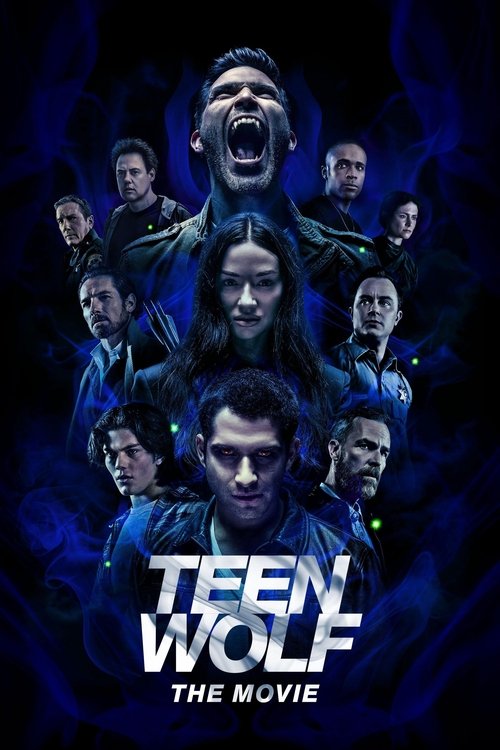
Teen Wolf: The Movie (2023)
Directed by Russell Mulcahy
No — Teen Wolf: The Movie is not woke, scoring 12 out of 100 on our wokeness meter.
Teen Wolf: The Movie arrives fifteen years after the series began, which is roughly the interval required for nostalgia to curdle into obligation.
Consciousness Markers
The ensemble is notably diverse (Latino lead, Black and Asian supporting players), but this diversity is inherited from the 2011 series rather than newly foregrounded as a representational statement.
Allison, Lydia, and Malia are capable combatants and Lydia's banshee scream is pivotal, but the film offers no explicit feminist thesis; it is standard action-ensemble competence.
Canonically gay characters Jackson and Mason appear, but their queerness is incidental background detail with no thematic weight in the plot.
The film is a nostalgia-driven supernatural action romp with no preachy messaging or moral instruction directed at the audience.
Race is never a subject of the narrative; the diverse cast exists without commentary on racial identity or injustice.
The forest fires are a villain's arson plot device, not an environmental parable; no climate messaging is present.
Lydia's employment at an energy company is a throwaway detail; the film mounts no critique of capitalism or wealth.
No engagement with body image, size, or physical self-acceptance themes.
No depiction or discussion of neurodivergence, mental health conditions, or neurodiverse identity.
The film continues existing franchise lore rather than revising or reinterpreting historical events.
Why it received this score
Teen Wolf: The Movie arrives fifteen years after the series began, which is roughly the interval required for nostalgia to curdle into obligation. Scott McCall now runs an animal shelter. Derek has a son. Lydia has a job at an energy company, a detail the screenplay treats as scenery. An ancient Japanese spirit called the Nogitsune is freed from an urn, forest fires are set, Allison is resurrected with amnesia, and a great many people who once attended Beacon Hills High School reconvene to punch the same villain they punched in 2014. It is a reunion special with claws.
The film declines to argue. Race is never a subject here. The cast is diverse, and that diversity was inherited from the 2011 series, not newly arranged as a statement. Climate does not enter the frame, though the woods are on fire; the arson belongs to a vengeful ex-teacher with a grudge, a motive as old as the genre. Nobody critiques the energy company. Nobody discusses body image, neurodivergence, or the reinterpretation of history. The film is uninterested in picking a fight with anyone.
The progressive content that does exist is ambient. Two canonically gay characters appear and are permitted to exist without plot consequence, which is its own kind of progress and its own kind of shrug. Allison, Lydia, and Malia fight capably, and Lydia's scream decides the third act, though no thesis accompanies the competence. The sermon count is effectively zero. This is a film built for people who already bought the ticket, and it knows better than to lecture them on the way in. As vintages go, it is a warm, flat, faintly metallic pour, best served to an audience already nostalgic for the bottle.
Analysis generated by our Consciousness Algorithm
Synopsis
The wolves are howling once again, as a terrifying ancient evil emerges in Beacon Hills. Scott McCall, no longer a teenager yet still an Alpha, must gather new allies and reunite trusted friends to fight back against this powerful and deadly enemy.
Questions about Teen Wolf: The Movie
Is Teen Wolf: The Movie woke?
No — Teen Wolf: The Movie is not woke, scoring 12 out of 100 on our wokeness meter. That earns it a verdict of Ultra Based.
Does Teen Wolf: The Movie have any woke elements?
1 of the 10 markers register at 30 or above, led by Representation Casting (30). On Representation Casting: The ensemble is notably diverse (Latino lead, Black and Asian supporting players), but this diversity is inherited from the 2011 series rather than newly foregrounded as a representational statement.
How does Teen Wolf: The Movie compare to other 2023 movies?
It ranks #135 of the 200 films from 2023 we've scored; their average is 24. The wokest is Origin (84).
How is the Woke Score calculated?
An AI-assisted process researches the film and its reception, scores it 0–100 on ten markers, then combines those into one 0–100 Woke Score. It measures a specific set of 2020s cultural themes, not film quality.