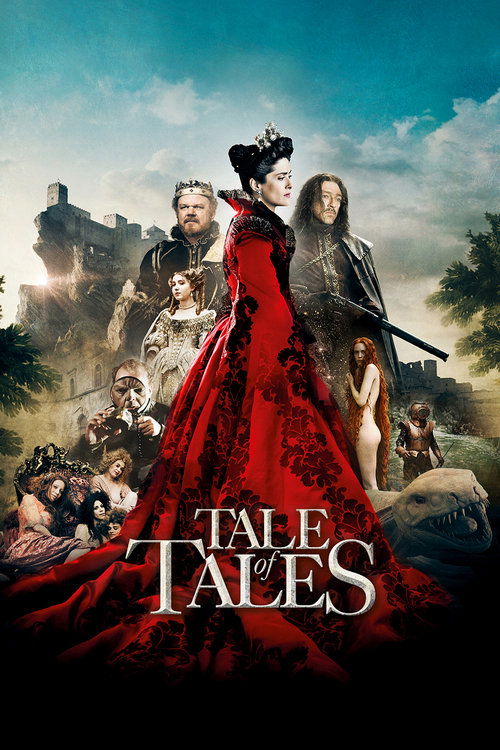
Tale of Tales (2015)
Directed by Matteo Garrone
No — Tale of Tales is not woke, scoring 18 out of 100 on our wokeness meter.
Matteo Garrone's Tale of Tales is a triptych drawn from Giambattista Basile's Pentamerone, and it carries itself like a tapestry left in a damp castle: gorgeous, musty, and faintly hostile to the touch.
Consciousness Markers
The film centers on women's desires, motherhood, aging, and beauty standards, but it does not advance an explicit modern feminist agenda.
The cast is predominantly white European with no evident modern representation-casting agenda.
No LGBTQ+ themes or characters are present in the film.
No racial themes or commentary are present; the story is set in a fantastical European kingdom.
There is no climate or environmental messaging in the film.
The film features kings and kingdoms but offers no anti-capitalist or eat-the-rich critique.
Although aging and beauty are themes, the film treats them through horror and grotesquerie rather than body-positive messaging.
No neurodivergent characters or themes are present.
The film is based on fairy tales, not historical events, and does not revise history.
The film presents its themes through dark fantasy storytelling rather than direct lecturing or moralizing.
Why it received this score
Matteo Garrone's Tale of Tales is a triptych drawn from Giambattista Basile's Pentamerone, and it carries itself like a tapestry left in a damp castle: gorgeous, musty, and faintly hostile to the touch. Three kingdoms, three obsessions. A queen eats a sea dragon's heart to conceive. A king falls for a voice and discovers an old woman beneath it. Another king raises a flea to monstrous size and then bargains away his daughter to an ogre. The film has the patience of a folktale and the cruelty of one, too. It is not in a hurry to reassure anyone.
The stories circle women's appetites and women's costs: maternity, youth, beauty, the fear of being discarded. That material is real, and the film gives it weight. It does not, however, organize itself into a modern thesis. The gaze is grotesque, not corrective. Aging is treated as horror and farce, not as a lesson in self-acceptance. The cast is European, the courts are European, and the film never stops to explain its own demographics. There is no racial argument, no climate sermon, no economic parable about kings and their hoarded pleasures. The kings are simply kings, and the ogres are simply ogres.
Garrone's direction is stately and strange, with real locations doing the work of a studio dream. The result is a film of old fears and old punishments, told with a straight face. It has progressive undertones if you squint, mostly because it takes women's suffering seriously. But it never lectures. It never mounts a campaign. It sits on its throne, adjusts its crown, and lets the blood dry.
Analysis generated by our Consciousness Algorithm


Synopsis
The Queen of Selvascura risks everything to be a mother; the King of Roccaforte falls in love with the voice of a mysterious girl; the King of Altomonte becomes obsessed with a flea and neglects his daughter.
Questions about Tale of Tales
Is Tale of Tales woke?
No — Tale of Tales is not woke, scoring 18 out of 100 on our wokeness meter. That earns it a verdict of Ultra Based.
Does Tale of Tales have any woke elements?
1 of the 10 markers register at 30 or above, led by Feminist Agenda (30). On Feminist Agenda: The film centers on women's desires, motherhood, aging, and beauty standards, but it does not advance an explicit modern feminist agenda.
How does Tale of Tales compare to other 2015 movies?
It ranks #81 of the 289 films from 2015 we've scored; their average is 15. The wokest is Chi-Raq (78).
How is the Woke Score calculated?
An AI-assisted process researches the film and its reception, scores it 0–100 on ten markers, then combines those into one 0–100 Woke Score. It measures a specific set of 2020s cultural themes, not film quality.