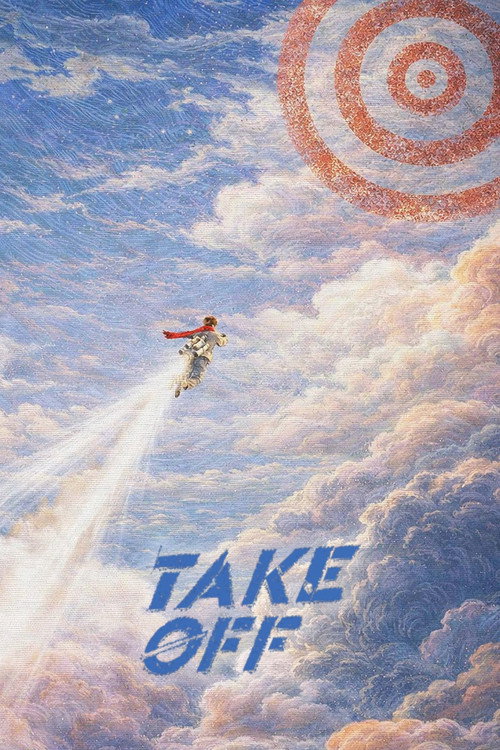
Take Off (2026)
Directed by Peng Fei
Peng Fei's Take Off arrives bearing a fictionalized Hegel quote in its first fifteen minutes, which tells you approximately everything you need to know about its ambitions and its methods.
Consciousness Markers
The film's backdrop is the collapse of China's state-owned enterprise system and the 'iron rice bowl,' depicting working-class hardship during mass layoffs. The critique is embedded in the period setting rather than delivered as polemic, and the film ultimately pivots toward warm resilience over structural indictment.
The film pairs acclaimed dramatic actor Jiang Qiming with Dongbei pop culture figures including stand-up comedian Li Xueqin and rapper Dong Baoshi. This reflects organic regional authenticity rather than the progressive diversity-checkbox framework, earning only the faintest trace of a score.
The film opens with a fictionalized Hegel quote about nations needing people who look up to the stars, which carries a mild inspirational-thesis energy. It does not sustain any sermonizing momentum beyond this opening gesture.
No LGBTQ+ themes, characters, or subtext of any kind are present in the film or its surrounding discourse.
No feminist agenda is discernible. The narrative centers entirely on a male protagonist's quixotic engineering obsession, and no gendered power critique is advanced.
The film operates entirely within a single regional Chinese cultural context. No racial consciousness discourse in the contemporary Western progressive sense is present.
A man builds a flying machine in the 1980s-90s Dongbei rust belt. Environmental consciousness is not on the agenda.
No body positivity themes or discourse are present in the film or its reception.
The protagonist is eccentric and single-minded to an absurdist degree, but the film frames this as quixotic folk heroism rather than through any neurodivergence lens.
The film depicts the post-Mao reform era with warmth rather than revisionist critique. The fictionalized Hegel quote functions as motivational framing, not historical reinterpretation.
Why it received this score
Peng Fei's Take Off arrives bearing a fictionalized Hegel quote in its first fifteen minutes, which tells you approximately everything you need to know about its ambitions and its methods. A man in Northeast China's rust belt wants to fly across the Songhua River in a machine he built himself. This is, by any reasonable measure, a terrible idea. The film treats it as a sacred calling. We are invited to agree, and most audiences apparently did.
Adapted from Shuang Xuetao's novella The Aeronaut, the film makes a pointed commercial decision: where the source material ends in tragic ambiguity, Peng Fei ends in triumph. The protagonist flies, raises money for his nephew's heart surgery, and the crowd goes home warm. Critics who noted this shift were not wrong to note it. The film's working-class backdrop, the collapsed state enterprises, the layoffs, the grinding uncertainty of the xiagang era, is present as texture rather than argument. It is a critique that has been sanded smooth and lacquered until it gleams. This is a legitimate artistic choice. It is also a very safe one.
From a progressive-sensibility standpoint, Take Off is essentially inert. It is a film about a man, made by a man, concerning a man's dream, set in a specific regional culture that it depicts with evident affection and zero ideological agenda. The casting of Dongbei comedian Li Xueqin and rapper Dong Baoshi (Gem) alongside more formally trained actors reflects a commitment to regional authenticity that predates and operates entirely outside the Western diversity-casting discourse. The film's social consciousness begins and ends with the observation that ordinary people in difficult circumstances can be stubborn and funny and occasionally airborne. For a cultural analyst of progressive markers, this is a remarkably quiet afternoon.
Analysis generated by our Consciousness Algorithm
Synopsis
A worker from Northeast China is obsessed with his dream of flying his self-made flying-device.