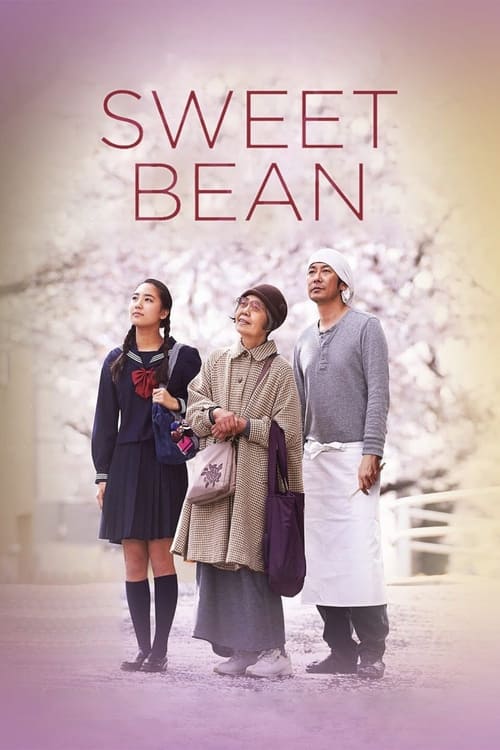
Sweet Bean (2015)
Directed by Naomi Kawase
No — Sweet Bean is not woke, scoring 19 out of 100 on our wokeness meter.
Naomi Kawase's Sweet Bean arrives with the quiet confidence of a film that knows exactly how much it can get away with.
Consciousness Markers
Tokue's deformed hands and leprosy are central to the plot's prejudice, and the film affirms her worth beyond appearance, aligning with disability and body-acceptance themes.
The film brings to light Japan's Leprosy Prevention Law and the forced isolation of patients until 1996, recovering a marginalized historical injustice, though it is a fictional humanist drama rather than an ideological rewriting.
The film centers on a 76-year-old woman and characters marginalized by leprosy, but the cast is entirely Japanese in a Japanese production, so this reflects the story's natural setting rather than a deliberate modern diversity-casting push.
A female director and a story centered on the dignity and wisdom of older women and a young girl offer a subtle feminist perspective, though gender inequality is not an explicit theme.
Tokue's recorded message explicitly states that a person's worth lies in being, not career, and that joy comes from sensory experience; the film delivers this gently rather than as a strident lecture.
The film contrasts artisanal bean paste with factory-made product and shows Sentaro trapped by debt to a loan shark, but it does not mount a systemic anti-capitalist critique.
There are no LGBTQ+ themes, characters, or subtext in the film.
The film deals with leprosy stigma in Japan, not racial identity or racial justice.
Nature and seasonal sensory experience are present, but there is no climate advocacy or environmental crusade.
There is no exploration of neurodivergence or neurodiverse characters.
Why it received this score
Naomi Kawase's Sweet Bean arrives with the quiet confidence of a film that knows exactly how much it can get away with. Sentaro runs a failing dorayaki stall on the outskirts of Tokyo, a man hollowed out by a pub brawl, a prison term, and a debt to the sort of lender who owns your shop and your mornings. Into this gloom walks Tokue, seventy-six years old, with hands deformed by leprosy, applying for a job she has wanted her entire life. She makes bean paste that shames the factory bucket Sentaro has been spooning out for years. Business improves. Then the customers learn why her hands look the way they do, and business does not improve anymore. The film handles this with restraint, which is both its virtue and its strategy.
The cultural accounting here is modest but real. Tokue's disfigurement and her decades of forced isolation under Japan's Leprosy Prevention Law carry a genuine charge, and the film recovers a historical injustice that the country spent a long time not discussing. That registers as a quiet act of conscience, not a sermon. The casting is entirely Japanese because the story is entirely Japanese, and we should not pretend otherwise. A woman directs the picture, and the emotional weight sits with an elderly woman and a schoolgirl, which counts for something without anyone announcing it. The debt trap is sketched but never prosecuted as a systemic indictment. The bean paste is artisanal and the factory paste is not, and there the critique ends.
Where the film drifts toward instruction is in its closing cassette recording, in which Tokue explains that worth resides in being rather than doing, and that joy lives in sensory attention. It is lovely. It is also a thesis statement delivered by a dying woman, which is a difficult thing to argue with and an easy thing to preach. The whole enterprise is gentle, slow, and sincere, and it means well in a way that predates any of our current cultural vocabulary. A dignified small film about dignity. We have seen many. This one is better than most, and it still ends up telling us what it thinks we should feel.
Analysis generated by our Consciousness Algorithm


Synopsis
The master of a dorayaki pastry store hires a 76-year-old woman whose talents attract customers from all over. But she's hiding a troubling secret. Life's joys are found in the little details, and no matter what may be weighing you down, everyone loves a good pastry.
Questions about Sweet Bean
Is Sweet Bean woke?
No — Sweet Bean is not woke, scoring 19 out of 100 on our wokeness meter. That earns it a verdict of Ultra Based.
Does Sweet Bean have any woke elements?
2 of the 10 markers register at 30 or above, led by Body Positivity (30) and Revisionist History (30). On Body Positivity: Tokue's deformed hands and leprosy are central to the plot's prejudice, and the film affirms her worth beyond appearance, aligning with disability and body-acceptance themes.
How does Sweet Bean compare to other 2015 movies?
It ranks #78 of the 289 films from 2015 we've scored; their average is 15. The wokest is Chi-Raq (78).
How is the Woke Score calculated?
An AI-assisted process researches the film and its reception, scores it 0–100 on ten markers, then combines those into one 0–100 Woke Score. It measures a specific set of 2020s cultural themes, not film quality.