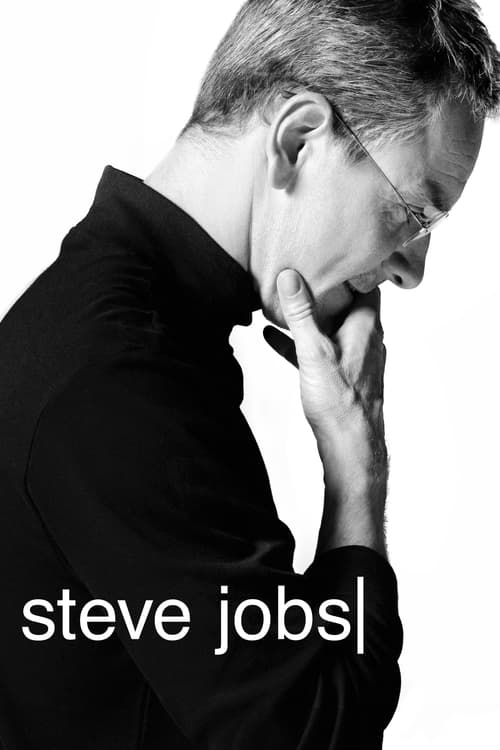
Steve Jobs (2015)
Directed by Danny Boyle
No — Steve Jobs is not woke, scoring 8 out of 100 on our wokeness meter.
Steve Jobs arrives as a three-act backstage drama, all corridors and countdowns, in which Aaron Sorkin's people walk briskly and speak in complete paragraphs.
Consciousness Markers
Kate Winslet's Joanna Hoffman is written as the one person who can 'knock sense' into Jobs and serves as his moral compass, giving the film a strong female presence, but this is character-driven rather than an articulated feminist thesis.
Sorkin's script is famously talky and didactic, with characters delivering moralizing monologues, but the lecturing concerns Jobs' character and legacy rather than any progressive social agenda.
The cast is overwhelmingly white, with Michael Fassbender, Kate Winslet, Seth Rogen, and Jeff Daniels filling the principal roles; John Ortiz appears in a minor supporting part. No meaningful diversity casting effort is present.
The film takes substantial dramatic license with real events and dialogue (Sorkin admits much of the dialogue is fiction), but this is conventional biopic compression rather than ideologically motivated historical revisionism.
The film critiques Jobs' personal cruelty and corporate ruthlessness, but it remains a celebration of the visionary capitalist rather than a systemic indictment of wealth or capital.
The film contains no LGBTQ+ characters, relationships, or themes whatsoever.
The film engages no racial themes or commentary; it is a portrait of white Silicon Valley figures.
There is no environmental or climate content in the film.
No body positivity themes or messaging are present.
Jobs' controlling, obsessive behavior is depicted as a character flaw rooted in his adoption, not framed through any neurodivergence lens.
Why it received this score
Steve Jobs arrives as a three-act backstage drama, all corridors and countdowns, in which Aaron Sorkin's people walk briskly and speak in complete paragraphs. Danny Boyle shoots it on three film stocks to mark the passage from 1984 to 1998, a formal gesture that announces seriousness. The subject is a man of enormous wealth and limited warmth, and the film treats his cruelty mostly as a symptom of having been given up at birth. That is a psychological reading, not a political one.
On the ledger of modern social consciousness, the film registers as a faint pulse. Kate Winslet's Joanna Hoffman is the only person permitted to knock sense into the genius, and she does so with a moral authority the script grants her without argument. That gives the picture a sturdy female center. The critique of corporate ruthlessness never travels far enough to indict the system. The visionary capitalist is mourned, not dismantled. The cast is white, the Silicon Valley of the era is rendered as such, and no commentary is attached. Race, sexuality, climate, body, mind: none of it is the film's business.
The rest is Sorkin sermonizing at volume about fathers and daughters and the price of genius. The lecturing has no cause attached to it, which makes for an odd vintage. Fassbender captures the essence, as he put it, and the essence turns out to be a man shouting in a hallway. The film is well made and well acted, and it leaves the culture wars to other people. It closes with a father handing his daughter a printout he kept for years, and we are meant to weep. Some of us took notes instead.
Analysis generated by our Consciousness Algorithm
Part of


Synopsis
Set backstage at three iconic product launches and ending in 1998 with the unveiling of the iMac, Steve Jobs takes us behind the scenes of the digital revolution to paint an intimate portrait of the brilliant man at its epicenter.
Questions about Steve Jobs
Is Steve Jobs woke?
No — Steve Jobs is not woke, scoring 8 out of 100 on our wokeness meter. That earns it a verdict of Ultra Based.
Does Steve Jobs have any woke elements?
Very few. None of the 10 markers reaches 30, the level where a marker counts as present; the highest is Feminist Agenda at 15.
How does Steve Jobs compare to other 2015 movies?
It ranks #158 of the 289 films from 2015 we've scored; their average is 15. The wokest is Chi-Raq (78).
How is the Woke Score calculated?
An AI-assisted process researches the film and its reception, scores it 0–100 on ten markers, then combines those into one 0–100 Woke Score. It measures a specific set of 2020s cultural themes, not film quality.