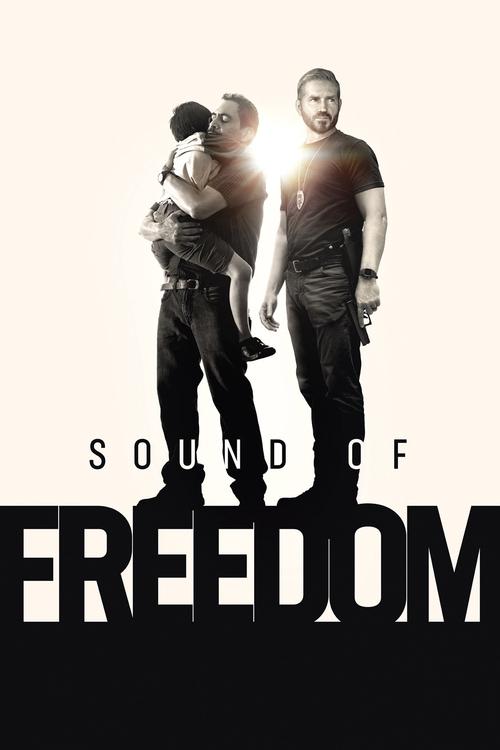
Sound of Freedom (2023)
Directed by Alejandro Monteverde
No — Sound of Freedom is not woke, scoring 9 out of 100 on our wokeness meter.
Sound of Freedom arrives with the solemn bearing of a film that believes it has something to tell us, and it does, though not the thing its loudest admirers and detractors imagine.
Consciousness Markers
The film features a large Latin American supporting cast and is set in Honduras and Colombia, but the white leads and lack of commentary on race keep this from being a deliberate representational statement.
No LGBTQ+ themes or characters.
The narrative centers on a male hero rescuing children, with female characters in supportive roles; no feminist agenda.
The film focuses on child trafficking, not racial justice or systemic racism.
No environmental themes.
The villains are criminal traffickers, not capitalists; no critique of capitalism.
No body positivity themes.
No neurodivergence themes.
While based on a true story and criticized for factual embellishments, the revisions are not in service of a progressive/woke historical narrative.
The film has a moralizing tone and an epilogue urging action against trafficking, but its message is not aligned with progressive social justice lecturing.
Why it received this score
Sound of Freedom arrives with the solemn bearing of a film that believes it has something to tell us, and it does, though not the thing its loudest admirers and detractors imagine. Alejandro Monteverde's drama follows Tim Ballard, a Homeland Security agent who resigns to chase traffickers through Honduras and Colombia. The craft is competent. The urgency is real. Children are in danger, the jungle is dark, and Jim Caviezel plays the rescuer with the fixed intensity of a man who has read the script and taken it personally.
What the film does not carry is the ideological furniture of the 2020s. Its villains are criminals, not boardrooms, so there is no indictment of capital here, only of predation. The hero is a man, the rescued are children, and the women who appear do so in supportive capacities. Racial injustice goes unexamined, the climate goes unmentioned, and no character pauses to educate the audience on identity or equity. The Latin American supporting cast is substantial and the settings are rendered with some texture, which grants the production a measure of representational weight, though the camera never stops orbiting its white lead and never asks what his presence in these places means.
The film's moralizing is unmistakable. An epilogue looks directly at the viewer and asks for money, for attention, for action. It is preaching, and it is sincere. But the sermon is aimed at a congregation that has already decided what it believes, and its text is rescue, not reform. The result is a thriller that sweats sincerity and lands, for all its noise, well outside the cultural current it was accused of riding. It wants to save children. It does not want to save anyone from anything else.
Analysis generated by our Consciousness Algorithm


Synopsis
The story of Tim Ballard, a former US government agent, who quits his job in order to devote his life to rescuing children from global sex traffickers.
Questions about Sound of Freedom
Is Sound of Freedom woke?
No — Sound of Freedom is not woke, scoring 9 out of 100 on our wokeness meter. That earns it a verdict of Ultra Based.
Does Sound of Freedom have any woke elements?
Very few. None of the 10 markers reaches 30, the level where a marker counts as present; the highest is Representation Casting at 25.
How does Sound of Freedom compare to other 2023 movies?
It ranks #154 of the 200 films from 2023 we've scored; their average is 24. The wokest is Origin (84).
How is the Woke Score calculated?
An AI-assisted process researches the film and its reception, scores it 0–100 on ten markers, then combines those into one 0–100 Woke Score. It measures a specific set of 2020s cultural themes, not film quality.