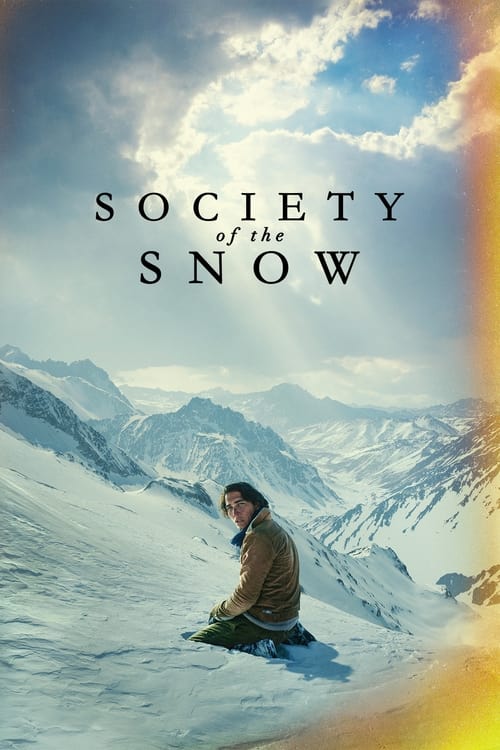
Society of the Snow (2023)
Directed by J. A. Bayona
No — Society of the Snow is not woke, scoring 9 out of 100 on our wokeness meter.
J. A. Bayona's Society of the Snow arrives with the full weight of a Netflix budget, two Academy Award nominations, and a determination to tell the 1972 Andes crash in Spanish with Uruguayan and Argentine unknowns.
Consciousness Markers
Bayona deliberately cast Uruguayan and Argentine unknowns and kept the film in Spanish for authenticity, a rejection of the 1993 Hollywood English-language version. This is cultural authenticity rather than a diversity checkbox, so it registers only mildly.
The film reframes the well-known disaster by foregrounding the voices of those who died rather than only the survivors, a mild narrative revision of the prior tellings.
The film trades preaching for a spiritual, existential humanism; survivors themselves noted it is 'free of an antagonist' and free of cynicism, keeping didacticism low.
The story centers on a 1970s male rugby team, and while the film foregrounds a range of voices, its concerns are communal survival and faith rather than gender critique.
There is no LGBTQ+ content, subtext, or character arc anywhere in the survival narrative.
The survivors are a homogenous group of Uruguayan rugby players; the film engages no racial or ethnic-justice themes.
This is a man-versus-nature survival story caused by a plane crash, with no environmental or climate messaging.
There is no class critique or eat-the-rich framing; the film is explicitly described as free of antagonists and cynicism.
The film depicts emaciation, injury, and cannibalism under extreme duress, which is the opposite of a body-positivity ethos.
No neurodivergent characters or themes are present.
Why it received this score
J. A. Bayona's Society of the Snow arrives with the full weight of a Netflix budget, two Academy Award nominations, and a determination to tell the 1972 Andes crash in Spanish with Uruguayan and Argentine unknowns. This is a corrective to the 1993 Hollywood version, which cast Americans and shot on a soundstage. The gesture registers, faintly, as cultural authenticity. It is not a diversity exercise. The survivors were a homogenous group of Catholic rugby players from Montevideo, and the film does not pretend otherwise.
What the film does not do is preach. There is no antagonist, no villainous corporation, no collapsing ecosystem to blame. The enemy is a glacier and a lack of food. The survivors eat the dead, which is the precise opposite of an affirmation of any body. No character pauses to interrogate masculinity, whiteness, or the extraction economy. The Catholic faith is treated with sincerity, not irony. The rugby club is a brotherhood, not a patriarchy requiring dismantling. The film's spiritual register is existential and communal, and it resists the urge to convert suffering into a lesson about the audience.
Where it does nudge the historical record, it does so gently. Bayona foregrounds the voices of the passengers who did not come home, giving narration to the dead, which mildly revises the survivor's-triumph template of earlier tellings. The survivors themselves have noted the absence of cynicism in the result. We are left with a well-made film about cold, hunger, and the will to live, competent, moving, and almost entirely free of the contemporary sermonizing that has become standard issue. A rare vintage. It pairs well with silence.
Analysis generated by our Consciousness Algorithm
Part of


Synopsis
On October 13, 1972, Uruguayan Air Force Flight 571, chartered to take a rugby team to Chile, crashes into a glacier in the heart of the Andes.
Questions about Society of the Snow
Is Society of the Snow woke?
No — Society of the Snow is not woke, scoring 9 out of 100 on our wokeness meter. That earns it a verdict of Ultra Based.
Does Society of the Snow have any woke elements?
Very few. None of the 10 markers reaches 30, the level where a marker counts as present; the highest is Representation Casting at 22.
How does Society of the Snow compare to other 2023 movies?
It ranks #154 of the 200 films from 2023 we've scored; their average is 24. The wokest is Origin (84).
How is the Woke Score calculated?
An AI-assisted process researches the film and its reception, scores it 0–100 on ten markers, then combines those into one 0–100 Woke Score. It measures a specific set of 2020s cultural themes, not film quality.