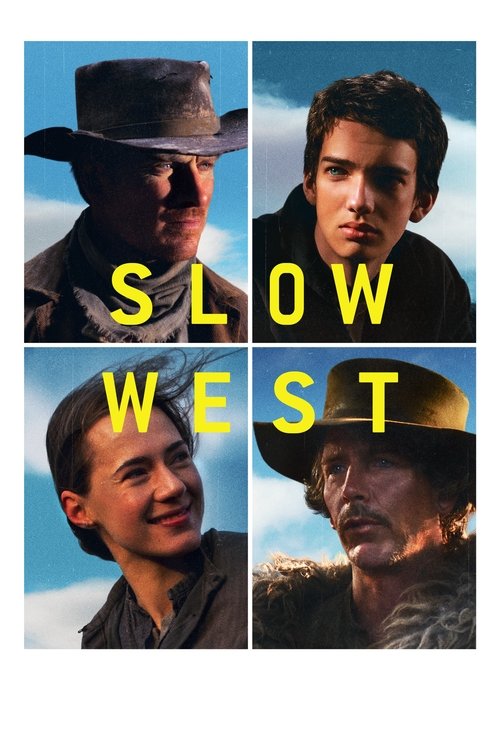
Slow West (2015)
Directed by John Maclean
No — Slow West is not woke, scoring 13 out of 100 on our wokeness meter.
John Maclean's Slow West arrives as a revisionist Western, which is to say it takes the old frontier mythology and quietly dismantles it while nobody is looking.
Consciousness Markers
The cast includes Native American actor Kalani Queypo as Kotori and New Zealand actress Madeleine Sami, but these are period-appropriate Western roles rather than deliberate diversity casting.
The film is explicitly a revisionist Western that deconstructs the genre's heroic mythology into absurdist, melancholy violence, though this is genre subversion rather than ideological rewriting of history.
Rose is a capable woman who turns the pistol to help Jay, but the film is a melancholy romance, not a feminist statement.
Native American characters appear (Kotori as a protector, others chased and killed), but the film treats them as part of the harsh frontier rather than as a racial-consciousness thesis.
The film is a quiet, absurdist character study that shows rather than tells, offering no moralizing or didactic messaging.
Bounty hunting and money motivate the plot, but the film offers no critique of capitalism or wealth.
No LGBTQ+ characters or themes appear anywhere in the film.
No environmental or climate themes are present.
No body positivity themes or messaging.
No neurodivergence themes or characters.
Why it received this score
John Maclean's Slow West arrives as a revisionist Western, which is to say it takes the old frontier mythology and quietly dismantles it while nobody is looking. A Scottish boy named Jay wanders Colorado in pursuit of Rose, a woman who regards him as a little brother, and hires a bounty hunter who is secretly escorting him toward a two thousand dollar reward. The film is an absurdist, melancholy thing, funny in the way that a long walk through bad weather is funny, and it ends in a shootout that kills nearly everyone worth caring about. It won the World Cinema jury prize at Sundance, which tells us the festival circuit has a reliable appetite for handsome sadness.
On the matter of social consciousness, the picture is largely abstinent. Kalani Queypo appears as Kotori, a protector of Rose and her father, and Madeleine Sami turns up in a small role, so the cast is not monochrome, though these are period-appropriate frontier figures and nothing more. Native Americans are chased, wounded, and killed as part of the harshness of the setting, not as the subject of a thesis. There is no queer thread, no environmental sermon, no meditation on the body or the mind's wiring, and the bounty money that drives the plot is never held up as a symptom of anything larger. Caren Pistorius's Rose is competent with a pistol when the moment demands it, which is a character trait, not a manifesto.
The film's one genuine act of subversion is against its own genre. It takes the Western's heroic vocabulary and replaces it with accident, miscommunication, and pointless death. That is genre deconstruction, not historical rewriting, and it carries no lecture. Maclean shows us a burned cabin and a boy bleeding in the grass and trusts us to draw our own conclusions. The result is a quiet, strange, beautifully photographed film that has no interest in instructing anyone. We are left to sit with it.
Analysis generated by our Consciousness Algorithm


Synopsis
In the Old West, a 17-year-old Scottish boy teams up with a mysterious gunman to find the woman with whom he is infatuated.
Questions about Slow West
Is Slow West woke?
No — Slow West is not woke, scoring 13 out of 100 on our wokeness meter. That earns it a verdict of Ultra Based.
Does Slow West have any woke elements?
Very few. None of the 10 markers reaches 30, the level where a marker counts as present; the highest is Representation Casting at 25.
How does Slow West compare to other 2015 movies?
It ranks #120 of the 289 films from 2015 we've scored; their average is 15. The wokest is Chi-Raq (78).
How is the Woke Score calculated?
An AI-assisted process researches the film and its reception, scores it 0–100 on ten markers, then combines those into one 0–100 Woke Score. It measures a specific set of 2020s cultural themes, not film quality.