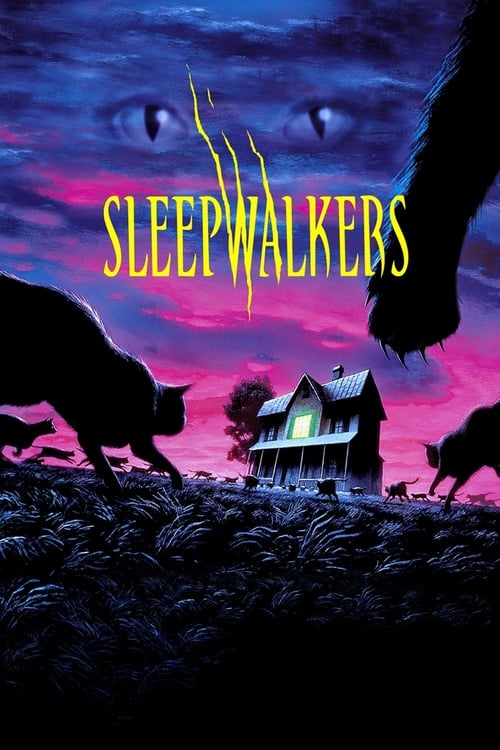
Sleepwalkers (1992)
Directed by Mick Garris
No — Sleepwalkers is not woke, scoring 0 out of 100 on our wokeness meter.
There is a moment in Sleepwalkers, roughly ninety seconds in, when we understand that the film has no interest in improving us.
Consciousness Markers
The cast is predominantly white and the film does not engage in any deliberate representation casting of marginalized groups.
There are no LGBTQ+ themes, characters, or subtext in the film.
The film features a female survivor, but this is a standard horror trope rather than a feminist agenda or explicit empowerment messaging.
The film does not address race, racism, or racial identity in any meaningful way.
There is no environmental or climate-related theme in the film.
The film contains no critique of capitalism, wealth inequality, or economic systems.
The film does not promote body positivity or challenge conventional beauty standards.
There is no exploration or representation of neurodivergence in the film.
The film is a fictional horror story and does not reinterpret historical events or figures.
The film is an exploitative horror piece and does not contain preachy or didactic social messaging.
Why it received this score
There is a moment in Sleepwalkers, roughly ninety seconds in, when we understand that the film has no interest in improving us. Stephen King wrote the screenplay, his first composed directly for the screen, and what he composed was a story about a mother and son, the last of a shapeshifting feline species, who feed on the life force of virgin women and who are also, in the film's most discussed flourish, lovers. Mick Garris directs with the solemn commitment of a man who believes he is making a serious picture. The MPAA disagreed, requiring five submissions before granting an R rating. This is a film that fought the ratings board and won the right to show us Ron Perlman's fingers being bitten off. No lesson is offered. None is intended.
The film's moral architecture is entirely thanatological. Tanya Robertson, played by Mädchen Amick, survives through a corkscrew to the eye and, later, her fingers in another eye, which is the standard final-girl arithmetic of the era rather than any statement about female agency. Her savior is a cat named Clovis. The cats of Travis, Indiana, are the only force capable of perceiving the Sleepwalkers' illusions, which makes them the film's true moral agents. That a domestic cat constitutes the ethical center of a major studio release is, on reflection, the most subversive thing here, and it is not subversive at all. It is simply a cat.
We search the frame for contemporary meaning and find none. No character remarks on the economic precarity of itinerant shapeshifters. The climate goes unaddressed. The town of Travis contains no discourse. The film simply proceeds, at speed, toward a burning driveway and a hug between a teenage girl and a cat. A treatment for a sequel was written by Tabitha King and involved a women's basketball team. It was never produced. That unrealized basketball sequel represents the closest this property ever came to a statement of any kind, and it remains, like the Sleepwalkers themselves, extinct.
Analysis generated by our Consciousness Algorithm


Synopsis
Charles Brady and his mother, Mary, are the last of a dying breed whose needs are not of this world. They are Sleepwalkers - able to stay alive only by feeding on the life-force of the innocent, but destined to roam the earth, avoiding discovery while searching for their next victim. That search takes them to the sleepy little town of Travis, Indiana, where beautiful teenager Tanya Robertson is about to become an unwilling pawn in their nightmarish fight for survival.
Questions about Sleepwalkers
Is Sleepwalkers woke?
No — Sleepwalkers is not woke, scoring 0 out of 100 on our wokeness meter. That earns it a verdict of Ultra Based.
Does Sleepwalkers have any woke elements?
No. All 10 markers score zero.
How does Sleepwalkers compare to other 1992 movies?
It ranks #65 of the 74 films from 1992 we've scored; their average is 12. The wokest is The Crying Game (62).
How is the Woke Score calculated?
An AI-assisted process researches the film and its reception, scores it 0–100 on ten markers, then combines those into one 0–100 Woke Score. It measures a specific set of 2020s cultural themes, not film quality.