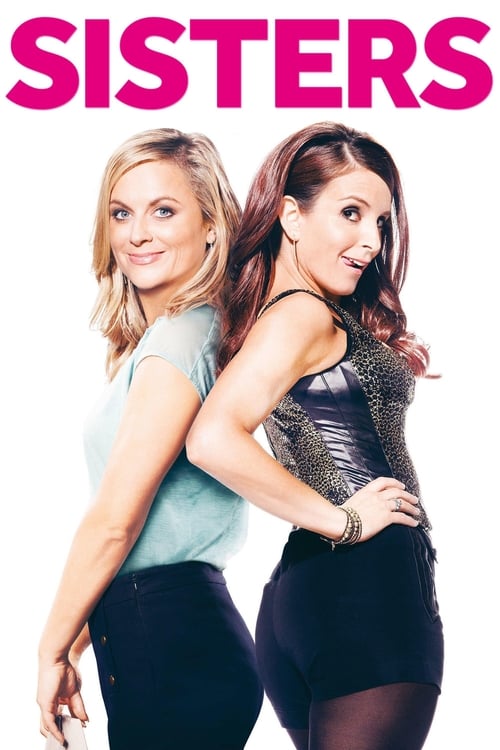
Sisters (2015)
Directed by Jason Moore
No — Sisters is not woke, scoring 16 out of 100 on our wokeness meter.
Sisters is a 2015 comedy about two estranged adult siblings, Kate and Maura, who return to their childhood home in Orlando to clear out a bedroom before the sale closes, and who instead throw one final party in the emptied house.
Consciousness Markers
A female-led comedy with a reasonably diverse supporting cast including Maya Rudolph, Greta Lee, Renée Elise Goldsberry, and John Leguizamo, though Greta Lee's role as a nail stylist leans on a mild stereotype.
A female-driven comedy written by Paula Pell and headlined by two women, frequently grouped with Bridesmaids and Spy, but its feminism is implicit in its casting rather than an articulated agenda.
The film is a raunchy party comedy that keeps its sentimentality light, offering no preachy moralizing to the audience.
No LGBTQ+ characters or themes appear anywhere in the film.
The film features minority performers but makes no comment on race, racism, or racial identity.
No environmental or climate themes whatsoever; the only geological event is a backyard sinkhole played for slapstick.
The plot revolves around selling a family home and opening a nail salon, with no critique of wealth or capitalism.
The film's humor is largely crude and physical but contains no body-positivity messaging or body-diversity themes.
A passing reference to a police officer's disabled cousin is a plot convenience, not a depiction of neurodivergence.
A contemporary domestic comedy with no historical subject matter to revise.
Why it received this score
Sisters is a 2015 comedy about two estranged adult siblings, Kate and Maura, who return to their childhood home in Orlando to clear out a bedroom before the sale closes, and who instead throw one final party in the emptied house. The plot is a delivery mechanism for slapstick and vulgarity, and it works about as often as it does not. Tina Fey and Amy Poehler have been doing this together long enough that their rhythm needs no introduction.
Screening this one for progressive content yields a modest return. The film is female-led and female-written, Paula Pell handling the script, and it slots neatly into the 2011 to 2015 cycle of ensemble comedies for women that critics kept comparing to Bridesmaids. That is a kind of cultural awareness, though it lives almost entirely in the casting and never announces itself. The supporting bench is reasonably varied, with Maya Rudolph, Renée Elise Goldsberry, John Leguizamo, and Greta Lee, the last of whom plays a nail stylist and leans on a stereotype the screenplay does not examine.
The rest of the ledger is bare. No queer characters, no engagement with race beyond the presence of performers, no climate anxiety, no critique of the property market it spends two hours negotiating, no body politics, no neurological diversity, no historical claims to revise. The single geological event, a backyard pool collapsing into a sinkhole, exists to drop a teenager into a hole. And the film resists the sermon. It wants to be rude and it stays rude, saving its hugs for the last five minutes. We can respect the restraint.
Analysis generated by our Consciousness Algorithm


Synopsis
Two disconnected sisters are summoned to clean out their childhood bedrooms before their parents sell their family home.
Questions about Sisters
Is Sisters woke?
No — Sisters is not woke, scoring 16 out of 100 on our wokeness meter. That earns it a verdict of Ultra Based.
Does Sisters have any woke elements?
2 of the 10 markers register at 30 or above, led by Representation Casting (32) and Feminist Agenda (30). On Representation Casting: A female-led comedy with a reasonably diverse supporting cast including Maya Rudolph, Greta Lee, Renée Elise Goldsberry, and John Leguizamo, though Greta Lee's role as a nail stylist leans on a mild stereotype.
How does Sisters compare to other 2015 movies?
It ranks #100 of the 289 films from 2015 we've scored; their average is 15. The wokest is Chi-Raq (78).
How is the Woke Score calculated?
An AI-assisted process researches the film and its reception, scores it 0–100 on ten markers, then combines those into one 0–100 Woke Score. It measures a specific set of 2020s cultural themes, not film quality.