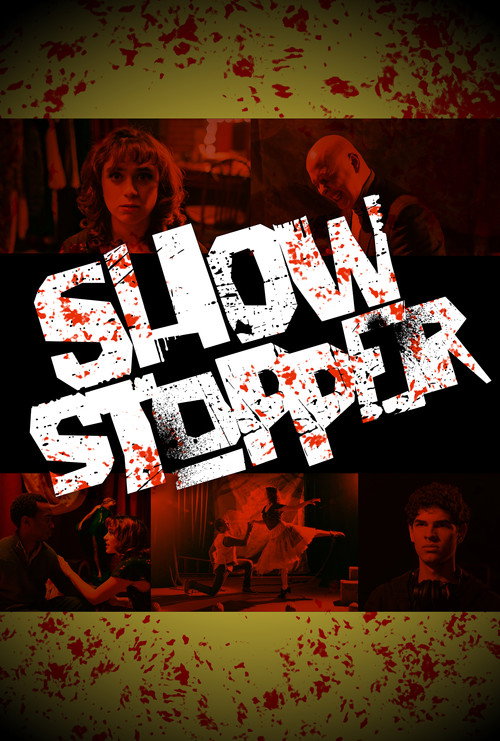
Showstopper (2026)
Directed by Jack Zatkowsky
Showstopper arrives from the hallways of the University of North Carolina School of the Arts, a student short film about a young woman who must sing for her survival at the behest of a musically-obsessed serial killer.
Consciousness Markers
The premise places a young woman at the mercy of a controlling male captor whose demands for perfection she must overcome to survive, a structure that carries a faint feminist undercurrent, though there is no evidence it is framed as such by the filmmakers.
The cast includes I'zaah Gray-Jones alongside other performers, suggesting modest demographic diversity, though no discourse or intentional representation agenda has been documented around the production.
The serial killer's obsession with perfection could theoretically be read as a commentary on impossible standards, but no evidence suggests the film sermonizes on this point rather than simply using it as a thriller engine.
No LGBTQ+ themes, characters, or commentary are present in any available synopsis, research, or festival materials.
No racial identity themes, commentary, or discourse have been identified in connection with this film.
No climate or environmental themes are present or suggested by any available material.
No anti-capitalist or class-critique themes have been identified in the film's premise or reception.
No body positivity themes or commentary are present in any available material.
No neurodivergence themes or representation have been identified in connection with this film.
The film is an original thriller premise with no historical setting or revisionist historical framing.
Why it received this score
Showstopper arrives from the hallways of the University of North Carolina School of the Arts, a student short film about a young woman who must sing for her survival at the behest of a musically-obsessed serial killer. The premise is, on its face, a perfectly serviceable thriller conceit. A controlling man demands flawless performance from a captive woman. She fights back. The curtain falls. Critics of a certain temperament might detect the skeleton of a metaphor about artistic perfectionism and the male gaze lurking somewhere in the wings, and they would not be entirely wrong to look.
The evidence, however, declines to cooperate with any grander thesis. No cultural discourse surrounds this film. No think-pieces, no festival panels on its social dimensions, no cast interviews in which anyone uses the word "empowerment." The research returns silence, and silence, in this line of work, is data. The feminist structural reading remains just that: structural, ambient, the kind of thing that happens when you cast a woman as the protagonist of a survival story. The film does not appear to have gone out of its way to make a point, which is, in its own quiet way, a choice.
We are left with a short film that scores modestly on the spectrum of progressive sensibility, not through any apparent design, but through the basic geometry of its premise. A diverse cast, a female lead escaping male control, a villain whose pathology might charitably be described as a critique of toxic perfectionism. These elements register faintly on the instruments. The needle barely moves. For a student production screened at a regional film festival, this is neither a failing nor a triumph. It is simply a film that had other things on its mind.
Analysis generated by our Consciousness Algorithm
Synopsis
A young woman is trapped in the clutches of a musical-obssesed serial killer, having to perform for her life to free herself from the perfection she is expected to achieve.