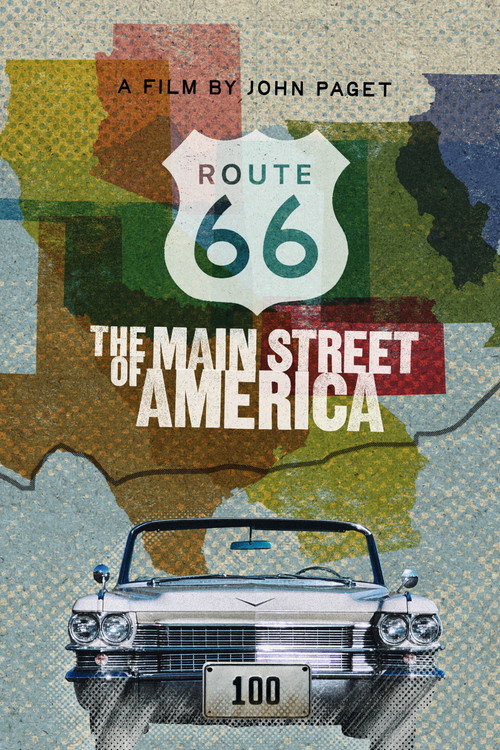
Route 66: The Main Street of America (2026)
Directed by John Paget
John Paget has spent thirty years documenting Route 66, which is either a sign of deep devotion or a failure to find another subject.
Consciousness Markers
The documentary explicitly engages with Black American travel history through The Green Book and Greenwood's Black Wall Street, and the restoration of a historically Black-owned gas station is framed as an act of historical recovery. This is substantive racial consciousness, though it reads more as historical documentation than ideological advocacy.
The film profiles a Vietnamese immigrant entrepreneur and a Black family restoring a historic gas station, presenting diverse community members as organic subjects of the documentary. These are not casting choices so much as editorial selections, though the pattern of selection does suggest deliberate representational breadth.
The inclusion of Green Book history and the Black-owned gas station narrative adds a corrective layer to the conventional nostalgic mythology of Route 66, acknowledging that the open road was not equally open to everyone. This is mild revisionism by inclusion, not a polemical reframing.
The film's civic and nostalgic tone, as described by all available coverage, is resolutely non-preachy. The Green Book segment carries some inherent moral weight, but the film does not appear to weaponize it.
No LGBTQ+ themes, characters, or commentary are present in any available materials.
No feminist framing or gender-politics commentary is present. The film does not appear to organize its subjects or arguments around gender.
No climate messaging, environmental advocacy, or ecological framing is present. A documentary about a highway celebrating car culture is, if anything, a gentle rebuke to the genre.
The film celebrates small business owners, entrepreneurs, and economic revitalization. It is, if anything, a quiet hymn to Main Street capitalism.
No body positivity themes are present or relevant to the subject matter.
No neurodivergence themes are present or referenced in any available materials.
Why it received this score
John Paget has spent thirty years documenting Route 66, which is either a sign of deep devotion or a failure to find another subject. With this centennial edition, he arrives at a film that is broadly celebratory, occasionally illuminating, and almost aggressively uninterested in telling you what to think. In the current documentary landscape, that last quality is so unusual it registers as a provocation.
The film's representational ambitions are present but restrained. A Black family in Luther, Oklahoma restores a historic gas station and the film takes the opportunity to discuss The Green Book and the Greenwood district, acknowledging that the legendary American road trip was, for a significant portion of Americans, more of a logistical challenge than a romantic adventure. A Vietnamese immigrant entrepreneur in Oklahoma City receives sympathetic coverage. These inclusions are genuine and the stories are worth telling. They do not, however, arrive wrapped in a thesis statement. The film seems to trust the viewer to draw conclusions, which is a courtesy the genre does not always extend.
What we are left with is a documentary that scores low on nearly every axis of modern progressive signaling, not because it is retrograde, but because it is sincerely, almost stubbornly, interested in the road itself. It celebrates small businesses, local preservationists, a high school student selling snow cones out of a 1923 gas station, and the general human tendency to find meaning in asphalt. This is not a film that wants to change you. It wants to take you for a drive. In 2026, that is a genuinely unusual ambition.
Analysis generated by our Consciousness Algorithm
Synopsis
Route 66: The Main Street of America is a centennial celebration of this legendary highway. It's a powerfully moving feature-length documentary that travels the route, sharing unforgettable stories along the way. From unexpected roadside attractions to revitalized main streets, each encounter reveals communities finding new life and purpose, making new history, proving the most meaningful journeys often unfold on the road less traveled.