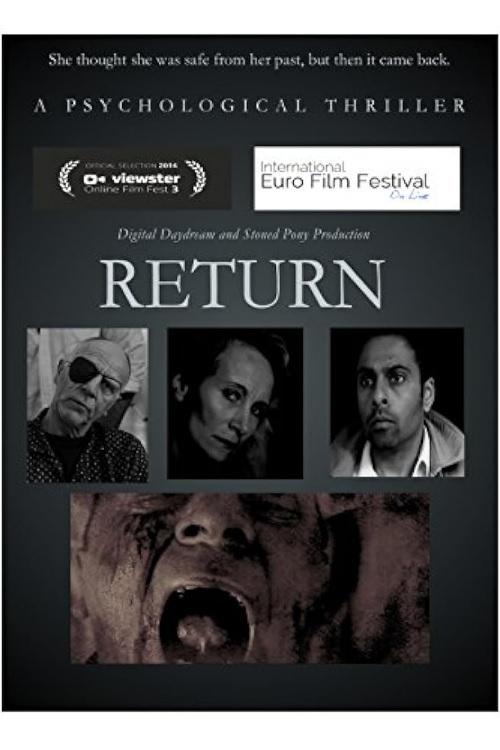
Return (2015)
Directed by Haqi Ali
No — Return is not woke, scoring 0 out of 100 on our wokeness meter.
There is a strain of British independent horror that arrives without announcement, plays a few rooms, and then quietly dissolves from memory.
Consciousness Markers
The cast appears to be predominantly white with no evidence of intentional diverse or inclusive casting.
There are no LGBTQ+ characters, themes, or subtext in the film.
The film has a female protagonist but does not engage with feminist themes or critique patriarchal structures.
The film does not address racial issues, systemic racism, or racial identity.
There is no environmental or climate-related content in the film.
The film does not critique capitalism, wealth inequality, or class structures.
There is no body-positive messaging or challenge to conventional beauty standards.
The film depicts schizophrenia as a source of demonic horror rather than offering an affirming neurodivergent perspective, so it does not meet the marker.
The film is a fictional horror story and does not revise or reinterpret historical events.
The film does not contain preachy or didactic social commentary.
Why it received this score
There is a strain of British independent horror that arrives without announcement, plays a few rooms, and then quietly dissolves from memory. Return is one of its specimens. Haqi Ali's film follows Cathy Reed, institutionalized for most of her life after a childhood diagnosis of schizophrenia, whose parents preferred the demonic reading and brought in priests to expel what the doctors had already named. Decades later she is released into a flat of her own, handed the standard-issue chance at independence, and promptly discovers that solitude and safety are different things. The nightmares keep their appointments. The walls do their work. Whether Cathy's mind is betraying her or something else has moved in is a question the film poses and then declines to answer with much conviction.
The film treats mental illness as an engine for dread, which places it firmly in an older tradition of genre storytelling. There is no effort to reframe Cathy's condition as an identity to be affirmed, no advocacy, no corrective to the language of possession that surrounds her. That is not a failing of nerve so much as a simple absence of interest in the subject. The screenplay wants atmosphere and a few good scares, and it pursues those with a narrow, almost monastic focus. Whatever conversation the wider culture was having in 2015 about diagnosis, treatment, or the people who live inside those systems goes unacknowledged here.
The casting is unremarkable and untroubled by any design beyond filling roles. The dialogue carries no argument about money, power, race, gender, or the planet. Nobody lectures. Nobody is redeemed by an idea. What remains is a small, sincere genre exercise that frightens intermittently and means nothing beyond its own running time. We have watched it, classified it, and filed it accordingly. The shelf is crowded, but there is always room for one more.
Analysis generated by our Consciousness Algorithm
Synopsis
A tale of terror. Cathy Reed has been institutionalized most of her life because of Schizophrenia, as a child her parents thought she was possessed by demons and had her exercised by priests. Medical science saw different. Now decades later Cathy is freed, relocated to her own flat and given a chance to be independent. Once alone things are not what they all seem and when her nightmares turn real she questions her state of mind before she is left to face her demons.
Questions about Return
Is Return woke?
No — Return is not woke, scoring 0 out of 100 on our wokeness meter. That earns it a verdict of Ultra Based.
Does Return have any woke elements?
No. All 10 markers score zero.
How does Return compare to other 2015 movies?
It ranks #258 of the 289 films from 2015 we've scored; their average is 15. The wokest is Chi-Raq (78).
How is the Woke Score calculated?
An AI-assisted process researches the film and its reception, scores it 0–100 on ten markers, then combines those into one 0–100 Woke Score. It measures a specific set of 2020s cultural themes, not film quality.