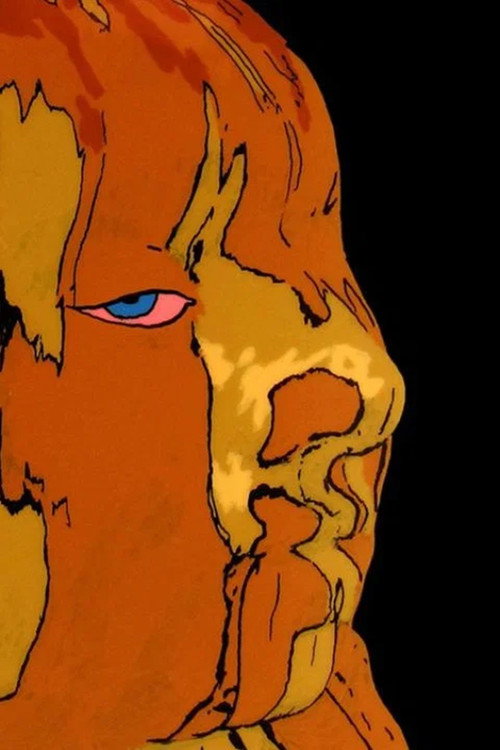
Rebecca's Mess (2026)
Directed by Jamie Crewe
Rebecca's Mess arrives from the New York Film Festival's experimental shorts program wearing the full regalia of contemporary art-cinema: pixelated eruptions, lurking dolls, and something described as "apologetic text," which is either a formal device of considerable ingenuity or a note left by the editor.
Consciousness Markers
Director Jamie Crewe self-identifies as transfeminine and queer, and their broader body of work consistently engages with trans subjectivity and queer identity. The film's title character 'Rebecca' and Crewe's documented thematic preoccupations suggest trans and queer identity is woven into the fabric of this work, even if the film's abstract form resists explicit statement.
The work's horror-adjacent aesthetic, lurking dolls, and cursed domestic imagery carry faint echoes of feminist gothic traditions. Without concrete narrative content this remains speculative, and the score reflects only the contextual signal from Crewe's known thematic range.
The presence of 'apologetic text' within the film's visual grammar hints at a self-aware, address-to-the-viewer quality that could shade into sermonizing. It is a faint signal at best, and the abstract form largely forecloses the kind of direct moral instruction this marker requires.
No cast information is available for this experimental short. With no discernible characters or actors to evaluate, the marker cannot be scored.
No evidence in the film's description, research, or director's documented thematic concerns points to racial consciousness as a focus of this particular work.
No climate or environmental themes are present or suggested by any available material.
No anti-capitalist content or framing is documented for this film.
No body positivity themes are present or suggested in the available description or research.
No neurodivergence themes are present or suggested in any available material.
The film is described as an abstract experimental work with no historical subject matter to revise.
Why it received this score
Rebecca's Mess arrives from the New York Film Festival's experimental shorts program wearing the full regalia of contemporary art-cinema: pixelated eruptions, lurking dolls, and something described as "apologetic text," which is either a formal device of considerable ingenuity or a note left by the editor. Director Jamie Crewe, a Glasgow-based transfeminine and queer artist, has built a career exploring trans subjectivity and queer histories through horror aesthetics and folk-inflected imagery. This film appears to continue that project, though its abstract form makes the ideological content about as easy to pin down as the cursed video haze it reportedly inhabits.
The documentary record on Rebecca's Mess is, to put it gently, sparse. No mainstream controversy has attached itself to the film. No conservative outlet has issued a warning. No progressive outlet has issued a citation. It screened in a program called "The Hidden Dimension," which feels apt: the film exists in a register where social consciousness is embedded in texture and form rather than delivered as a press release. The LGBTQ marker scores as the film's most legible dimension, not because the content is explicit, but because Crewe's entire body of work is a sustained meditation on transfemininity, and a character named Rebecca in a film by this director is not an accident. The faint feminist gothic undertones of the doll imagery add a minor secondary signal.
For the remaining eight markers, the film offers nothing, and we are obligated to honor that nothing with zeroes rather than with generous speculation. The experimental short film is a format that has historically resisted the kind of plot-driven moralizing this scoring system is designed to detect. Rebecca's Mess is, by all available evidence, a piece of queer art-horror that communicates through dread and abstraction. Whether that constitutes a political act depends entirely on your theory of aesthetics, and this critic has long since stopped having theories about aesthetics after dark.
Analysis generated by our Consciousness Algorithm
Synopsis
Punctuated by eruptions of pixelation, apologetic text, and jump-scare abstractions, Jamie Crewe's tense and sinister work creates a hybrid organic-electric space in which lurking dolls peer out at the spectator from a haze of cursed video.