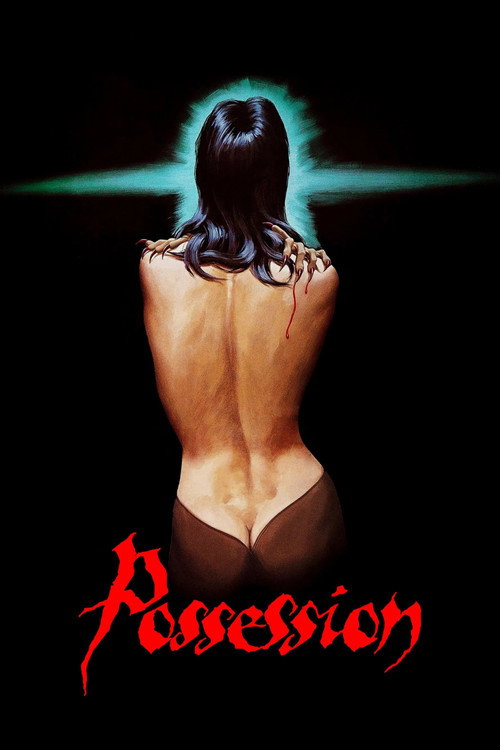
Possession (1981)
Directed by Andrzej Żuławski
No — Possession is not woke, scoring 0 out of 100 on our wokeness meter.
Andrzej Żuławski's Possession arrived in 1981 with a Cannes premiere, a Best Actress prize for Isabelle Adjani, and a reputation that has since curdled into cult reverence.
Consciousness Markers
The international cast (French, British, German, Polish) reflects the film's European co-production logistics, not any deliberate diversity-casting agenda.
No LGBTQ+ characters or themes appear; the central relationship is a heterosexual marriage in collapse.
The film depicts a woman's breakdown through a lurid, hysterical lens rooted in the director's own divorce; it offers no feminist critique or agenda.
Race is entirely absent as a theme; the sociopolitical subtext concerns the Cold War and the Berlin Wall, not racial politics.
No environmental or climate themes whatsoever.
The political subtext is anti-totalitarian and Cold War allegory, not an eat-the-rich economic critique.
The body is treated as a site of horror, miscarriage, and monstrosity, the opposite of body-positivity messaging.
Mental illness appears as gothic horror spectacle (psychosis, breakdown) rather than as neurodivergent identity or advocacy.
No historical revisionism; the Berlin Wall setting is used as metaphor, not to rewrite historical record.
The film is surreal, oblique, and allegorical rather than preachy; it never lectures the audience on social issues.
Why it received this score
Andrzej Żuławski's Possession arrived in 1981 with a Cannes premiere, a Best Actress prize for Isabelle Adjani, and a reputation that has since curdled into cult reverence. It follows a spy named Mark and his wife Anna through the collapse of their marriage in West Berlin: an apartment beside the Wall, a tentacled creature in a derelict flat in Kreuzberg, a body count that rises with the emotional temperature. The film is a divorce memoir wearing a monster suit, and it never pretends otherwise.
The hysteria at its center belongs to the gothic tradition, not to any contemporary critique. Anna's breakdown is filmed as spectacle, an aria of convulsion and blood, and the film extends no argument about her condition beyond the fact that it terrifies. The body here is a site of miscarriage, dismemberment, and monstrosity, which places it at a distance from any affirmative messaging about physical form. Mental illness serves as horror furniture. Race never enters the frame. Neither does the climate. The political subtext runs toward anti-totalitarian allegory, the Wall as a symbol of separation, and stops well short of an economic sermon.
Nothing in the film lectures. It is opaque, dreamlike, and content to let its meanings stay contested among critics who cannot agree whether the creature is psychosis, revenge, or a literal squid. The international cast reflects co-production logistics between France and West Germany, not a representation agenda. The use of divided Berlin carries no revisionist intent. The residue is a nasty, audacious, and oddly beautiful piece of work that predates the vocabulary we now apply to such things. It asks nothing of us except endurance.
Analysis generated by our Consciousness Algorithm


Synopsis
A young woman left her family for an unspecified reason. The husband determines to find out the truth and starts following his wife. At first, he suspects that a man is involved. But gradually, he finds out more and more strange behaviors and bizarre incidents that indicate something more than a possessed love affair.
Questions about Possession
Is Possession woke?
No — Possession is not woke, scoring 0 out of 100 on our wokeness meter. That earns it a verdict of Ultra Based.
Does Possession have any woke elements?
No. All 10 markers score zero.
How does Possession compare to other 1981 movies?
It ranks #32 of the 43 films from 1981 we've scored; their average is 5. The wokest is The Fox and the Hound (18).
How is the Woke Score calculated?
An AI-assisted process researches the film and its reception, scores it 0–100 on ten markers, then combines those into one 0–100 Woke Score. It measures a specific set of 2020s cultural themes, not film quality.