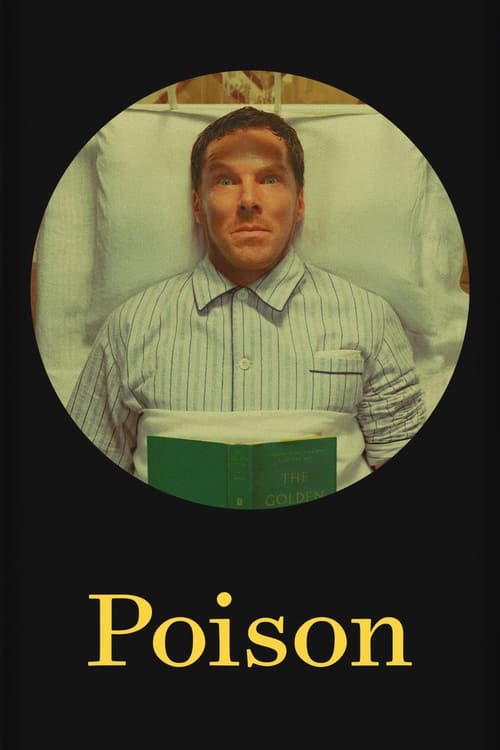
Poison (2023)
Directed by Wes Anderson
No — Poison is not woke, scoring 15 out of 100 on our wokeness meter.
Wes Anderson returns to the Roald Dahl cupboard for a seventeen-minute exercise in sustained abdominal suspense.
Consciousness Markers
Dev Patel and Ben Kingsley appear as Indian characters in a story set in colonial India, but the casting is period- and setting-appropriate rather than a deliberate diversity statement.
The British-in-India colonial setting provides faint ambient context of empire, but the film treats it as backdrop rather than commentary.
No LGBTQ+ characters, themes, or subtext whatsoever in this snake-on-a-stomach chamber piece.
No women of note in the narrative and no engagement with feminist themes.
No environmental or climate themes; the snake is a personal hazard, not a metaphor for ecological collapse.
No economic critique or class warfare of any kind.
No body-image themes; the body here is merely a surface for a venomous reptile.
No neurodivergent characters or themes.
No historical revisionism; the colonial setting is presented without re-framing or reclamation.
Wes Anderson's deadpan narration delivers a Roald Dahl yarn, not a sermon; no moral instruction is offered.
Why it received this score
Wes Anderson returns to the Roald Dahl cupboard for a seventeen-minute exercise in sustained abdominal suspense. A venomous snake has settled onto the stomach of an Englishman in colonial India, and the man's associate and a doctor spend the runtime attempting to extract it without provoking a fatal bite. The camera holds still. The narration is flat. The tension is real, which is a strange thing to report about a film whose central image is a grown man lying rigid while a reptile enjoys his torso. It is a chamber piece in the most literal sense, and it ends exactly when it should.
The casting of Dev Patel and Ben Kingsley as Indian characters raises the ambient temperature of representation by a modest degree, though both are simply occupying roles the setting requires. The British Raj hovers at the edges as furniture, a fact of the room, never a thesis. There is no woman of consequence in the story. There is no economic argument, no ecological warning, no reclamation of history. The snake is not a symbol. The snake is a snake, and its ambitions extend no further than warmth.
Anderson's narration, delivered with his customary dryness, recounts rather than instructs. No lesson is offered, no viewer is scolded, no moral is tacked to the final frame. The film is adapted from a published short story, which is the only classification it earns with any confidence. What we have, then, is a small, tense, beautifully arranged anecdote about a man who cannot move. It asks nothing of us except attention. In the current climate, that restraint registers as almost radical, though it is not, strictly speaking, anything of the kind. It is simply a story told well, and left alone.
Analysis generated by our Consciousness Algorithm


Synopsis
When a poisonous snake slithers onto an Englishman's stomach in India, his associate and a doctor race to save him.
Questions about Poison
Is Poison woke?
No — Poison is not woke, scoring 15 out of 100 on our wokeness meter. That earns it a verdict of Ultra Based.
Does Poison have any woke elements?
1 of the 10 markers register at 30 or above, led by Representation Casting (30). On Representation Casting: Dev Patel and Ben Kingsley appear as Indian characters in a story set in colonial India, but the casting is period- and setting-appropriate rather than a deliberate diversity statement.
How does Poison compare to other 2023 movies?
It ranks #105 of the 200 films from 2023 we've scored; their average is 24. The wokest is Origin (84).
How is the Woke Score calculated?
An AI-assisted process researches the film and its reception, scores it 0–100 on ten markers, then combines those into one 0–100 Woke Score. It measures a specific set of 2020s cultural themes, not film quality.