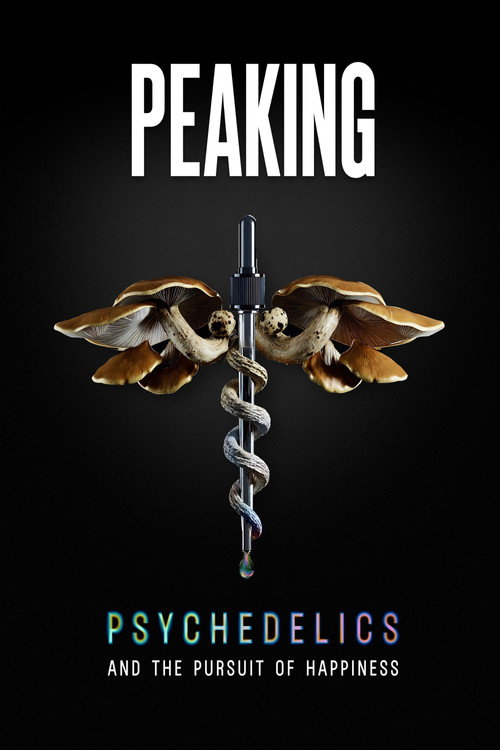
Peaking: Psychedelics and the Pursuit of Happiness (2026)
Directed by Jordan Kronick
Jordan Kronick's documentary arrives bearing the full weight of its title's earnestness and proceeds to deliver exactly what it promises: a methodical, emotionally staged argument that psychedelics deserve a seat at the table of legitimate medicine.
Consciousness Markers
The documentary engages substantively with traumatic brain injury, PTSD, suicidal ideation, and addiction as medical conditions deserving alternative treatment. The destigmatization of mental health conditions is a core narrative thrust, though it is framed medically and journalistically rather than through an identity-politics lens.
The documentary's subjects include Black veteran Chalvia Brown and a diverse cross-section of trauma survivors, though the casting is driven by the stories available rather than any visible diversity-mandate logic. The film's primary demographic skews toward male athletes and military veterans, which is not a traditionally curated woke lineup.
The film explicitly traces the 1960s criminalization of psychedelics and argues that history made a category error, positioning modern clinical research as a correction of a politically motivated suppression. This is mild revisionism in service of a policy argument rather than ideological myth-making.
The film's implicit critique of the pharmaceutical industry and the criminalization of psychedelics carries a faint anti-establishment undertone, and the advocacy work of MAPS and Heroic Hearts Project frames institutional medicine as a failing system. This is incidental rather than programmatic.
The documentary advocates clearly for psychedelic legalization and therapy integration, and its roster of MAPS-affiliated researchers and non-profit founders ensures a consistent pro-psychedelic message. The observational footage tempers the sermonizing somewhat, keeping it closer to journalism than a TED talk with camera work.
The film does not foreground race as a structural theme, though the inclusion of Black veteran Chalvia Brown gestures toward the underserved demographics in mental healthcare. No explicit racial justice framing is present.
Women feature in supporting roles, including Ela Carcillo and Mary Leake-Johns as partners of the male athlete subjects, and one unnamed woman's opioid recovery is highlighted. The framing is human-interest rather than feminist-agenda driven.
No LGBTQ+ themes, subjects, or framing are present in the film's known content or coverage.
Climate change, environmental themes, and ecological consciousness are entirely absent from this documentary's subject matter.
Body positivity as a cultural movement has no presence in this film. The bodies in question are brains, and the film treats them with clinical rather than celebratory interest.
Why it received this score
Jordan Kronick's documentary arrives bearing the full weight of its title's earnestness and proceeds to deliver exactly what it promises: a methodical, emotionally staged argument that psychedelics deserve a seat at the table of legitimate medicine. The film is not, by any rigorous measure, a politically charged culture-war artifact. Its subjects are NHL enforcers, combat veterans, and massacre survivors, a demographic profile that would cause considerable discomfort at most progressive film festivals. It is, instead, a destigmatization project aimed squarely at the demographic that still associates psilocybin with tie-dye and poor decision-making.
The film's social consciousness is real but narrow. Rick Doblin, founder of MAPS and a man who has spent forty years being politely ignored by the FDA, anchors the advocacy layer with the patient intensity of someone who has rehearsed this argument in congressional waiting rooms. Robin Carhart-Harris provides the neuroscience. Jesse Gould provides the pathos. The structure is familiar to anyone who has watched a documentary about a thing that should be legal but isn't. Kronick, a ten-time Emmy winner from the HBO sports journalism world, brings a competent observational eye to the dosing room footage, which is genuinely rare and genuinely affecting. The film earns its emotional moments without particularly manufacturing them.
Where it edges toward the gently preachy is in its framing of the 1960s criminalization of psychedelics as a historical wrong to be corrected, a position that is defensible but delivered with the confidence of a verdict rather than an argument. The lecture energy is present, but it is the lecture energy of a harm-reduction advocate, not a gender studies seminar. The film's progressive sensibilities are, in the end, those of a very serious doctor who would like you to reconsider your assumptions. We have seen more strident cases made for less interesting subjects.
Analysis generated by our Consciousness Algorithm
Synopsis
"Peaking: Psychedelics and the Pursuit of Happiness" is a feature documentary that explores all the major psychedelics, not just by explaining how they work medicinally, but by taking viewers inside dosing rooms for extremely rare looks at the remarkable power, emotion, and speed of psychedelic healing in action: from pro athletes repairing brain damage from concussions, to combat veterans finding relief from suicidal despair, to a woman breaking free from opioid addiction, to survivors of the Nova Music Festival massacre who say being on psychedelics during the attack shielded them from developing mental trauma.